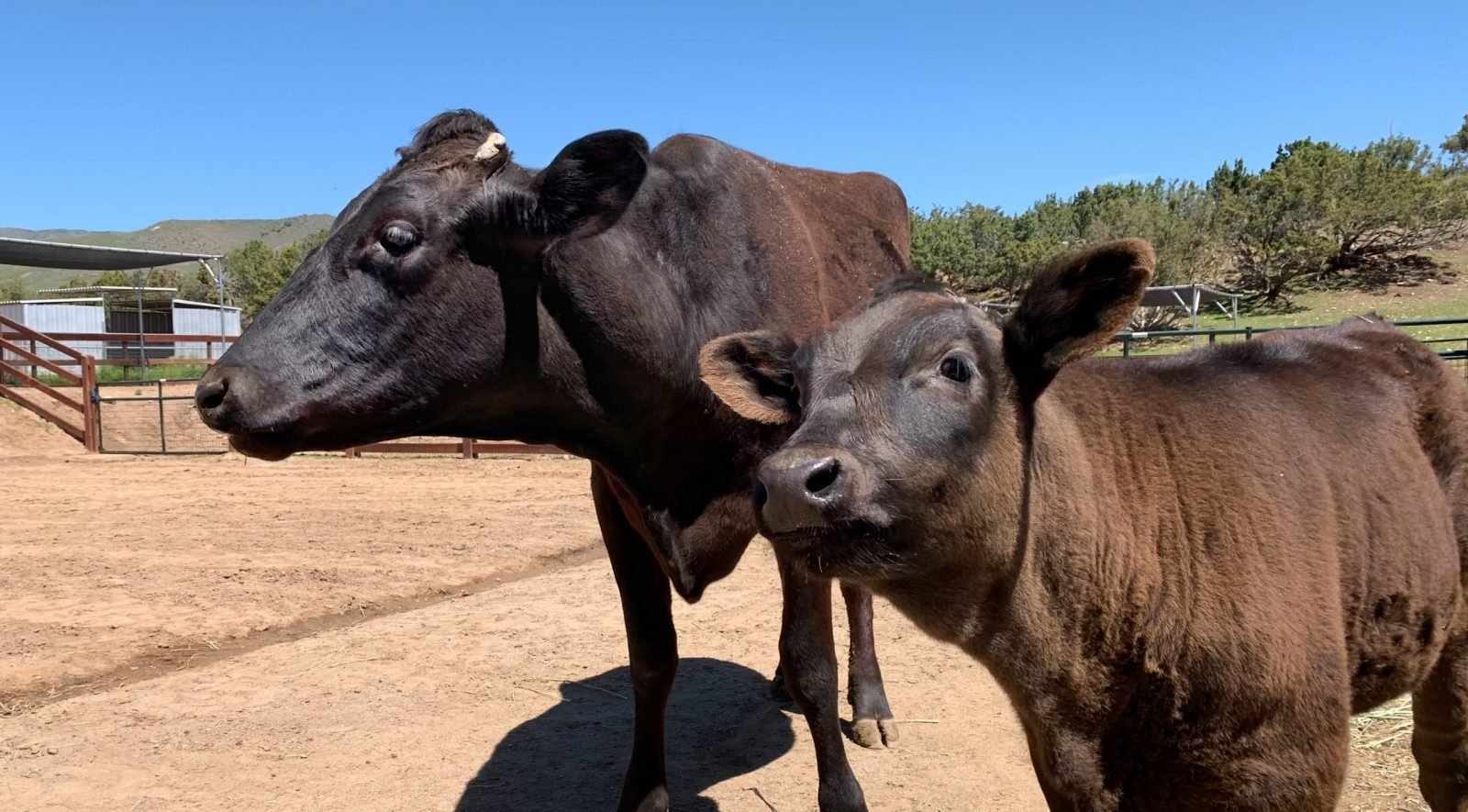
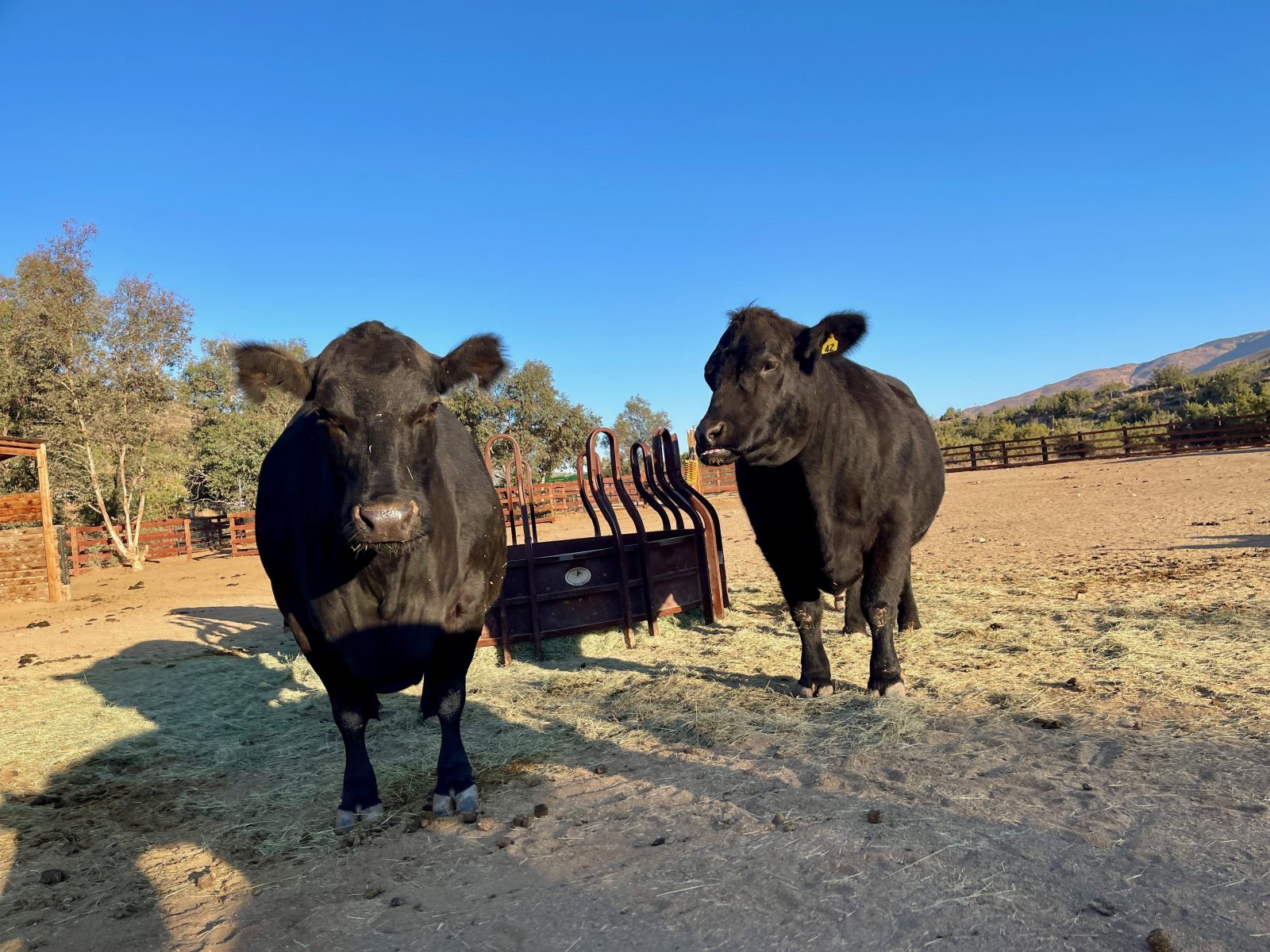
Standard practices in the dairy, beef, and veal industries are designed to maximize production and profit, not the well-being of cows. Through selective breeding, excessive feeding, and the use of growth hormones, cows today are raised to grow unnaturally large in very short periods of time.
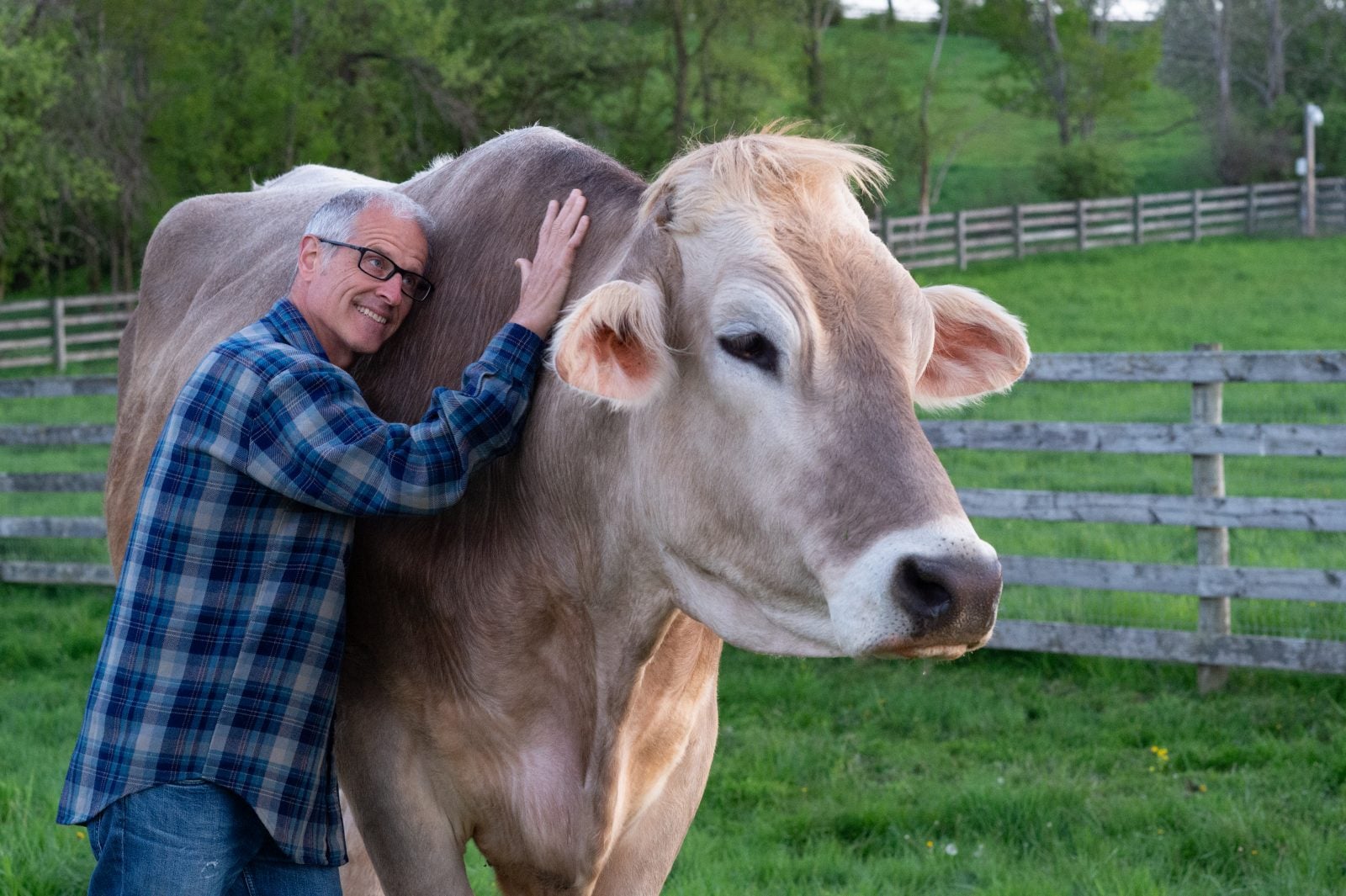
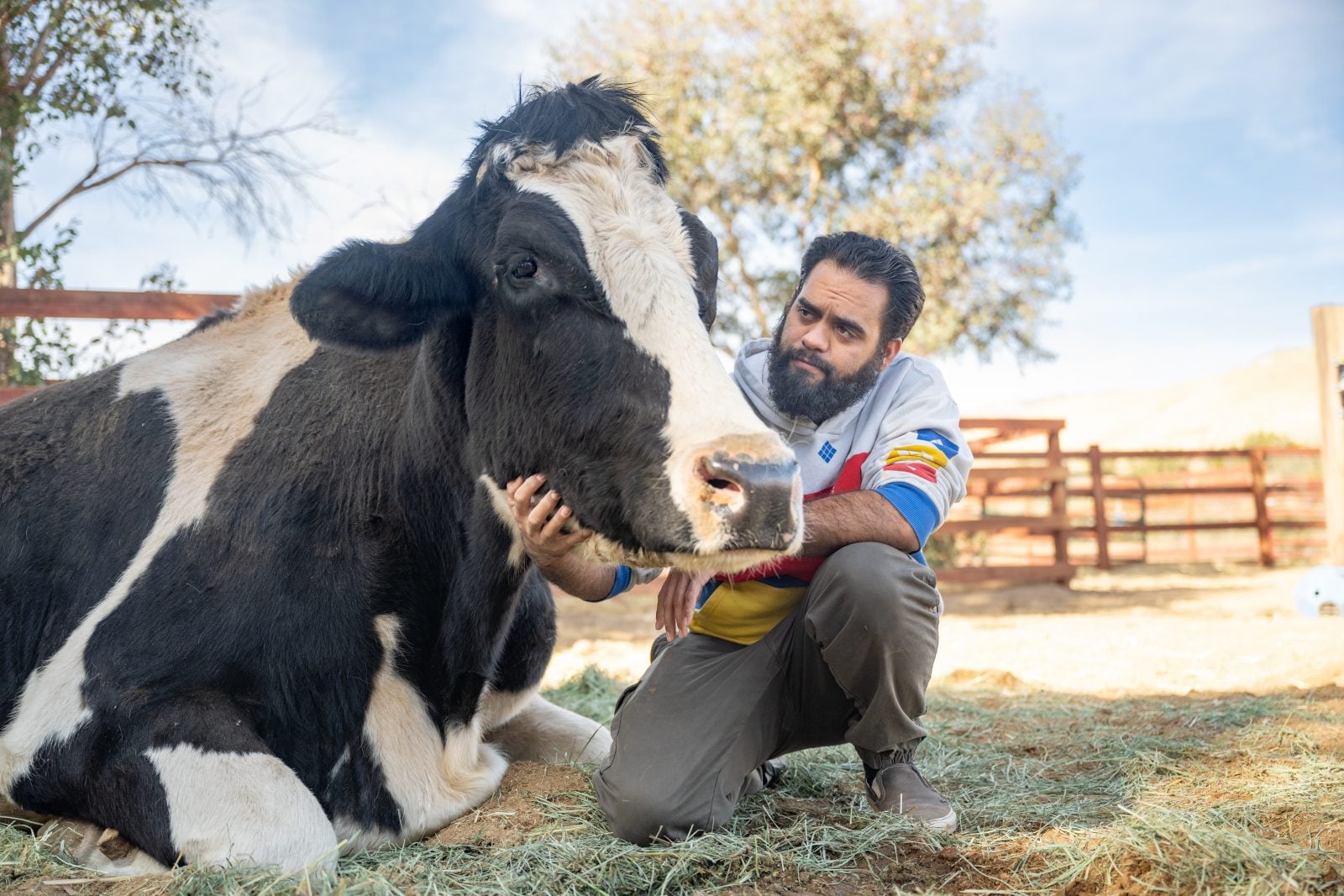
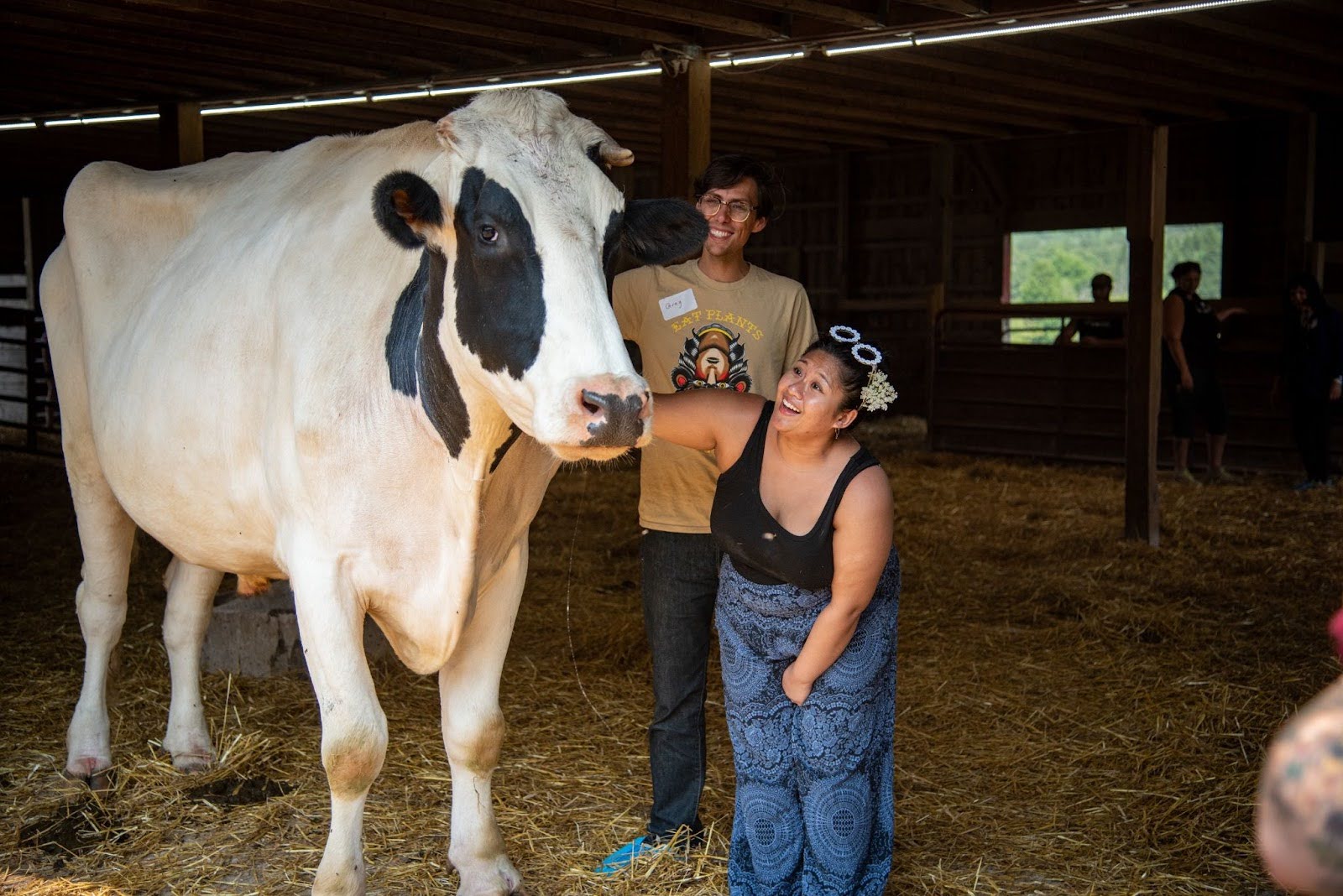
Over decades, the industry has selectively bred cows to grow bigger and faster. Because of these genetics, many cows rescued from animal agriculture come to the sanctuary with abnormally large bodies, even when they are still young.
In addition to selective breeding, the beef industry in particular aims to fatten cows as quickly as possible. Between 6 months and 1 year of age, cows are moved from pastures to feedlots (also called “finishing” operations) to be fattened before slaughter. Although their digestive systems are designed for grasses and foliage, cows are fed unnatural, grain-heavy diets in feedlots. Their feed often contains antibiotics, antibacterial agents, and sometimes fillers made from aftermarket human food products, like candy.
Bovine growth hormone (BGH), banned in the U.K., Canada, and several other countries, is still used by many U.S. beef and dairy operations. Injections of BGH increase milk production in dairy cows but are also linked to higher rates of painful health issues, such as mastitis and lameness.
Due to selective breeding and overfeeding of unnatural diets, many cows in animal agriculture reach a so-called “market weight” of 1,200 pounds in as little as six months.