Sanctuary Questions: What's Wrong with Wool?

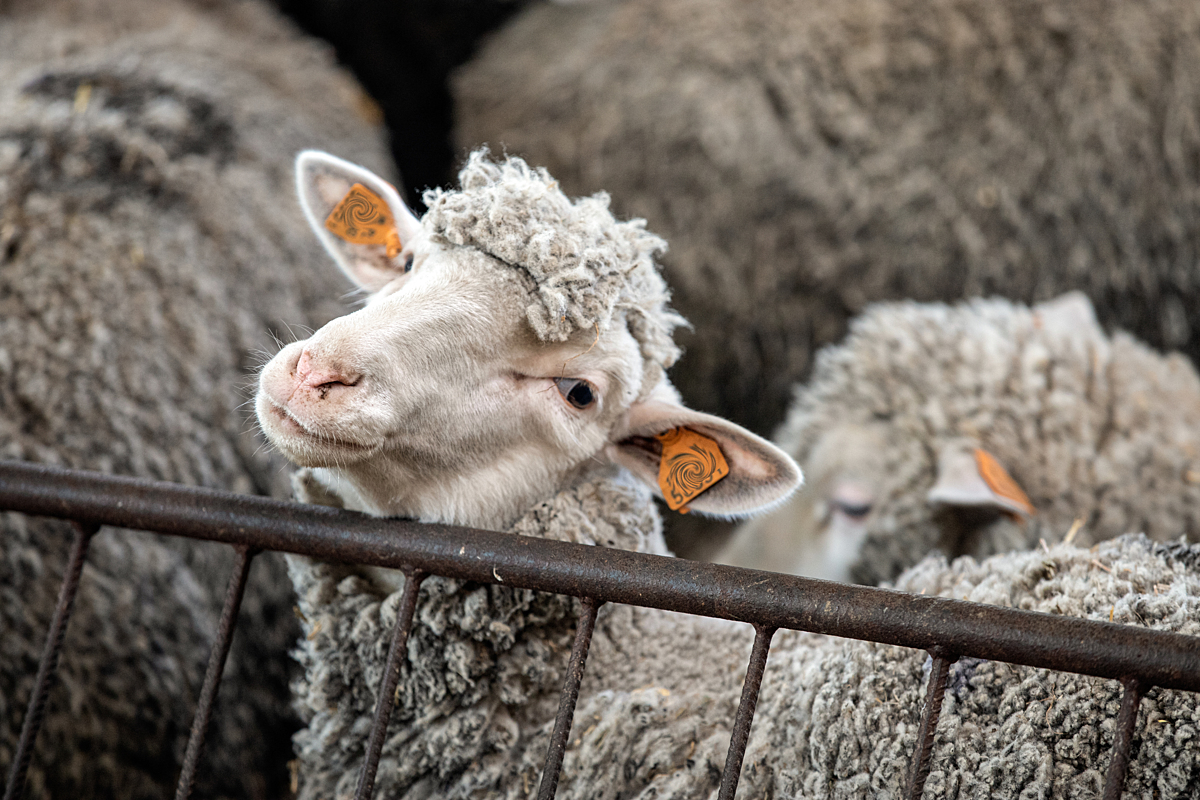
A curious ewe looks out over the top of her crowded pen at a regional sheep farm in Poland. These sheep are reared for wool production.

Andrew Skowron/We Animals

Sanctuary Questions: What's Wrong with Wool?

Andrew Skowron/We Animals

This article is part of our Sanctuary Questions blog series. While touring our New York and California sanctuaries, visitors often express curiosity about the lives of our rescued farm animal residents. We’re sharing the most frequently asked questions and answering them here. Read on, and stay tuned for more.

Twice a year, our resident sheep receive haircuts to relieve them of their heavy winter coats, an important part of keeping the animals of Farm Sanctuary comfortable and healthy. Seeing the sheep’s stylish new ’dos often inspires visitors to ask questions. We love questions like these, which lead to meaningful conversations about the harms of animal agriculture and how sanctuary addresses them.

One of the most commonly asked questions we hear is, “If sheep need to be sheared, what’s wrong with buying wool?”
The Basics: What is Wool?

Wool is the protein fiber (keratin) taken from sheep’s coats and used in clothing, bedding, and other textiles. While global wool production has declined over the last 20 years—partly due to the rise of synthetic alternatives like polyester and nylon—the industry still produced nearly 900 metric tons of wool in 2023.

Wild sheep naturally shed their coarse winter coats each year. As the weather warms up, they rub away excess wool by scratching their bodies against trees. Unfortunately, the breeds of sheep most commonly used in wool production—wool breeds and wool/hair crosses—can no longer shed their winter coats naturally. Over time, humans have selectively bred sheep to produce an unnatural amount of wool, and those rescued from meat and wool production require gentle shearing at least once per year to keep them healthy and comfortable, and to avoid overheating.

Yet, in commercial wool production, profit is prioritized over the sheep’s well-being. Underneath every wool sweater or blanket in stores lies a system of cruelty and exploitation.

Why Wool Isn’t Cool: Life in Commercial Sheep Farms

Like all commercial animal industries, wool production aims to maximize profit. Nearly half of the sheep raised commercially in the U.S. are kept in flocks of 1,000 or more, a highly stressful and unhealthy environment for such intelligent and sensitive animals. In wool farms, sheep face mutilation without pain relief and dangerously fast shearing—and when their wool production declines, they are sent to slaughter.

Many male sheep are castrated due to farmers’ preference for handling castrated males (“wethers”), who are easier to manage than unaltered rams. Castration is typically performed without pain relief, using either a blade or a process called “banding,” in which a tight rubber band cuts off circulation to the scrotum and testes. Over weeks, the tissue dies and eventually falls off.

Sheep in wool farms also commonly suffer from “flystrike,” in which maggots thrive in damp, dirty wool. Instead of keeping sheep clean and dry to reduce susceptibility, many ranchers dock lambs’ tails or employ a practice called “mulesing,” in which wool and skin are sliced off their backsides, deterring maggot infestation.

Speedy Shearing Causes Fear and Injury

The commercial shearing process itself causes distress and injury to sheep, too. Since shearers are paid either by the sheep or by the volume of wool they can remove, they’re incentivised to work as quickly as possible. The fast pace not only frightens the sheep but also increases the risk of injury—both to the sheep and the shearer.

Sheep, as prey animals, are highly sensitive to their surroundings. The rough handling, frantic pace, and loud whirring of electric shears can cause intense fear. Cuts to sheep’s skin are common, and pain relief is often not provided. Rather than slowing down to reduce stress and injury, ranchers often starve sheep for a full day so the animals will have less energy to react to the distress of shearing.

It’s not just the sheep who are put at risk by commercial shearing. Despite low wages, sheep shearers are up to six times more likely than the average worker to be hurt on the job. Instead of finding sustainable solutions, the industry tries to normalize—even celebrate—extreme speeds by holding timed shearing contests.

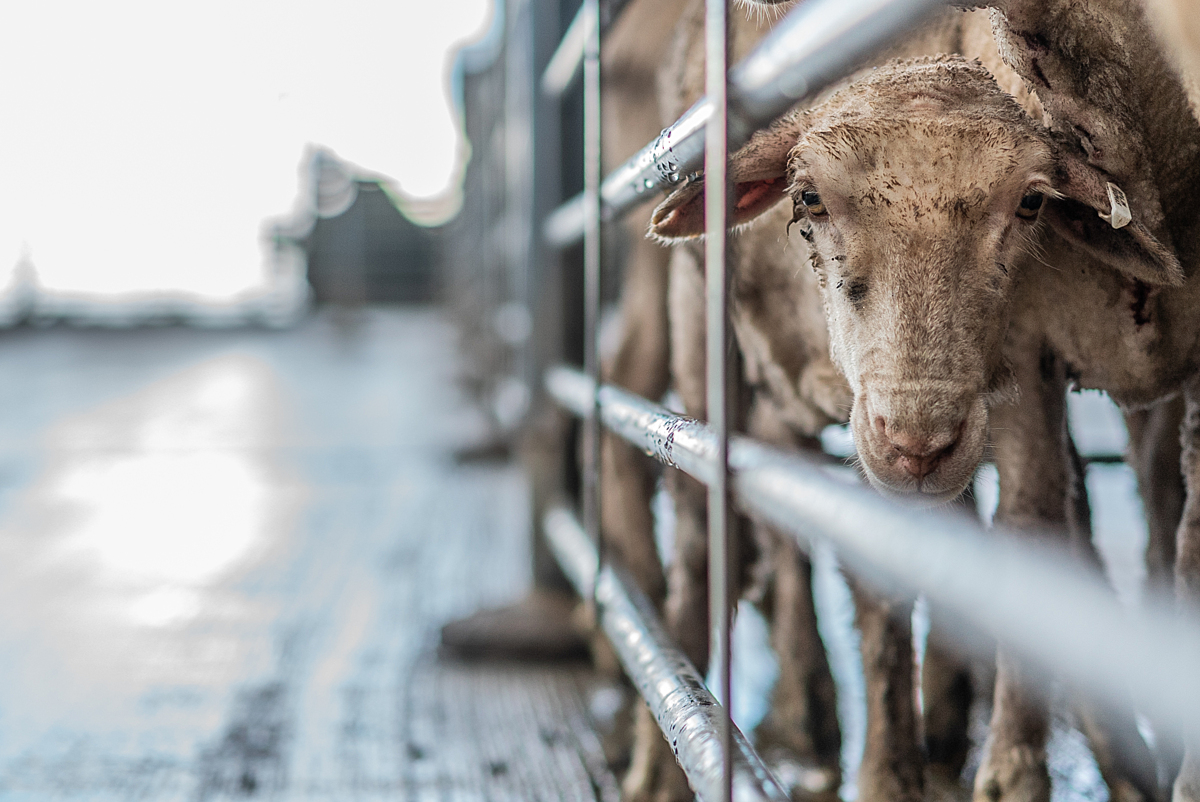
With shearing day over, a ewe peers through the yard rails on a wet winter's day.

Lissy Jayne/HIDDEN/We Animals

When Wool Production Declines, Slaughter Follows

Like sheep raised for meat, those exploited for their wool are ultimately sent to slaughter. This happens when their wool production slows or its quality declines—sometimes when they’re as young as five years old. In Australia, the source of most of the world’s wool (including most Merino wool), older sheep are typically exported to other countries, where mature sheep meat is more commonly consumed. Sheep endure a grueling weeks-long boat journey, only to meet their demise.

How Sanctuary is Different

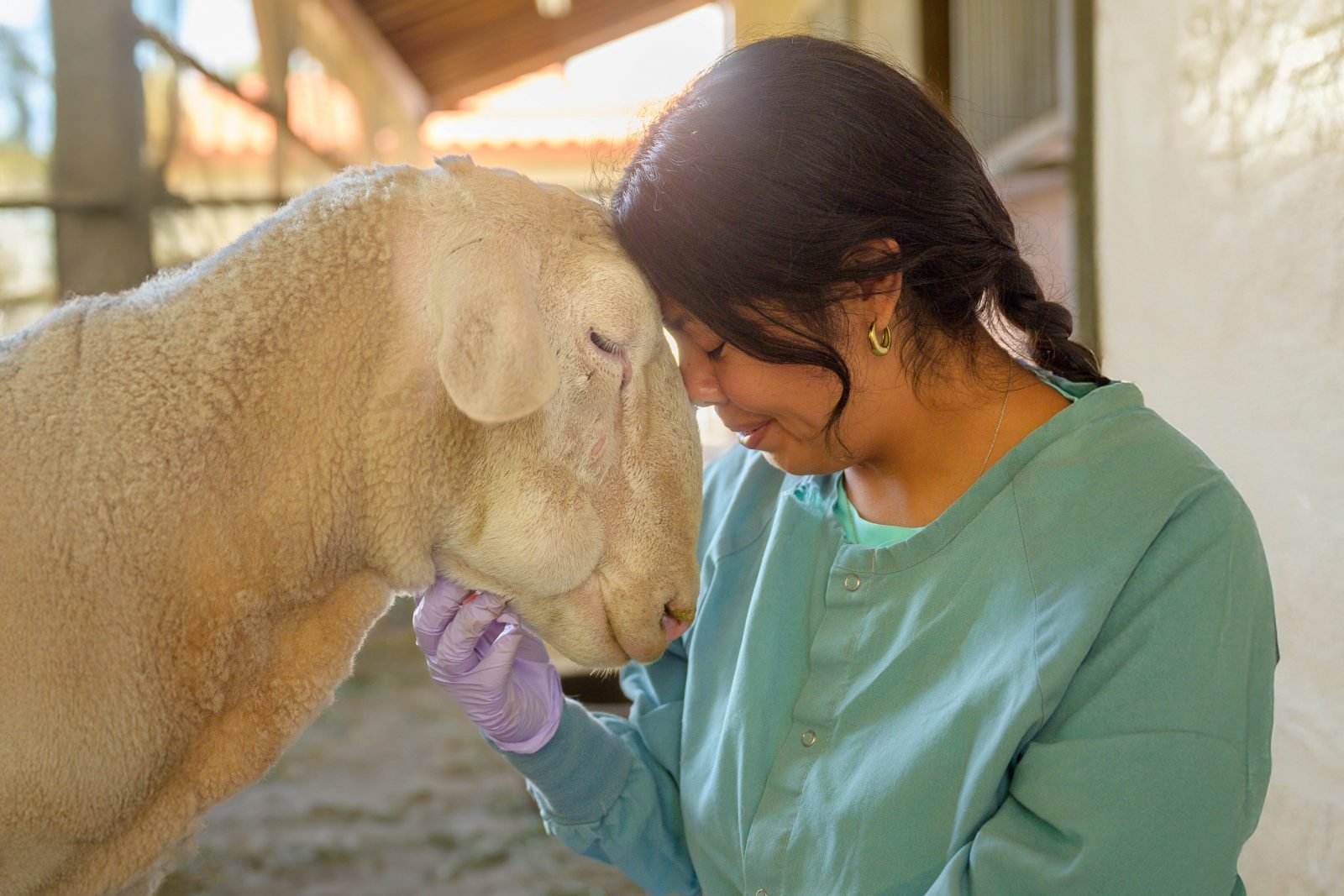
Twice a year, the Farm Sanctuary team spends several days carefully and humanely shearing the resident sheep at our New York and California locations. We work with a trusted shearer who has known our flocks for years and treats each sheep with the utmost care and respect. Since even careful handling can be scary for sheep—and accidents can still occur—our caregiving team is on hand throughout the process to monitor sheep and provide assistance.

After shearing, each sheep receives a wellness check and annual vaccinations. Then comes one of our favorite sights: comfortable sheep kicking up their heels, frollicking across the pasture, and grazing with the cool breeze against their skin.

Their wool doesn’t enter the commercial marketplace. Instead, we give it back to nature by spreading it across the hillsides, where wildlife collect some for nesting, and the rest composts naturally. Nobody is harmed and everybody benefits!

Riley sheep and Brooke Marshall of Farm Sanctuary

Visit Us

Rescued sheep running in from pasture at Farm Sanctuary

Witness for yourself the power of sanctuary by planning a visit to our New York or California location today! Stroll through rolling pastures, meet the resident sheep and other animals as they graze and play, and learn their stories of surviving animal agriculture.

Visit for the day or immerse yourself in sanctuary life with an overnight stay at one of the on-site cabins or tiny houses at our New York location. Experience an awe-inspiring glimpse at a world where every animal is treated with kindness and respect—a future you’re helping to create through your support of Farm Sanctuary.