

This means that, to profit from their milk, the dairy industry runs on a cruel cycle of exploitation, with mother cows and their calves paying the price.
Read on to learn about the lives of cows on dairy farms and how you can make a difference.
Jo-Anne McArthur/We Animals
Jo-Anne McArthur/We Animals
Many of us are raised on the belief that cows “give” milk, automatically producing it for human consumption at all times. However, like other mammals, cows lactate only when they’re pregnant or nursing their young.
This means that, to profit from their milk, the dairy industry runs on a cruel cycle of exploitation, with mother cows and their calves paying the price.
Read on to learn about the lives of cows on dairy farms and how you can make a difference.
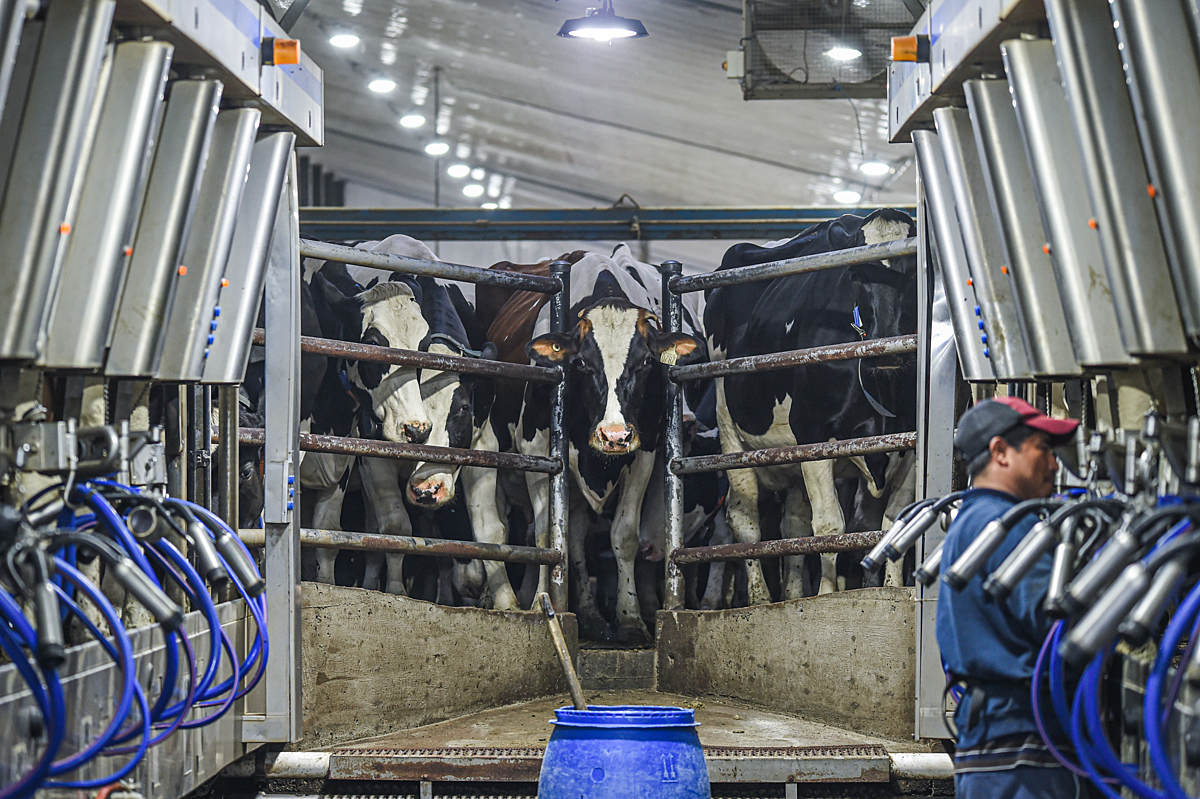
Producing unnaturally high amounts of milk and regularly having their sensitive udders hooked up to milking machinery takes a grueling toll on the bodies of mother cows, often leading to painful bacterial infections called mastitis, nutritional deficiencies, metabolic conditions like hypocalcemia, and other maladies. Some become “downed,” unable to walk or even stand.
In today’s factory farm-dominated food system, commercially raised cows are selectively bred to maximize milk production—particularly Holstein cows, who make up the majority of the U.S. dairy herd. If allowed to nurse her calf, a cow would naturally produce around 2,200 pounds of milk in a year; compare that to over 24,000 pounds of milk per U.S. farmed cow in 2025.

Julie LP/We Animals
Industry marketing often depicts cows happily grazing in lush green pastures. The reality of where dairy milk comes from is very different. It is estimated that nearly 75% of U.S. cows (including those raised for milk and meat) are kept on factory farms.
Consolidation and intensification of the dairy industry have led to fewer farms, with more cows, producing more milk. The total number of U.S. dairy farms has decreased by 95% since the 1970s, while the average number of cows on farms has increased, and over 60% of the nation’s milk supply now comes from operations with more than 2,500 cows.
On intensive dairy farms, cows aren’t able to mate naturally; instead, they are artificially inseminated through a frightening and invasive manual process. Their pregnancies last for nine months (just like that of humans), and as soon as possible, cows are inseminated again as the cycle of pregnancy, birth, and milk production continues.
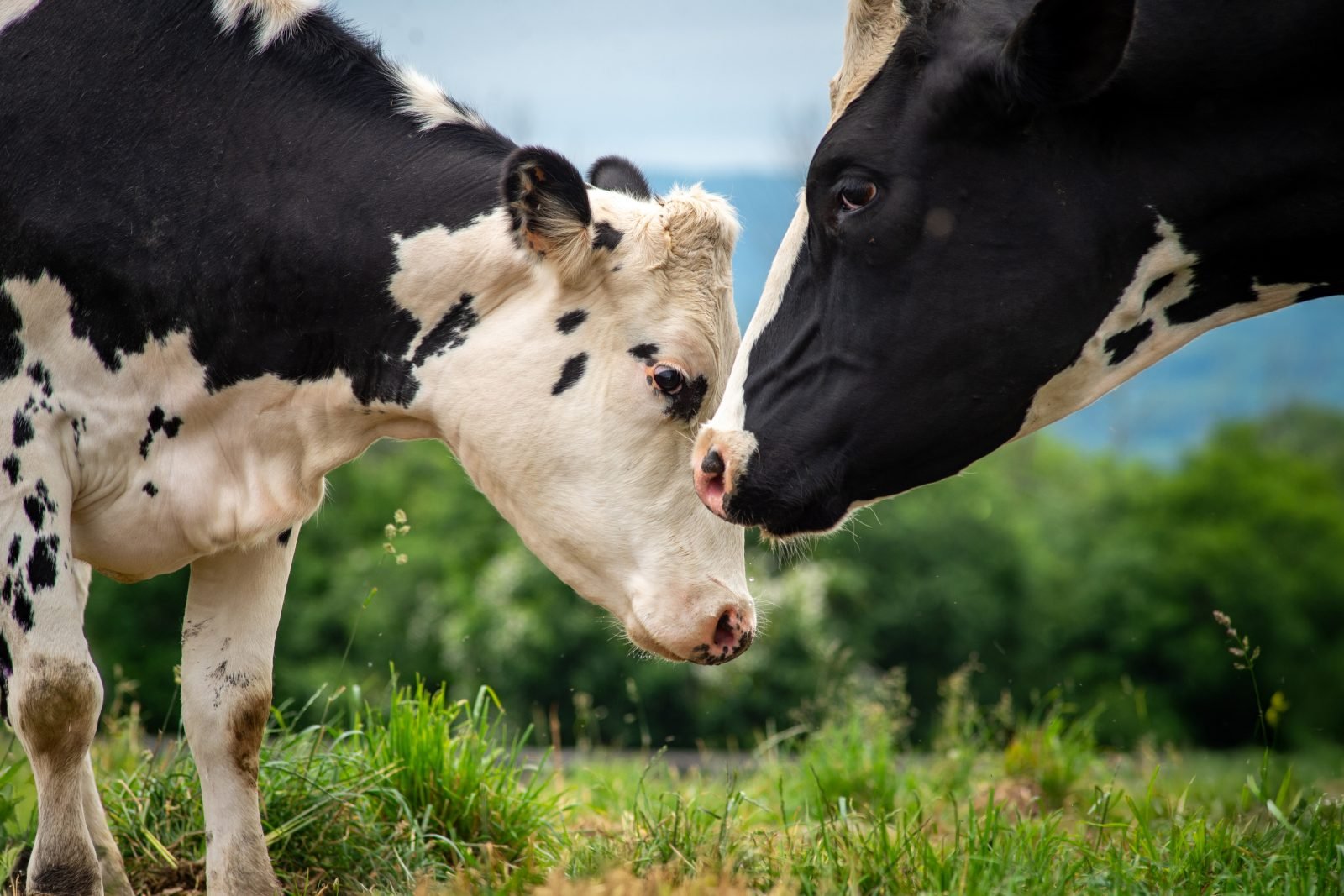
Cows are gentle, loving, and protective mothers. Yet, on dairy farms, although they are pregnant each year of their shortened lives, cows are denied the chance to care for their babies.
Ira Moon/We Animals
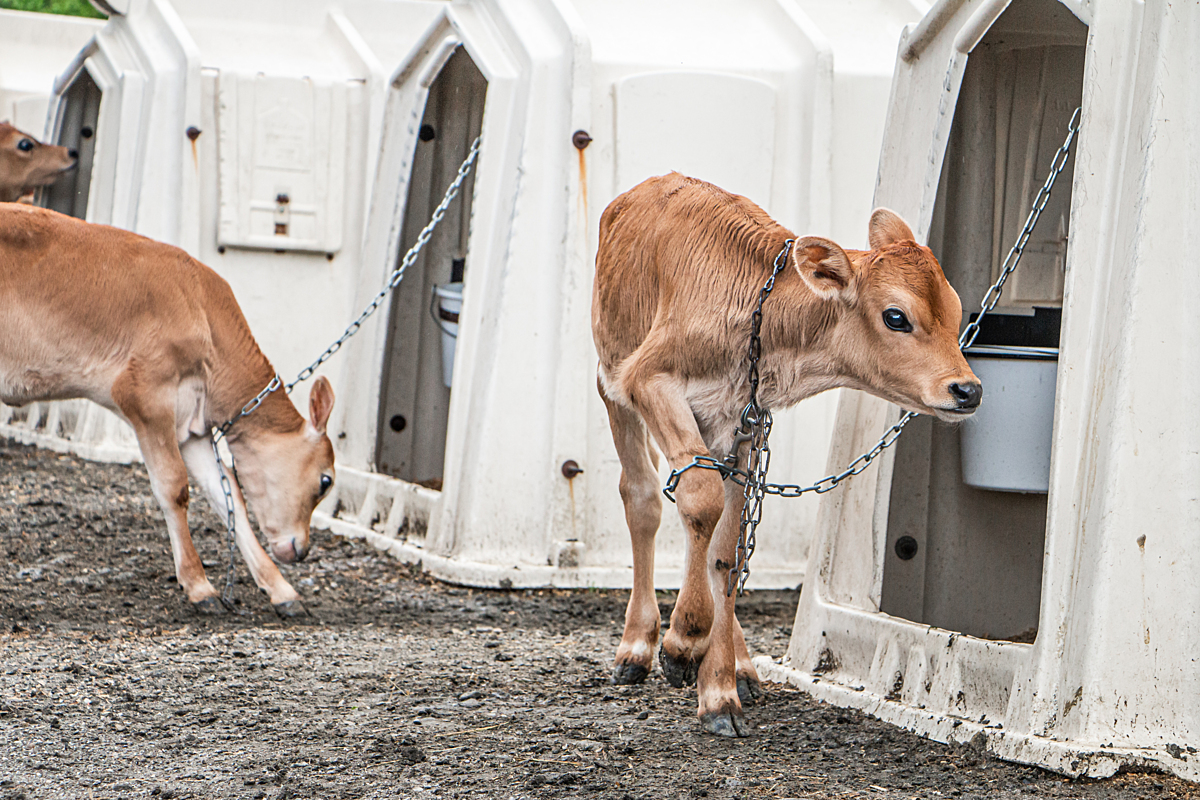
Time and again, shortly after their calves are born on dairy farms, cows are forced to endure having their vulnerable calves separated from them—a practice opposed by most consumers. Forming deep bonds with their young from the start, mother cows are known to cry out in distress or try to follow their calves.
Following these heartbreaking moments, the suffering continues. Female calves are typically exploited for dairy production, like their moms. While some are deemed worthless or killed, male calves are most often sold to be raised for beef or veal. On veal farms, these young calves are chained and confined to tiny crates, where they’re intentionally malnourished simply to achieve the desired color and texture of veal products. While many people forgo veal for its cruelty, many are unaware that it’s inextricably linked to the dairy industry.
Like cows raised for meat, those farmed for their milk are ultimately killed. When these exhausted mothers can no longer become pregnant or lactate, and they are no longer profitable to the industry, they face grueling transport to slaughterhouses. There, lives of suffering end in terrifying and painful final moments as cows are shackled upside down by their legs and moved down the slaughter line.
Most cows raised for dairy are slaughtered at just 5-6 years old, living for only a small fraction of their natural lifespan of up to 20 years.
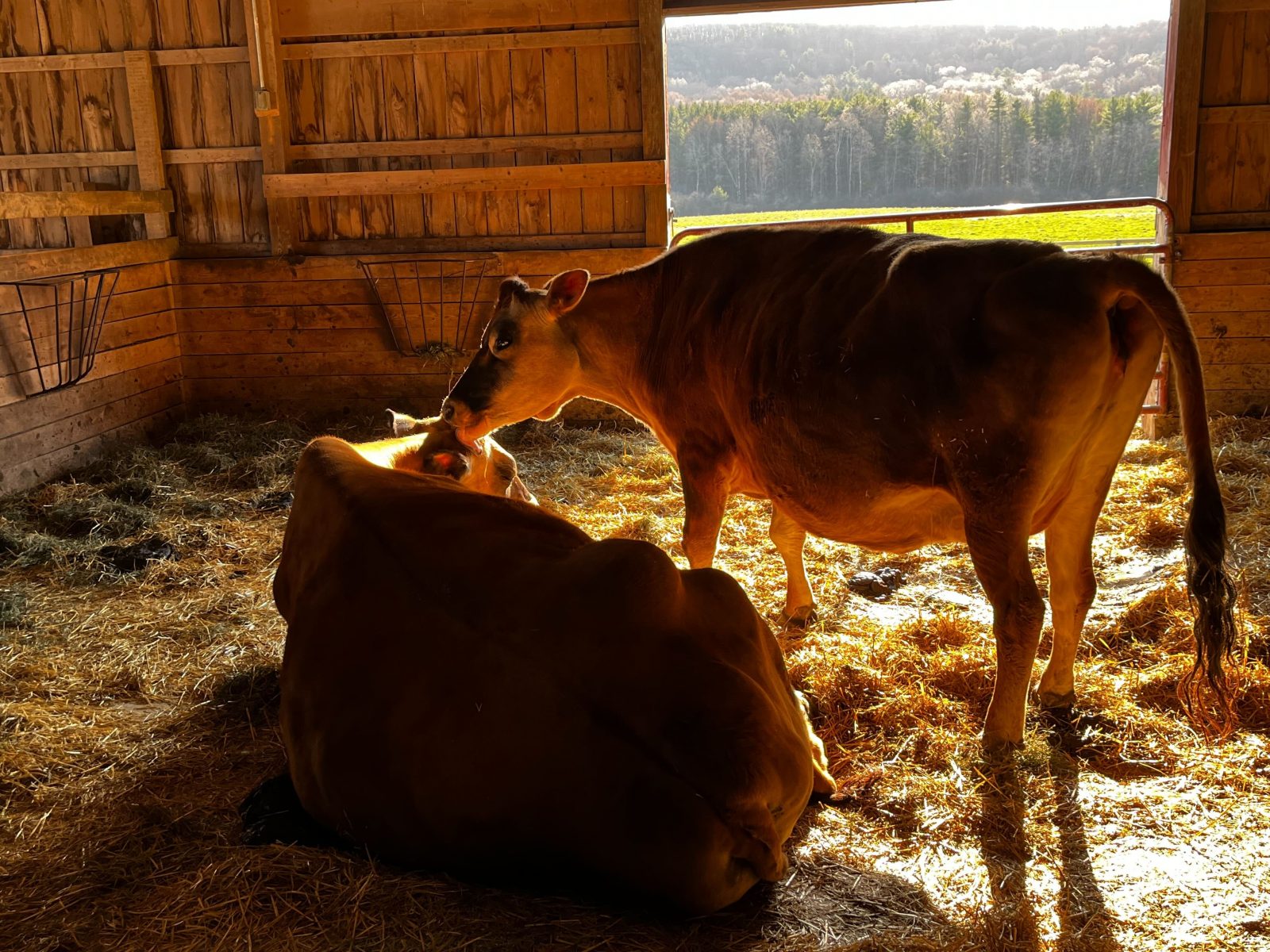
Liz grooms her son Cashew, who’s grown up by her side at Farm Sanctuary.
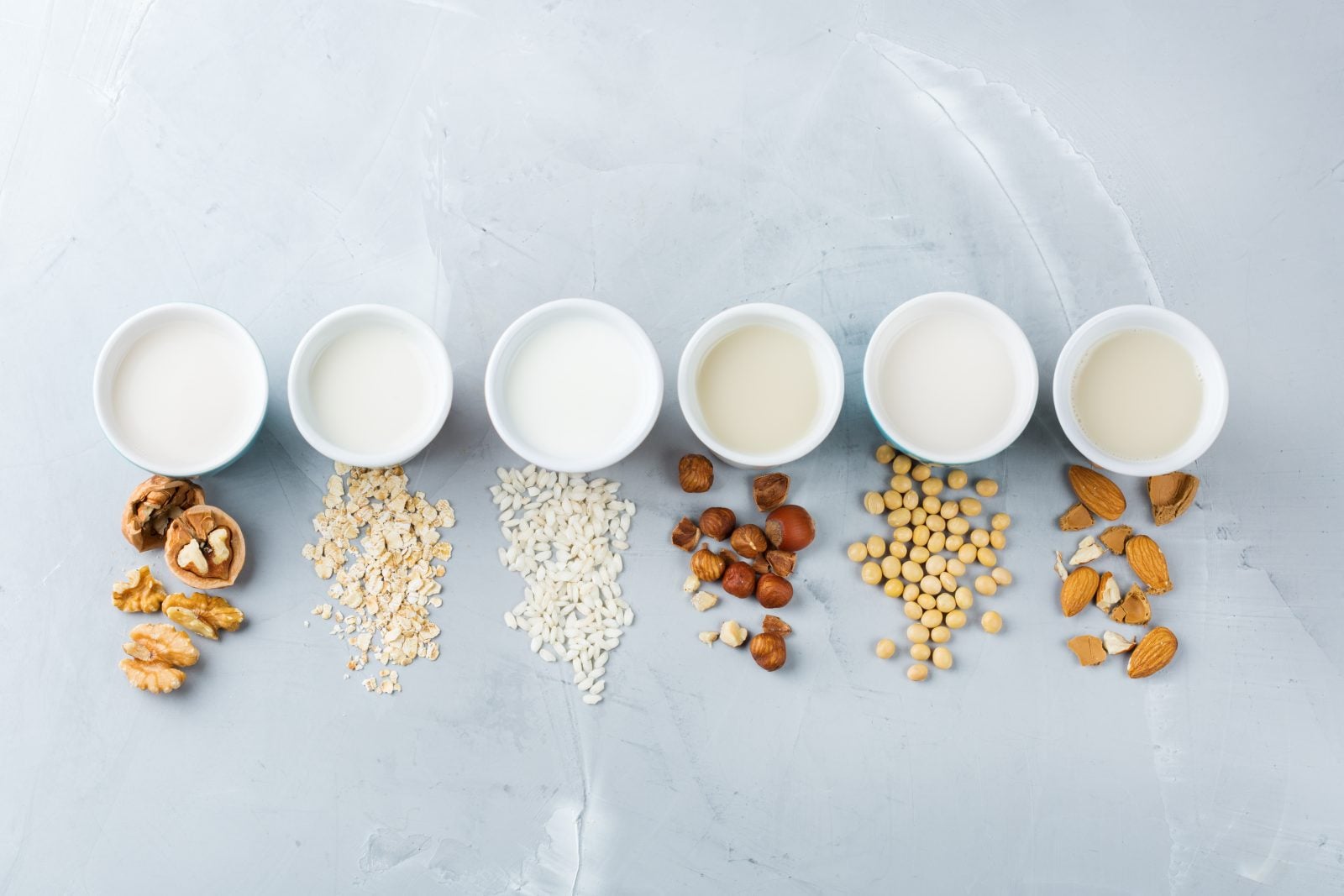
Americans had been drinking less and less dairy each year since 1975, until a slight increase in cow’s milk consumption in 2024, attributed to a heavy focus on protein. But you can easily and healthfully meet your protein needs with a plant-based diet! In recent years, many consumers have turned to plant milks for their health and animal welfare.
With simple dietary swaps, you can oppose the cruelty of factory farming and stand up for mother cows and their calves.
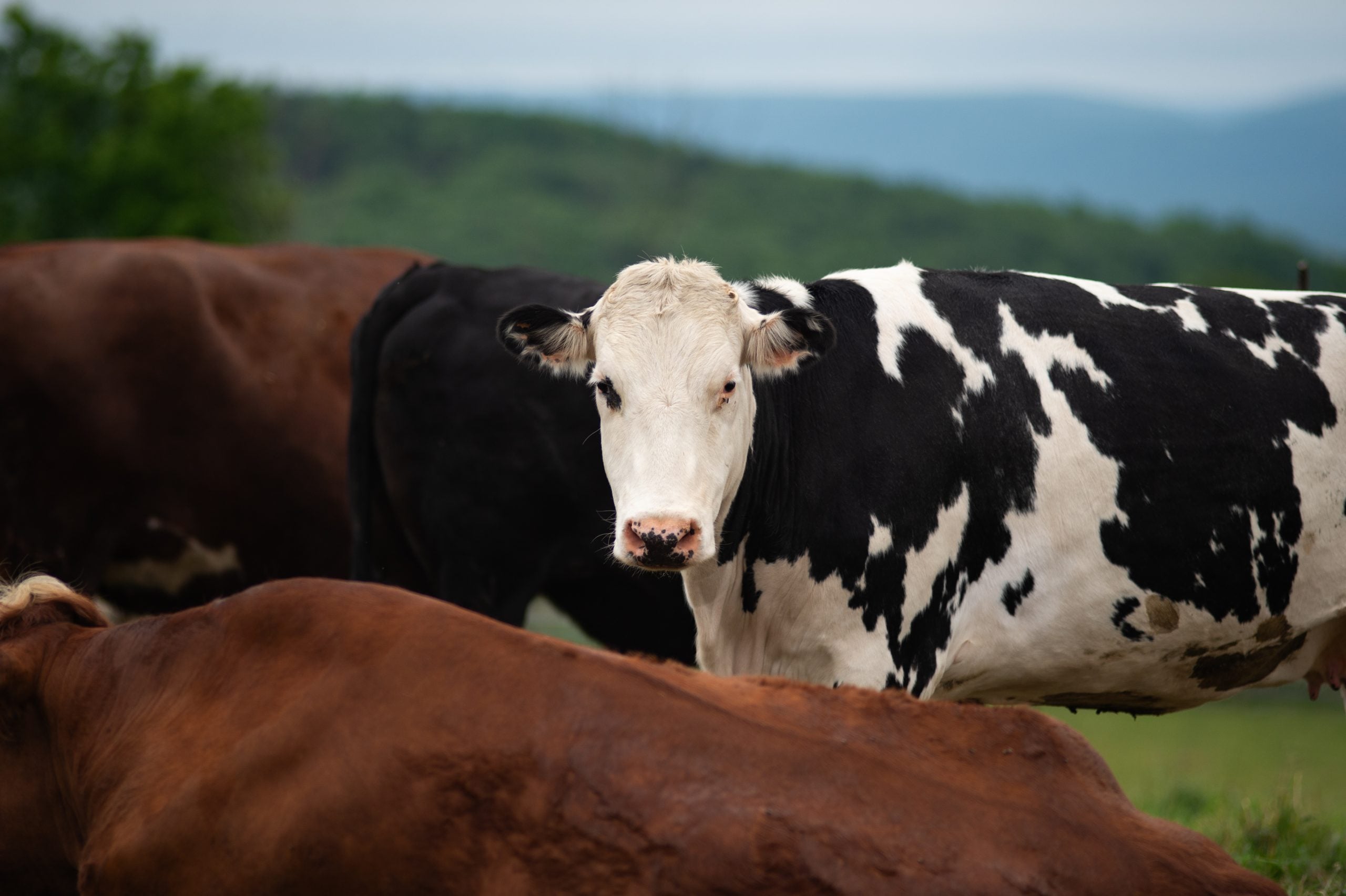
Farm Sanctuary is home to hundreds of rescued farm animals, including dairy survivors like Olive. By sponsoring Olive, you’ll not only support her lifelong care at Farm Sanctuary but also further our efforts to protect all farm animals from cruelty.
Pregnant and afraid, Olive escaped a dairy farm and fled into the woods. Sadly, she lost her calf, but at sanctuary, her heart has healed, and she’s overcome the traumas of her past. She’s surrounded by friends and valued for who she is—not what she can produce. Stand with Olive today, and stand with cows everywhere.