Every Animal Deserves to Enjoy Spring: A Photo Essay

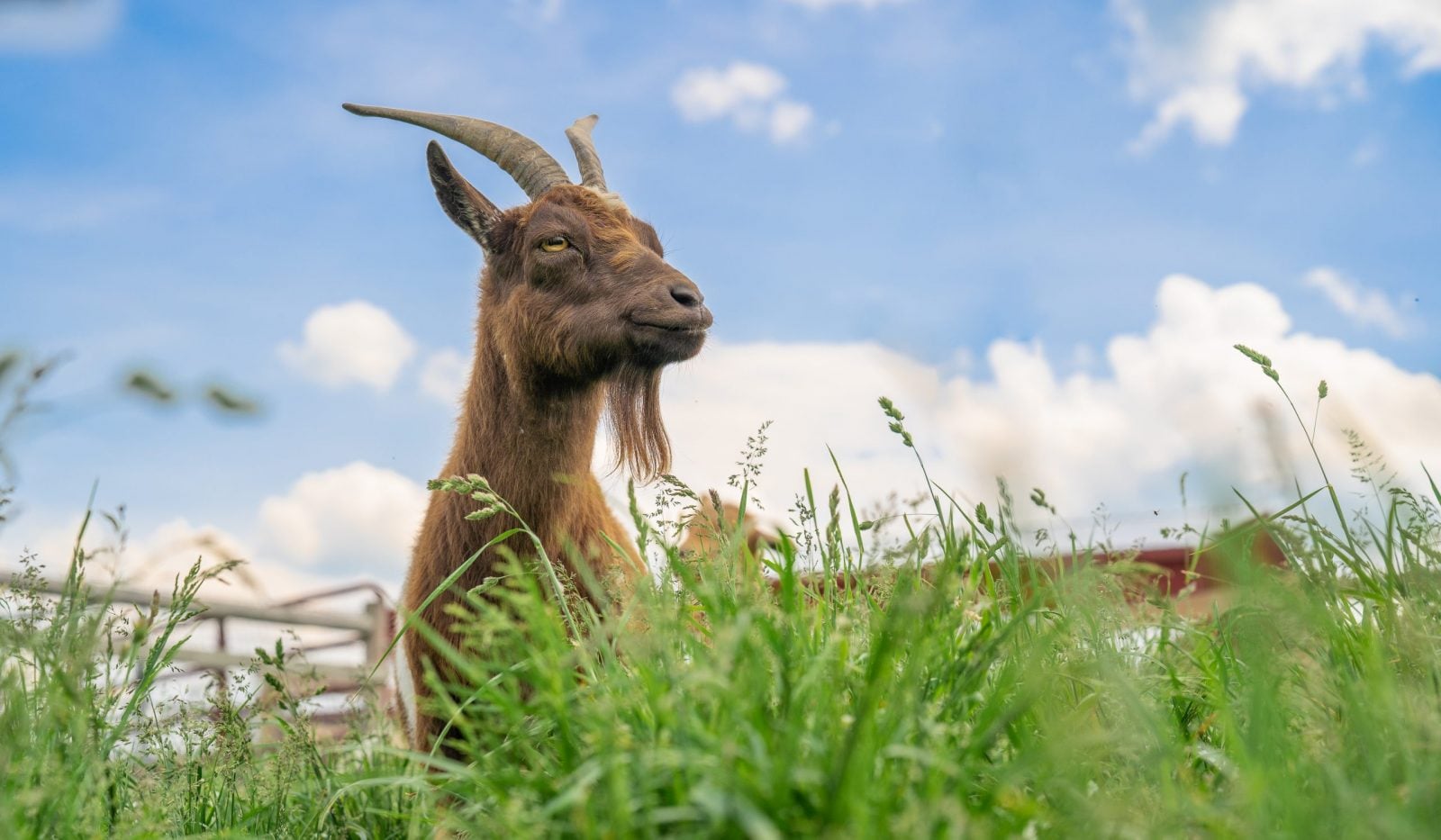
Rescued mini goat Aretha stands in tall grass pasture in front of fence and bright blue sky with clouds at Farm Sanctuary

Every Animal Deserves to Enjoy Spring: A Photo Essay

As our resident animals revel in springtime at the sanctuaries, billions of animals still suffer in the food system, where they’re denied the joy and freedom every animal deserves. These photos show these two opposing realities—one rooted in compassion, the other in exploitation.

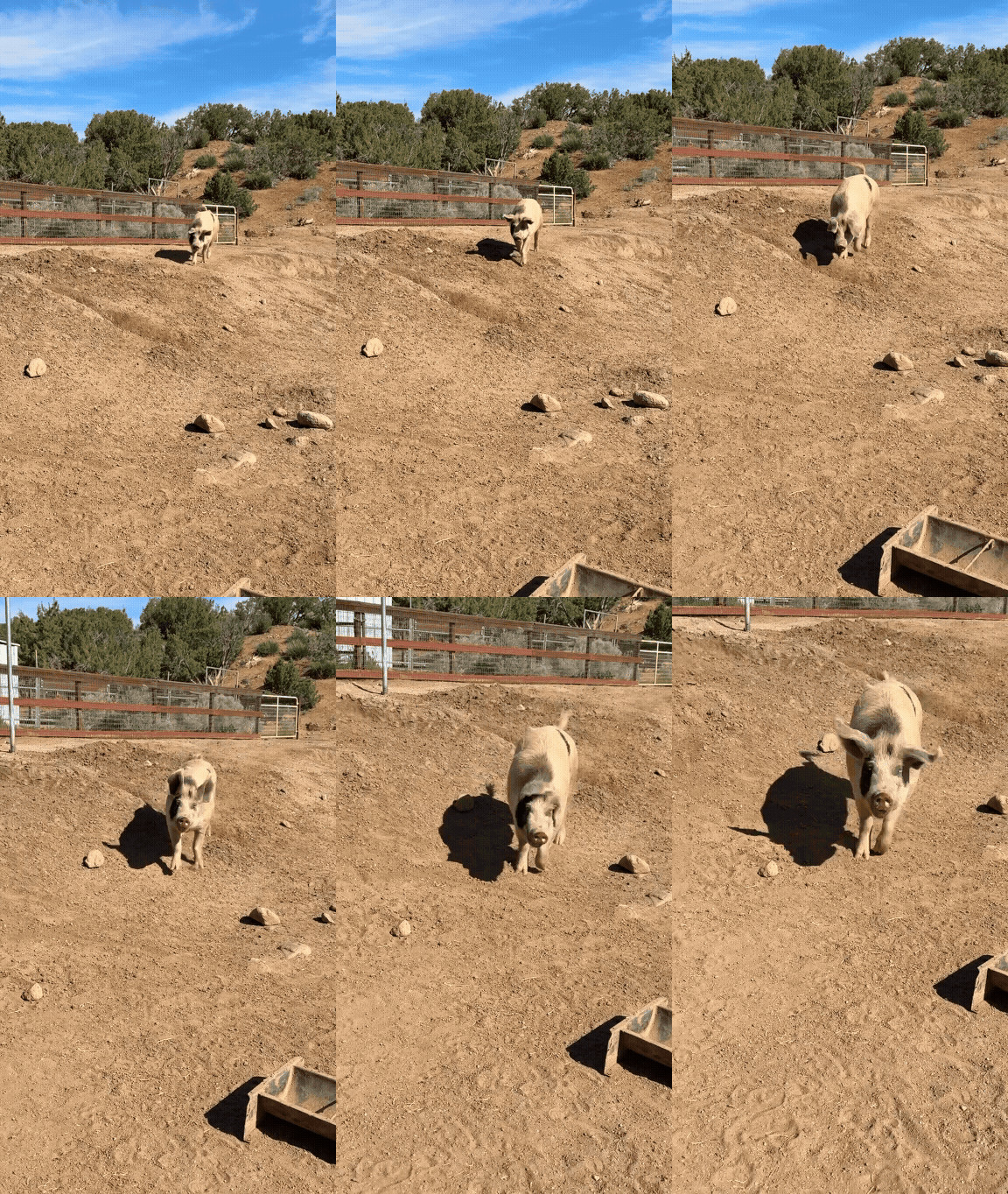
With spring in full bloom, the rescued animals of Farm Sanctuary are delighting in the gentle breezes and sun-drenched days. Sheep smile in the sunshine. Pigs like Boris befriend members of other species. Chickens roost, dust-bathe, and even throw parties.

Yet, while our residents lead rich and happy lives, billions of animals equally deserving of freedom and compassion are still suffering in the food system. Ten billion animals are killed for food each year in the U.S. alone. Over 99% of them are raised in overcrowded and inhumane factory farms, where their natural behaviors and freedoms are denied, and what they can produce for the profit of mega-corporations is prioritized.

The following photos contrast our joyful sanctuary spring with the hidden bleakness of factory farms, demonstrating the importance of our work to build a compassionate world for all animals.
Overcrowding vs. ample space

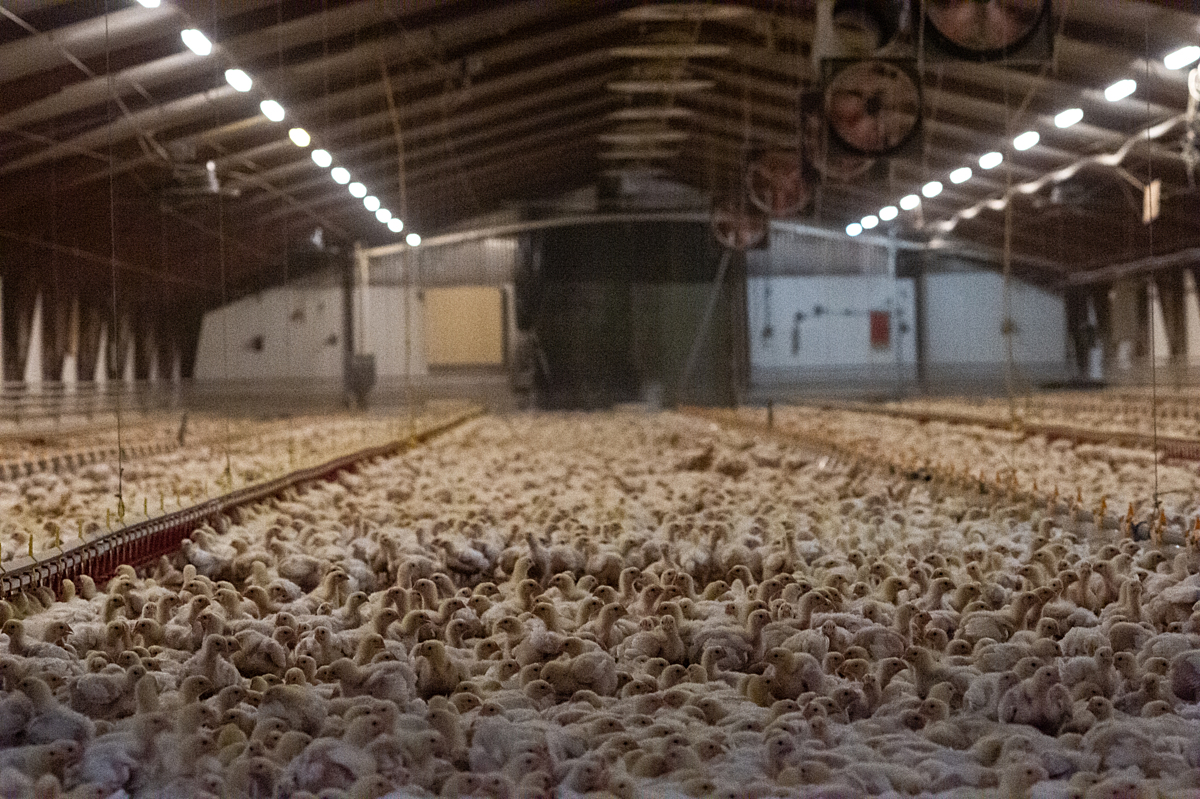
Young factory farmed broiler chickens in a crowded barn

Jo-Anne McArthur/We Animals

In factory farms, animals are confined to warehouse-like buildings, unable to access the outdoors or engage in natural behaviors. Chickens raised for meat, for example, are cooped up in sheds with as many as 20,000 fellow birds, each with only an area the size of a piece of paper to inhabit.

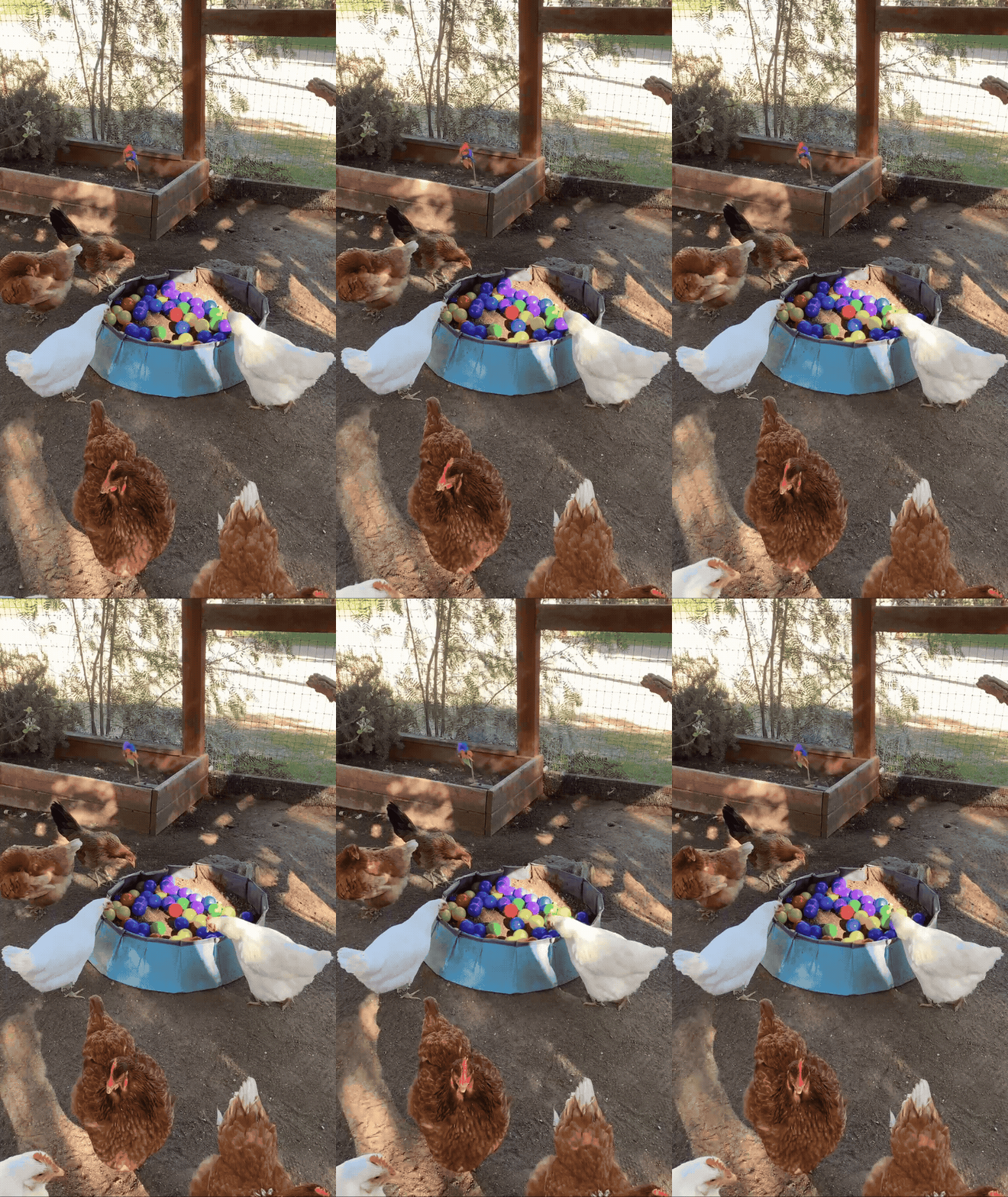
At Farm Sanctuary, the resident animals have rolling pastures to explore, as well as enrichment activities—like music and puzzle toys—to keep them engaged and fulfilled. We even throw an occasional ball-pit party for the chickens!

Separation vs. friendship

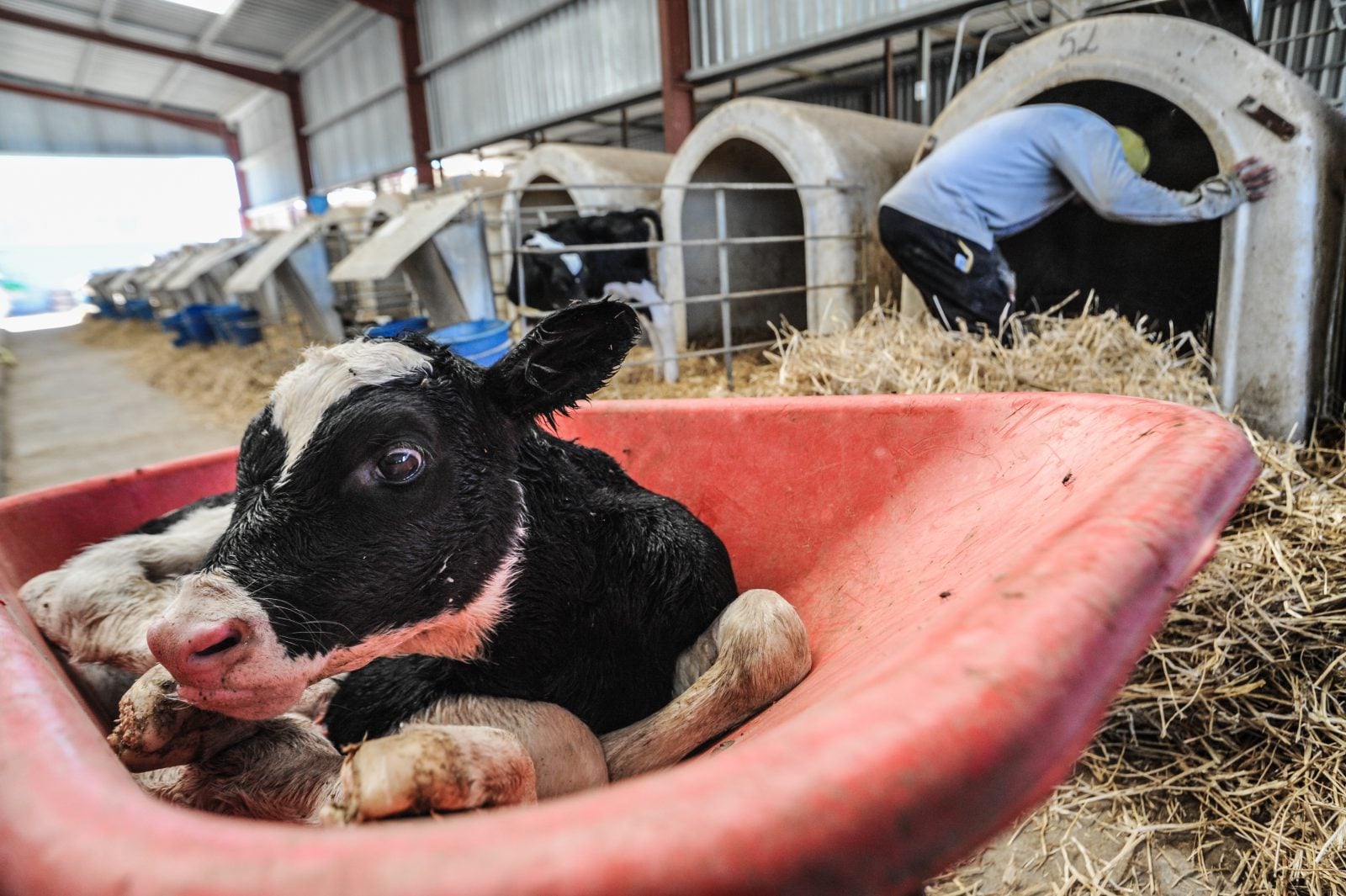
Still wet from birth, a newborn calf at a dairy farm lies in a wheelbarrow before being wheeled away from her mother and put into a veal crate at a dairy farm.

Jo-Anne McArthur/Animal Equality/We Animals

Cows used to produce milk spend their lives in constant cycles of forced pregnancy and separation from their calves within hours of birth. This unnatural separation causes both mother and calf to mourn, and calves to become sick and lose weight. 

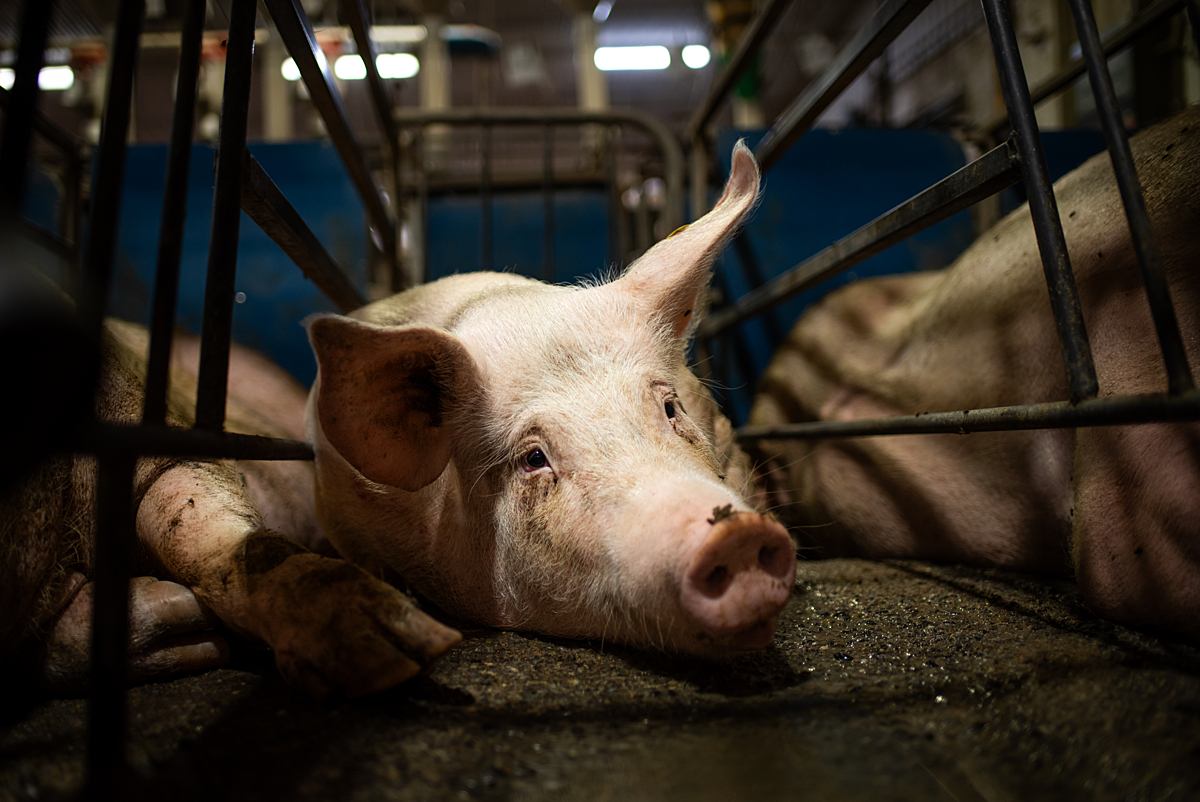
Mother pigs fare no better. Most female pigs spend their lives behind bars—in gestation crates when pregnant and in farrowing crates during and after they give birth. Not only are they separated from their piglets, but they’re confined to a space so small they can’t even stretch or turn around.

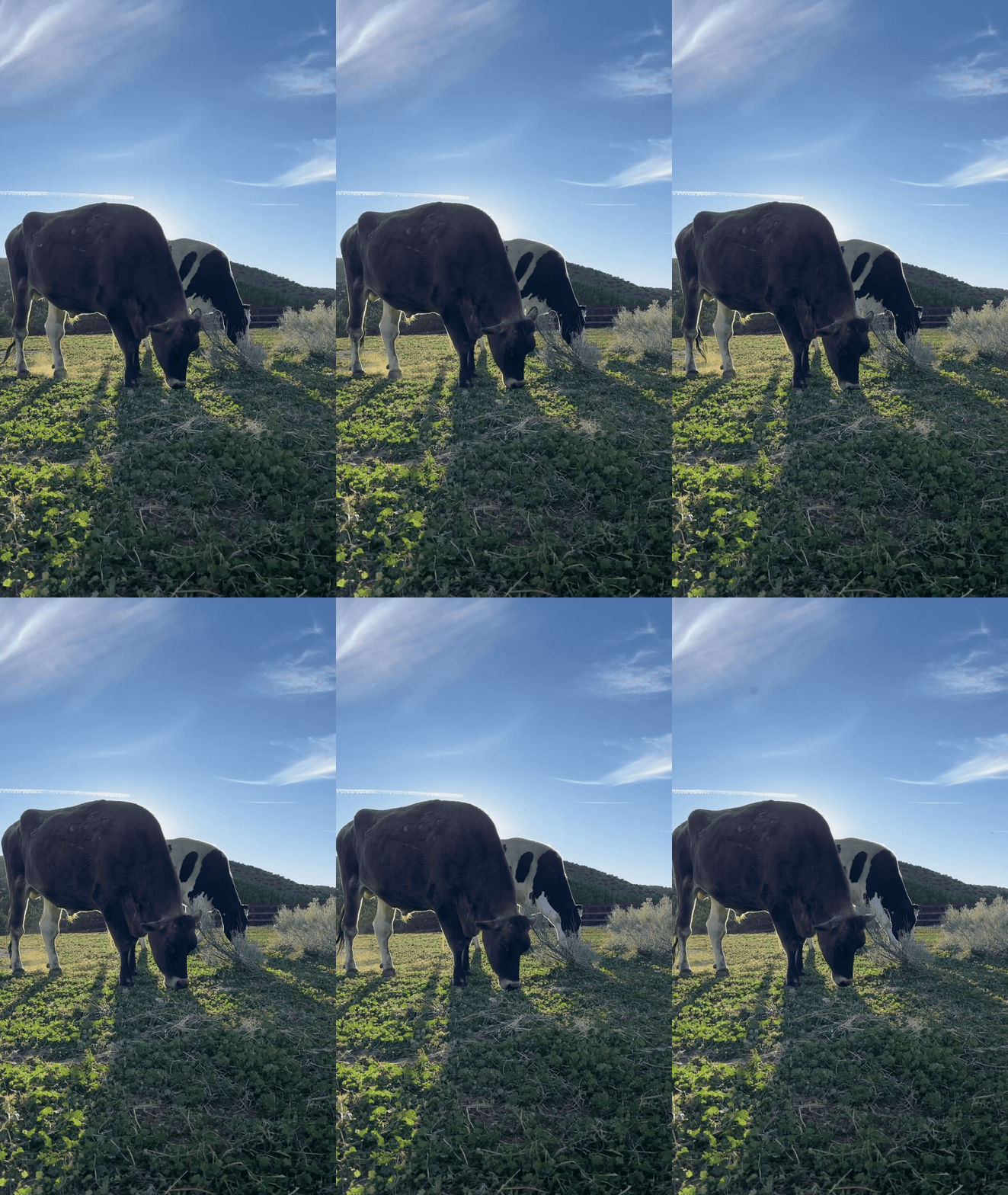
At Farm Sanctuary, Oscar spends his days free to roam, graze, and frolic with the companions he treasures most, Leo and Omi. These steers—like every animal at the sanctuary—are seen for who they are: living, feeling individuals with the capacity to develop close friendships and lifelong bonds.

Filthy facilities vs. clean comfort

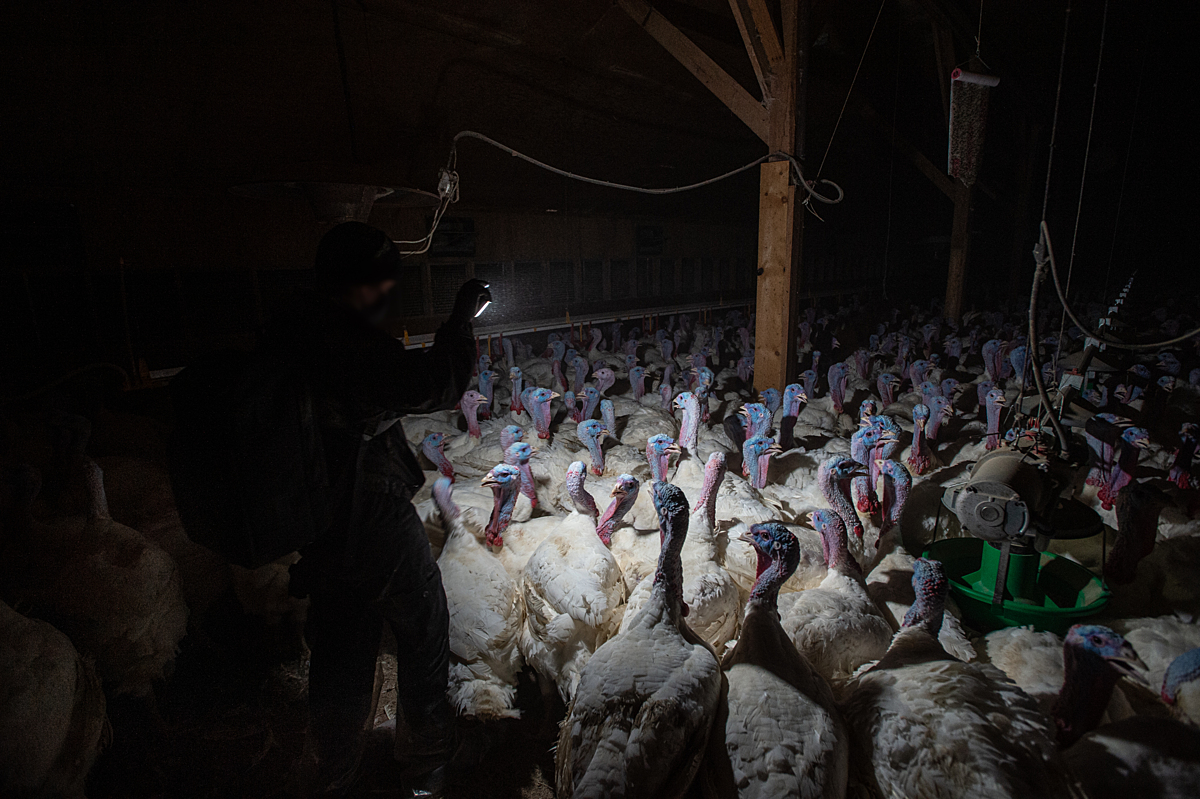
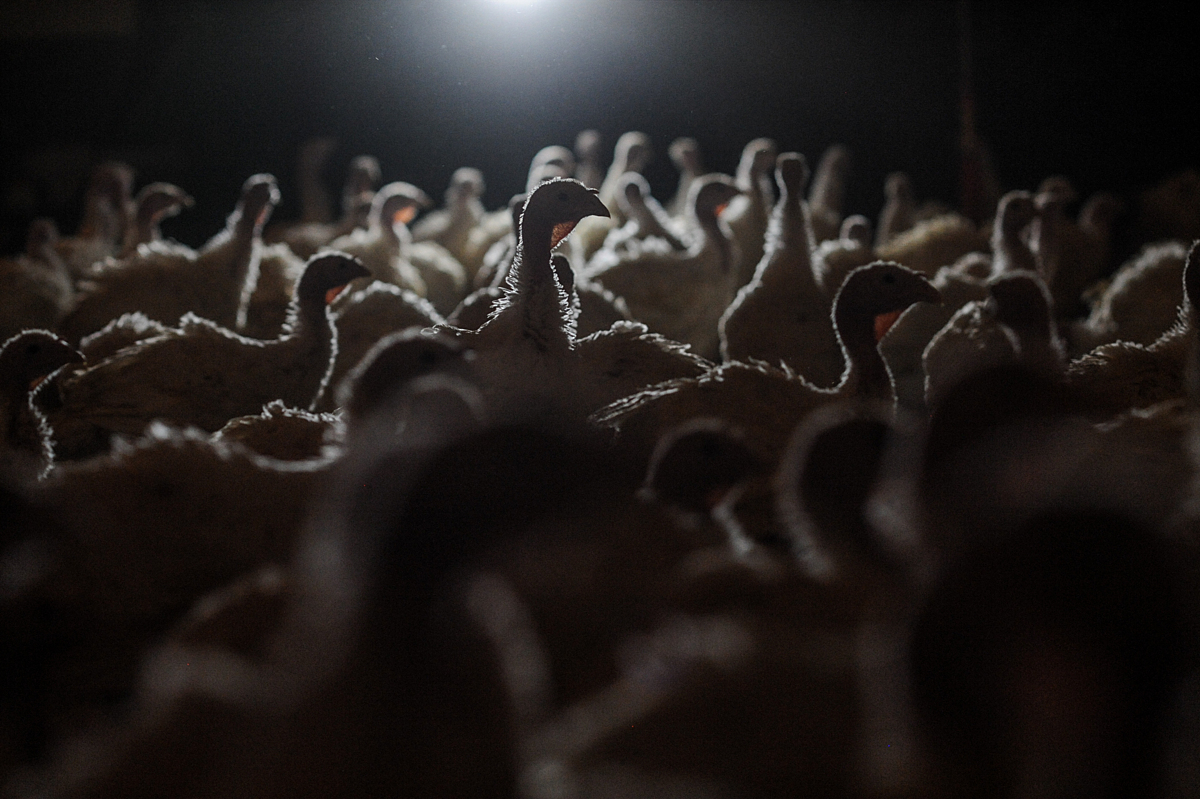
Investigators document the crowded conditions inside a turkey factory farm.

Jo-Anne McArthur/We Animals

Health issues run rampant in factory farms, especially in the warehouse-sized sheds that pack in tens of thousands of chickens or turkeys. The poor ventilation and overcrowding in these facilities fill the air with dust and ammonia, causing respiratory damage and irritated, swollen eyes for both the animals and the workers.

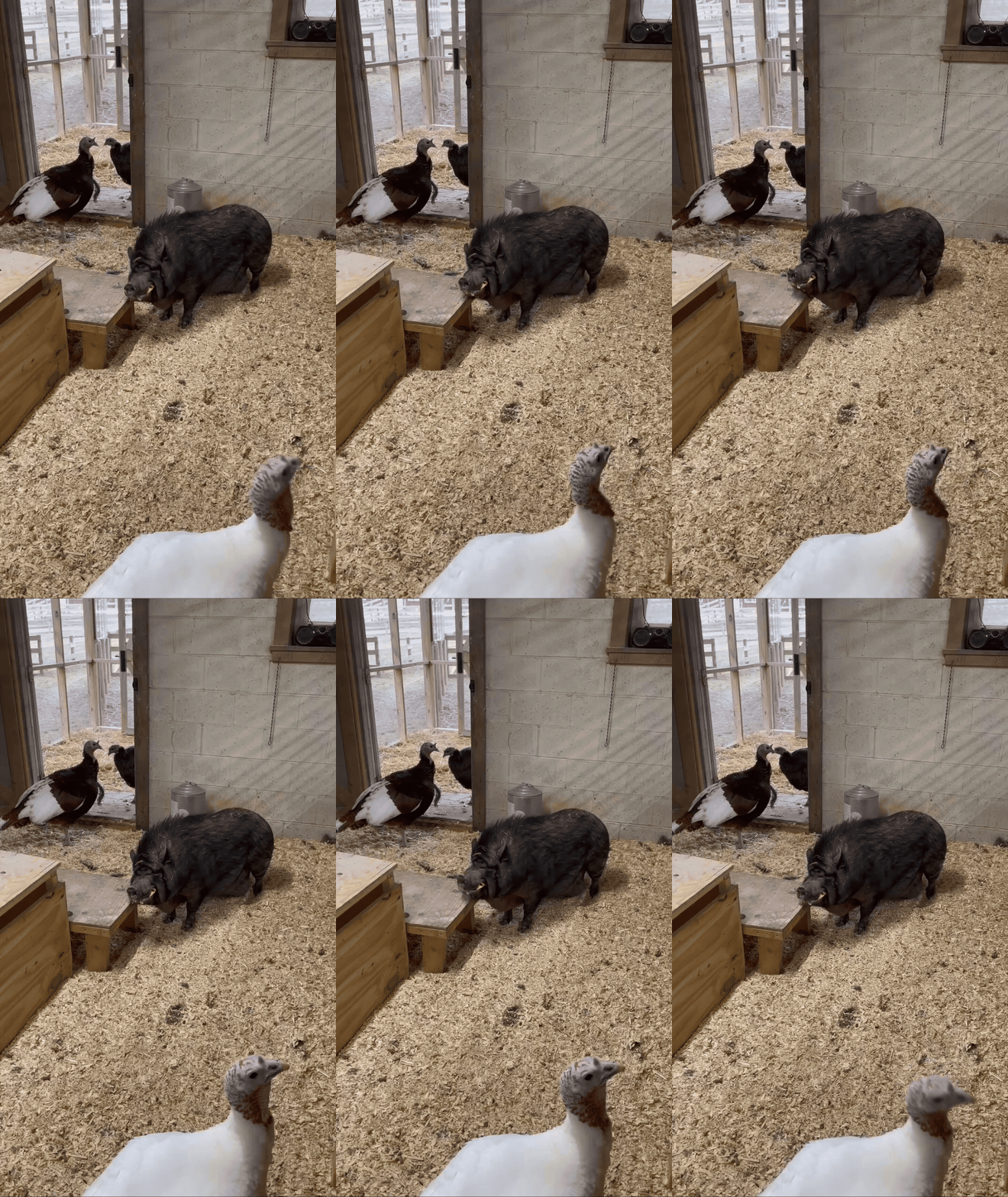
At Farm Sanctuary, we clean everyone’s living quarters daily to maintain a sanitary and comfortable place for the animals to play during the day and lay their heads at night. In fact, sometimes the turkeys’ aviaries are so clean that they even invite visitors of other species—like Boris, pictured above, enjoying the turkeys’ fresh sawdust and giving himself a satisfying head scratch on their steps.

Mutilation vs. unique style

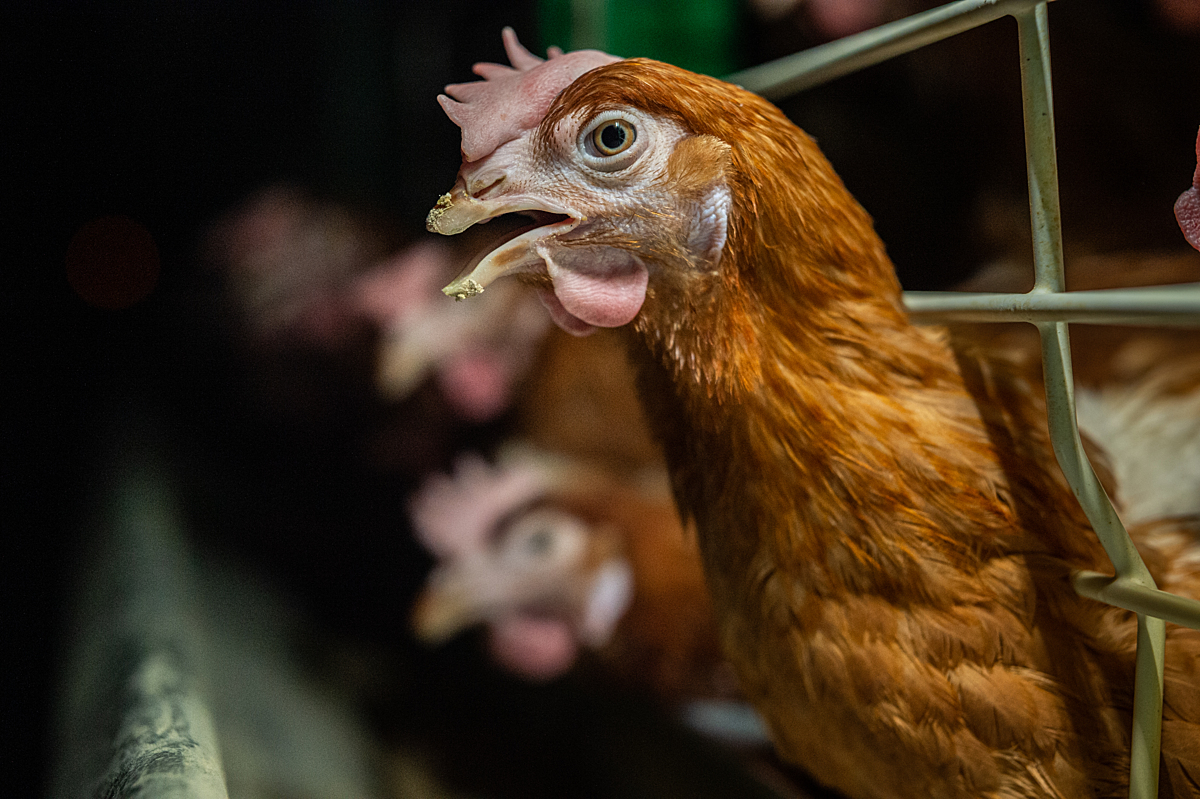
Layer hens in battery cages on a factory farm.

Jo-Anne McArthur/Animal Equality/We Animals

The extreme confinement of animals raised for food can cause anxious behaviors like aggression and self-harm. Factory-farmed chickens commonly peck at their feathers, and this overgrooming actually increases the amount of food the chickens need to regulate their body heat, cutting into farm owners’ profits. Instead of improving conditions to prevent stress among the birds, farmworkers routinely perform painful mutilations like “debeaking,” or severing the tip of a chicken’s beak with a hot blade or electrodes and a high-voltage current.

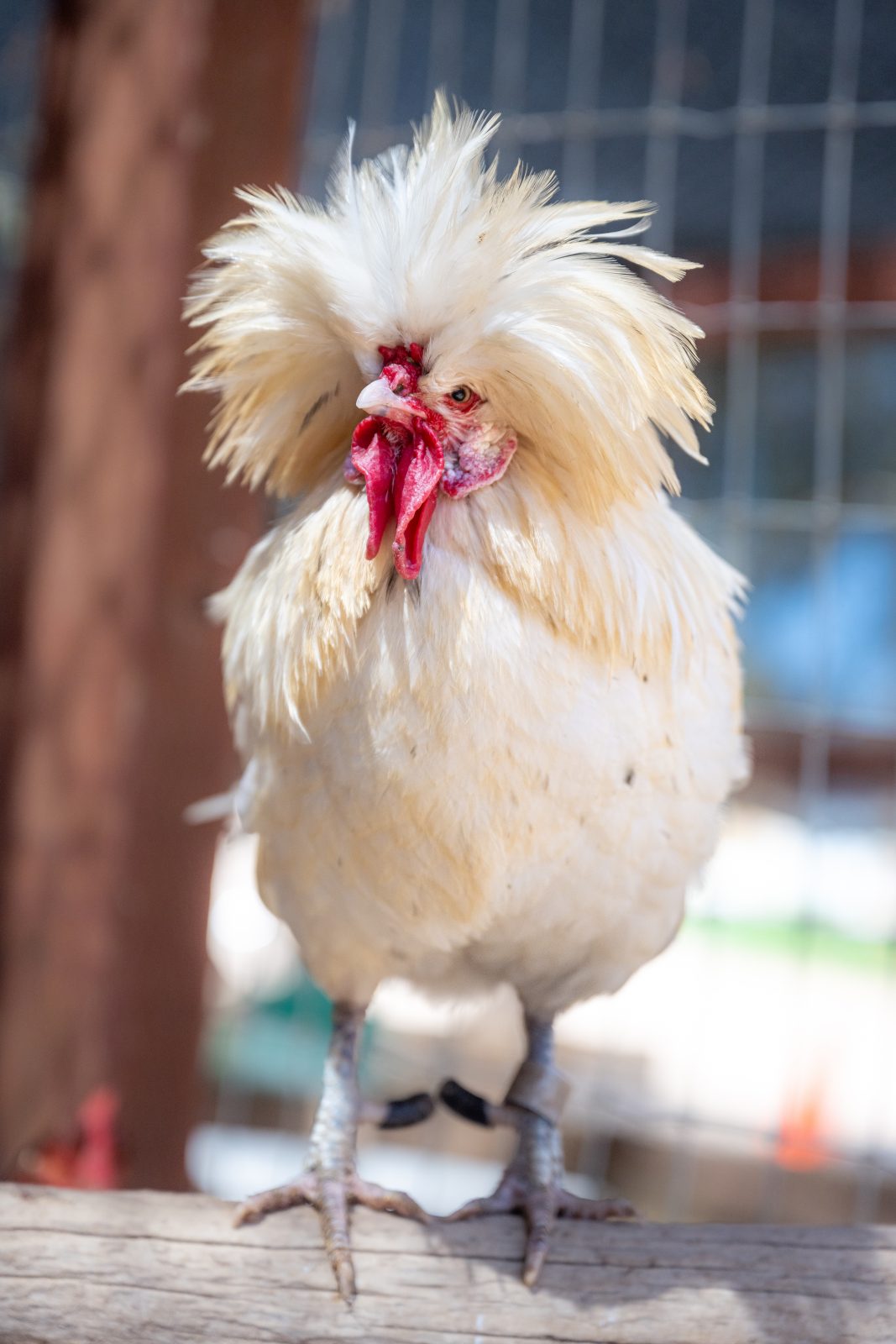
Rescued rooster David Bowie stands on wooden perch

David Bowie seems to revel in his radical style and good looks—especially the large crest of feathers on the crown of his head, typical of Polish chickens like him. Ruler of his roost, David Bowie devours his midday salad and parties it up in the aviary, flirting with his groupies—the resident hens. All the chickens at Farm Sanctuary are encouraged to be their stylin’ selves and provided ample space and freedom to dust bathe, which helps them to keep cool, socialize among their flocks, and maintain healthy skin and feathers.

Killed young vs. allowed to grow old

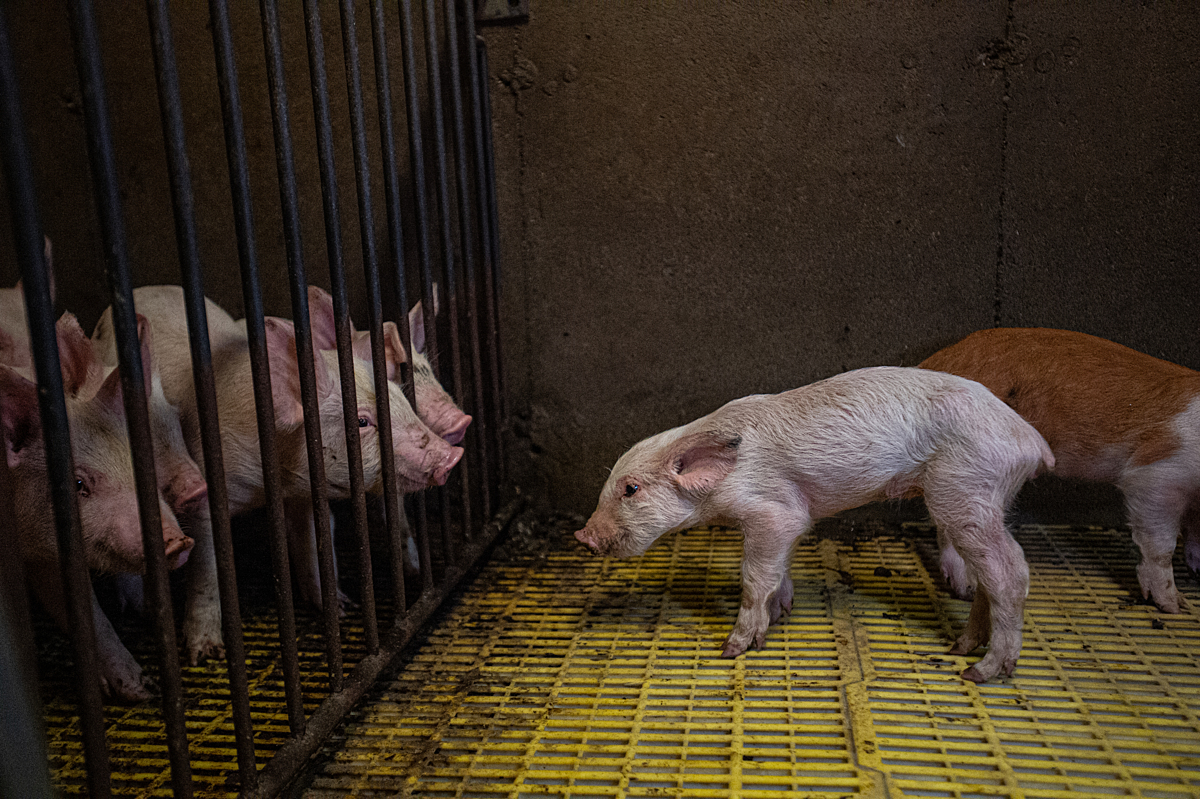
Curious piglets look at one another from inside a small pen. The pig on the right is ill and too thin. At this farm, there are no windows facing the exterior and the pigs live in darkness.

Jo-Anne McArthur/We Animals

Animals in factory farms face slaughter well before their natural lifespans would come to an end. Since U.S. consumers prefer meat from lambs, 90% of sheep are killed between 6 and 8 months of age. This taste for meat from younger animals extends beyond sheep, too. Calves raised for veal are killed between one and six weeks old. Even when no taste preference exists, the economics of raising animals as profit-making machines incentivize early slaughter: pigs are killed at 5-6 months, turkeys at 10-17 weeks, and chickens at just 5-6 weeks.

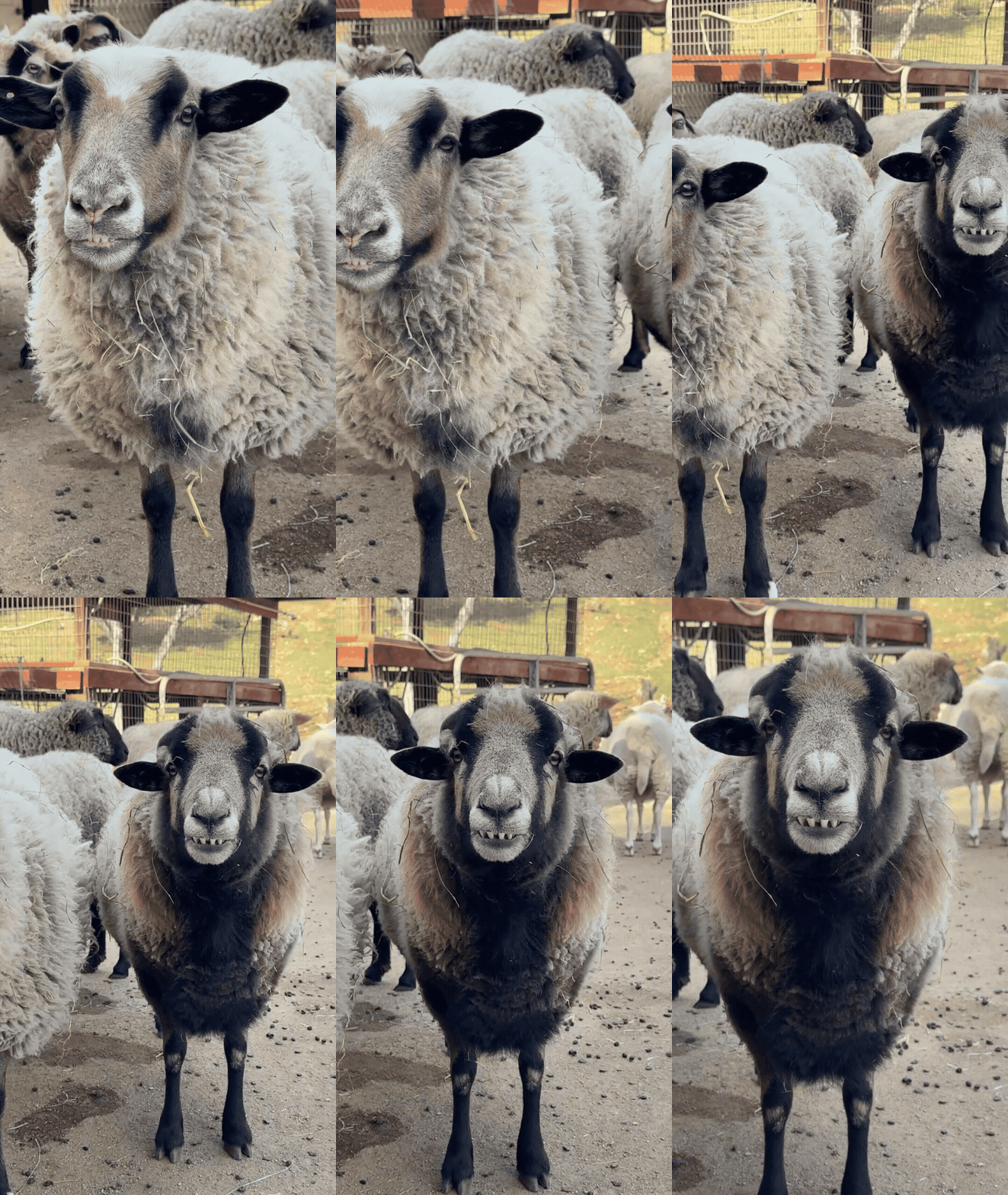
The sheep at Farm Sanctuary have a lot to smile about, no matter their stage of life. Not only are they allowed to grow old, but they’re given all the medical care and special attention they need as they age. Young or old, they enjoy grazing in the pastures, spending time with their friends, and frollicking with the joy and abandon of knowing they’re safe from harm.

Downed animals vs. lifted spirits

A sow stares through the bars of a cement-floored gestation crate at a pig breeding facility.

Balvik C./We Animals

Every year, at least half a million pigs arrive at slaughterhouses unable to even walk or stand. Referred to as “downed” animals, their lameness is often caused by stress from confinement or an injury sustained on the truck bringing them to slaughter. Downed animals often lie on and drag themselves across waste-laden feedlots and truck floors, increasing their risk for contracting diseases and infections that can spread to humans. While the USDA has banned the slaughter of downed cows for human consumption, killing downed pigs for food remains both legal and common.

Farm Sanctuary is a place where spirits are lifted. Here, animals who were once victims of the food system can heal from past pain and enjoy lifelong refuge, compassion, and peace. Happy pigs can commonly be heard snorting as they saunter through the pasture—ears flopping with every bouncy step as they delight in the simple yet powerful experience of being themselves.

Hidden from view vs. visitors welcomed

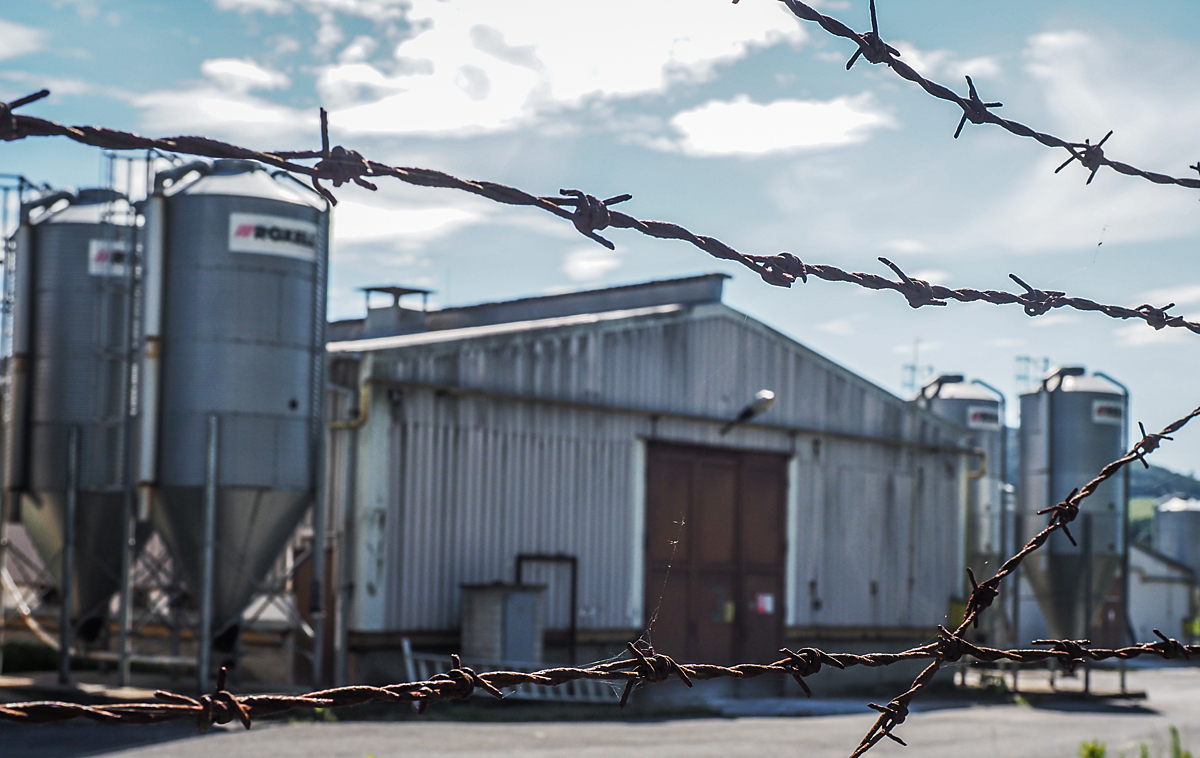
The exterior of a barn and feed hoppers on a Czech factory turkey farm

Lukas Vincour/Zvirata Nejime/We Animals

Considering the cruel and oppressive conditions of factory farms, it’s no wonder these facilities are kept largely hidden from the public. The industry chooses remote rural locations for its factories and feedlots, uses misleading marketing to sell a cheerful lie, and advocates for and relies on “Ag-Gag” laws to criminalize any documentation of the filth, extreme confinement, and animal suffering.

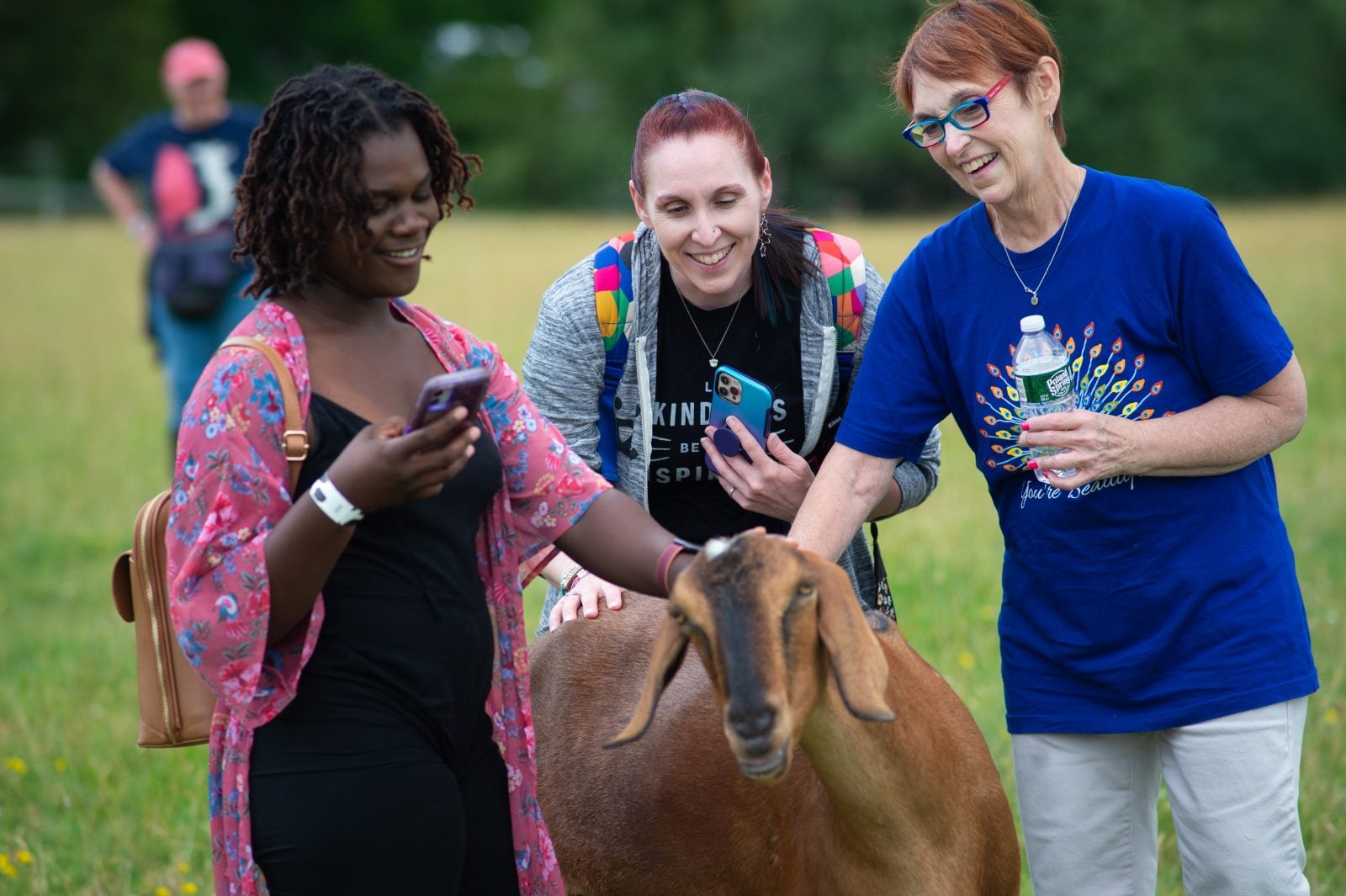
Three smiling guests pet rescued goat Halbert in pasture at Farm Sanctuary

Farm Sanctuary proudly welcomes the public to both of its locations—in Upstate New York and Southern California. People from all over the world come to tour the grounds and meet the resilient and awe-inspiring survivors of the industrialized food system. Learning about the individuality of farm animals instills compassion and moves us toward a world where all animals are freed from factory farming.

The power of sanctuary

Farm Sanctuary works year-round to rescue animals suffering in the food system—and provides lifelong care and refuge from the horrors of their past. Our sanctuary residents experience the peace and safety that every animal deserves.

While we can’t rescue all the animals in factory farms, we can heal the animals in our care and tell their stories to change thousands of hearts and minds. We can advocate for a just and sustainable food system rooted in compassion, one that serves animals, people, and the planet. That’s been our mission since our founding 40 years ago.

Together with caring individuals like you, these efforts are building a world where all animals are valued—not for what they provide us, but for who they are.

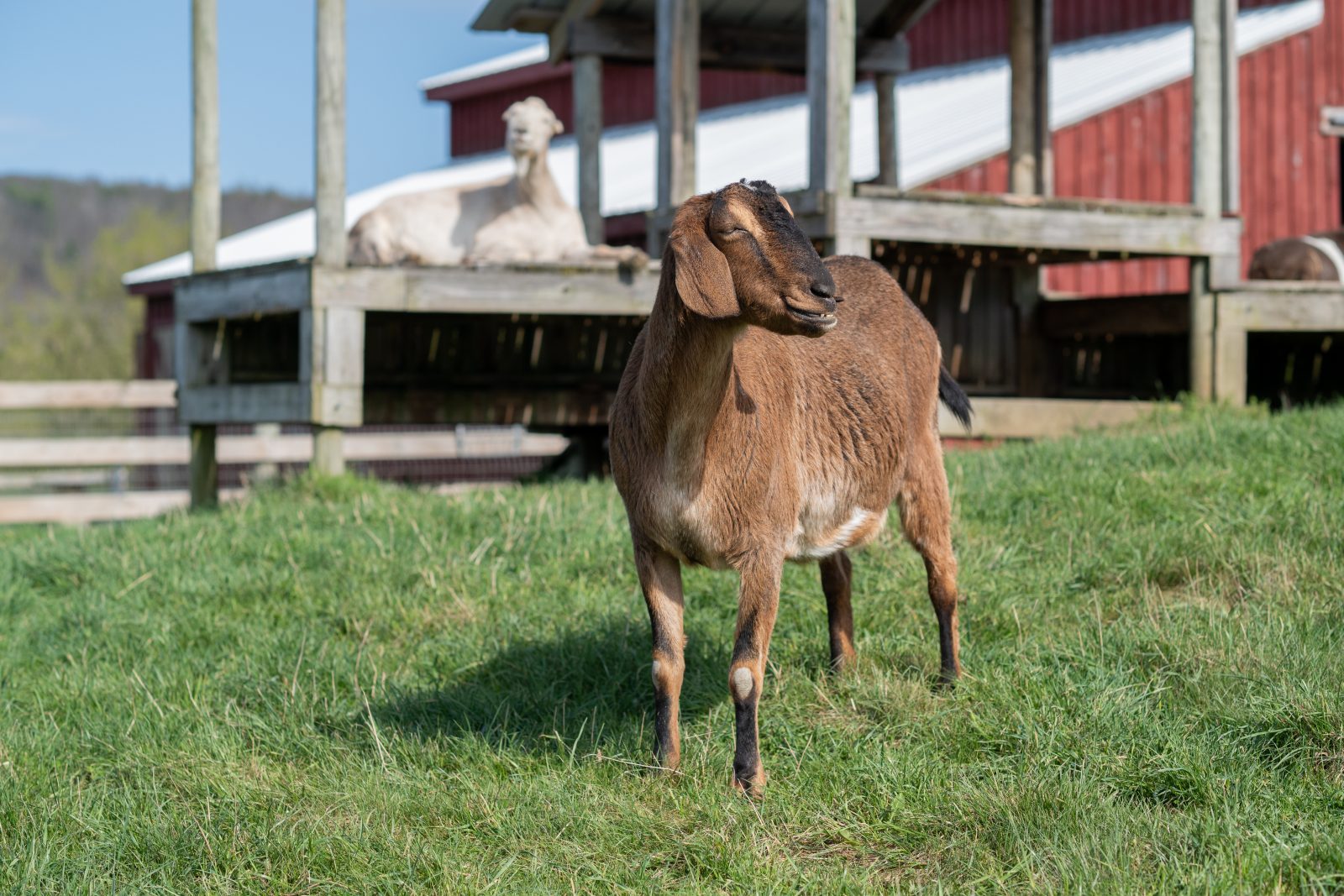
Rescued goat Halbert stands in pasture with another goat on a wooden play structure and a red barn in background