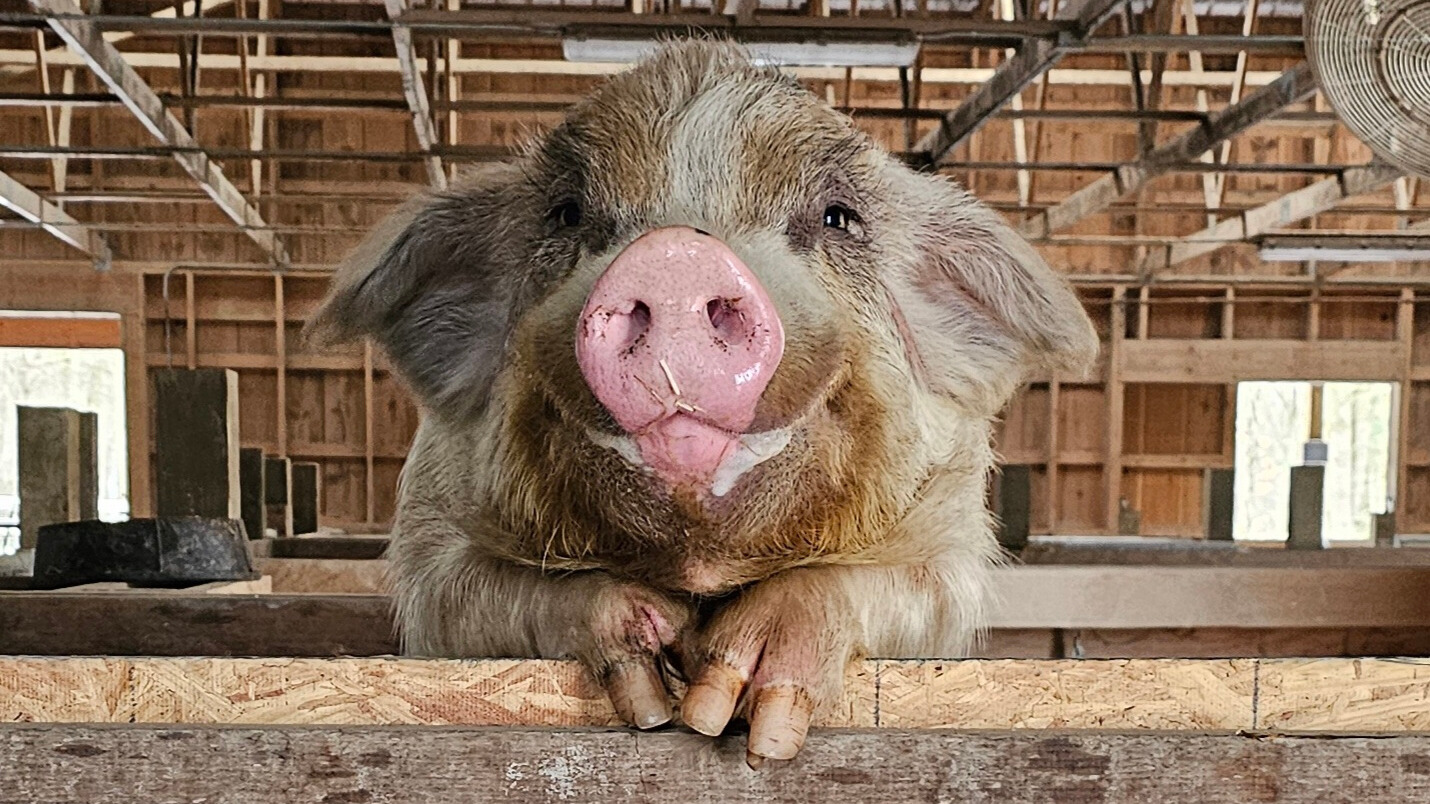


Yet, the public is often unaware of the daily suffering of these smart and social animals, kept behind the closed doors of factory farms.
Read on to discover more about the lives of farmed pigs—and how you can make a difference.
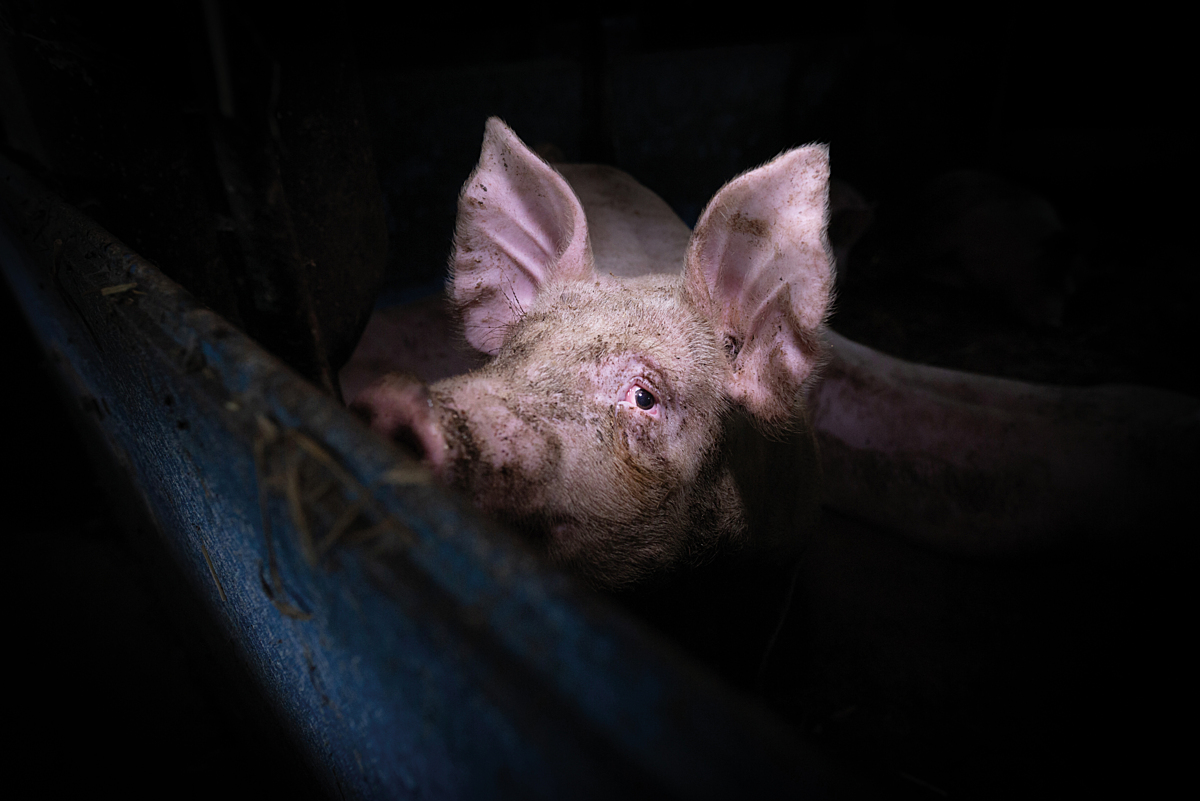
Konrad Lozinski/HIDDEN/We Animals
Konrad Lozinski/HIDDEN/We Animals
Globally, around 1.5 billion pigs are farmed and killed each year, including as many as 130 million in the United States alone. In some states, pigs even outnumber the human population due to the intensive farming operations that dominate our food system.
Yet, the public is often unaware of the daily suffering of these smart and social animals, kept behind the closed doors of factory farms.
Read on to discover more about the lives of farmed pigs—and how you can make a difference.
Like chickens, pigs are selectively bred to grow unnaturally large. This increases production and profit for multi-billion-dollar meat producers, while pigs pay the price.
Growing too large, too quickly, many pigs may suffer leg deformities, become unable to stand or walk, or develop cardiac and metabolic diseases.
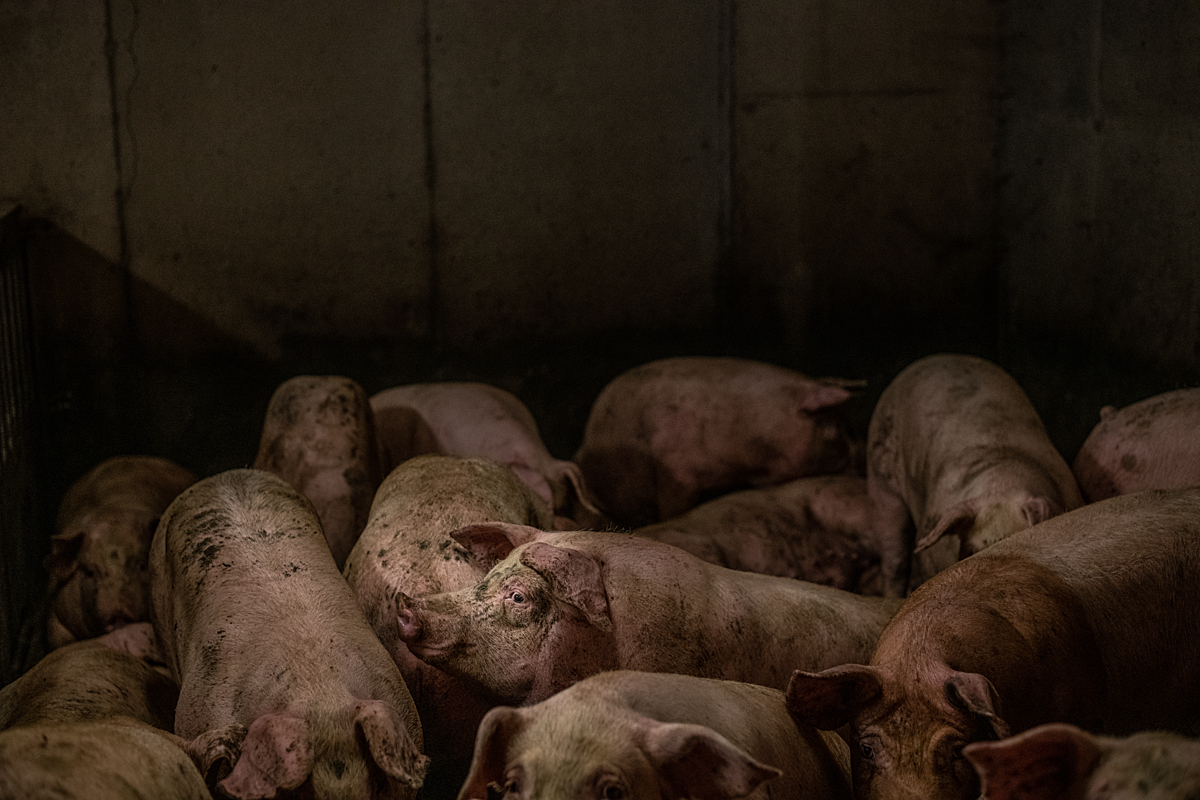
Jo-Anne McArthur/We Animals
Industry marketing often depicts happy pigs freely roaming lush pastures, but the reality is that over 98% of pigs raised in the U.S. are kept on large-scale factory farms. Only around 5% of pigs nationwide are on farms with fewer than 2,000 animals, and 75% are on farms with 5,000 animals or more.
Factory farms are extremely stressful and unnatural environments, where thousands of pigs are crowded into filthy sheds and denied any enrichment or even the ability to engage in their natural behaviors, like rooting for food and nesting.
Like cows used for dairy, female pigs continuously face pregnancy, birth, and having their babies taken from them as the cruel cycle of production continues. On intensive farms, pigs aren’t able to mate naturally; instead, sperm is forcibly collected from males and females are artificially inseminated in an invasive, manual process.
With each pregnancy lasting a little over three months, mother pigs are impregnated 2-3 times every single year—until their exhausted bodies are considered “spent,” and they are sent to slaughter, typically at just 3-5 years old.
Human Cruelties/We Animals
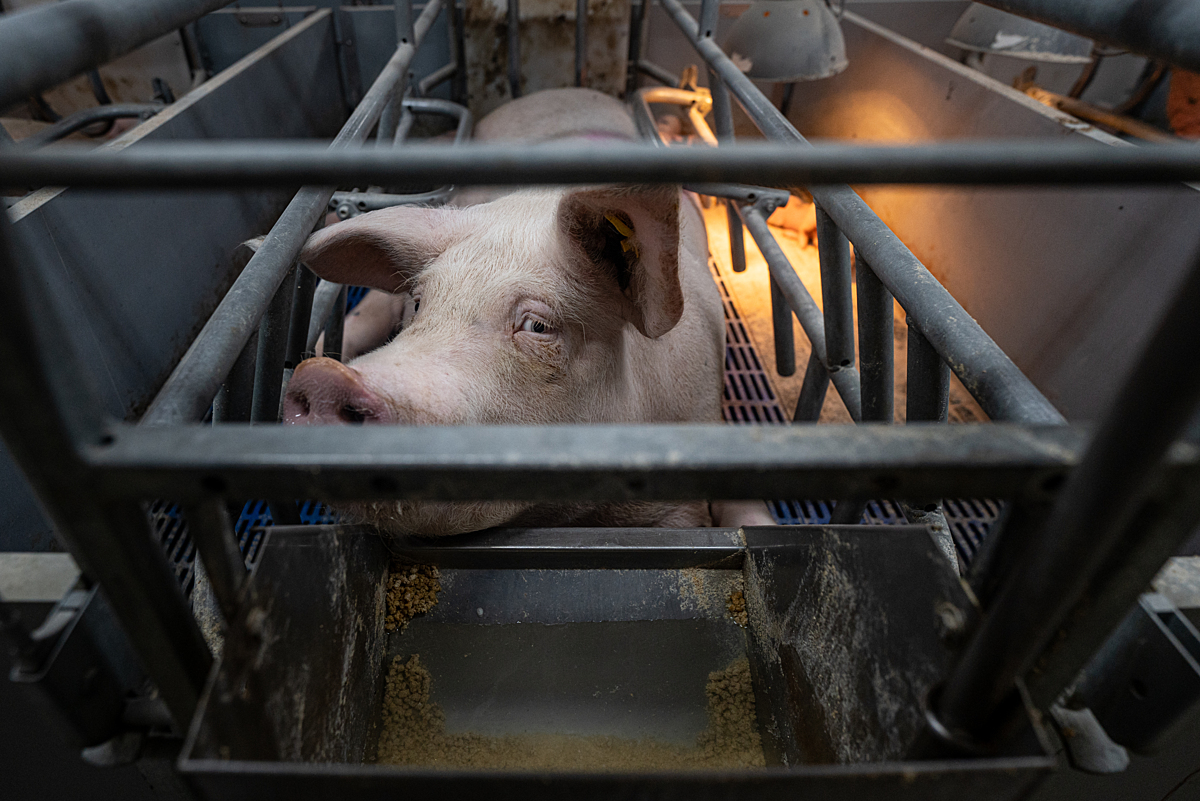
Around 60-70% of female pigs used for breeding on U.S. farms are confined to metal crates so tiny they can’t even turn around, even though nearly 84% of American consumers oppose this cruel practice. Throughout pregnancy, pigs endure the severe discomfort of confinement to gestation crates, before they are forcibly moved into farrowing crates where they try to nurse their vulnerable piglets through metal bars.
Animal agriculture spins this cruelty as an attempt to prevent pigs from accidentally crushing their piglets. Yet when allowed to live their lives naturally with their families, pigs are protective mothers who carefully tend to their young. They build warm and comfortable nests, nurse their piglets—and even sing to them!
Jo-Anne McArthur/We Animals
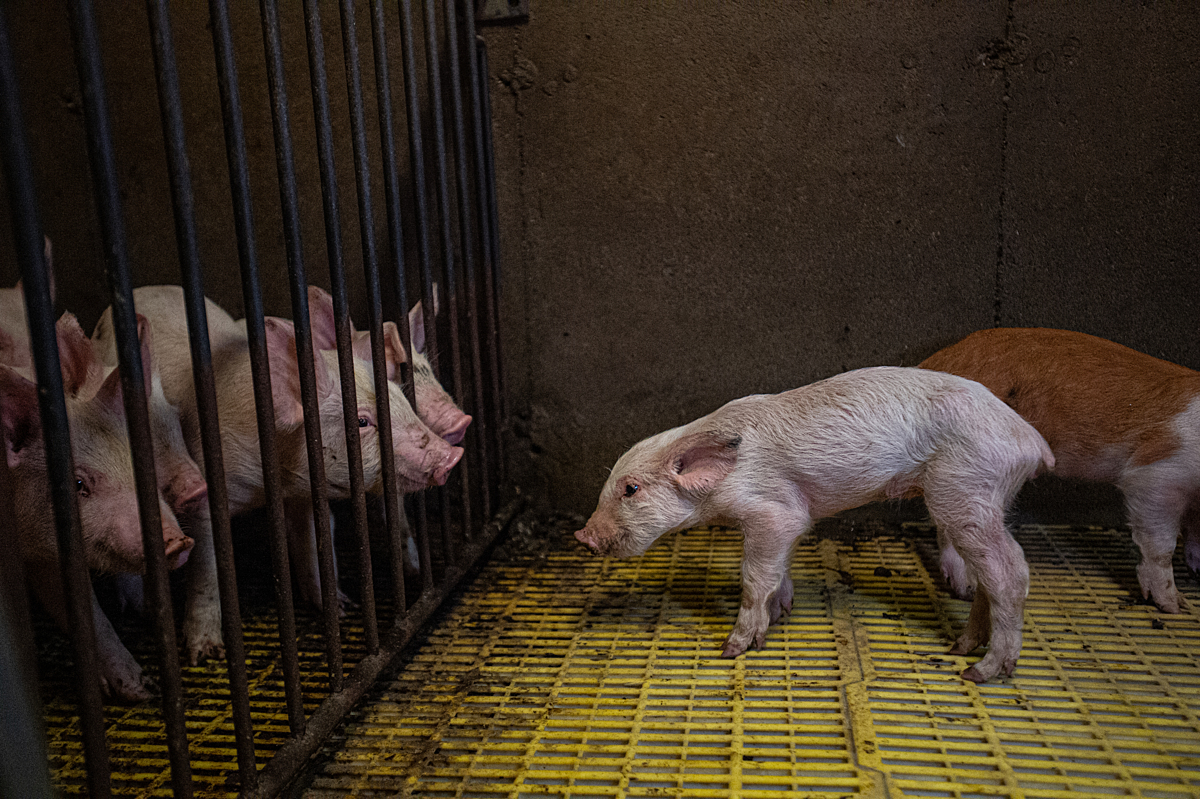
On factory farms, piglets are born into a cruel world that values them only as a means to an end, and those who are deemed unprofitable may not live past day one. Sick, weak, or injured piglets are killed, often facing painful and frightening deaths via carbon dioxide in gas chambers (opposed by over 70% of consumers) or in a violent practice known as “thumping.”
In “thumping,” piglets are violently hit on the head to cause blunt force trauma, either using an object to strike them or by lifting the tiny pigs into the air by their hind legs and slamming their heads against the hard floor. While this is a horrific end to lives just begun, those piglets who go on to be raised for meat production face unimaginable suffering, too.
Like chickens, turkeys, and other farm animals, young pigs are subjected to brutal mutilations and denied any form of relief from the pain.
Piglets are fully conscious and able to suffer when they are castrated and when their tails are “docked” (partially amputated), despite the latter practice being opposed by over 81% of Americans. These acts of violence may be shocking, but sadly, they are considered standard practice on factory farms.
Jo-Anne McArthur/We Animals
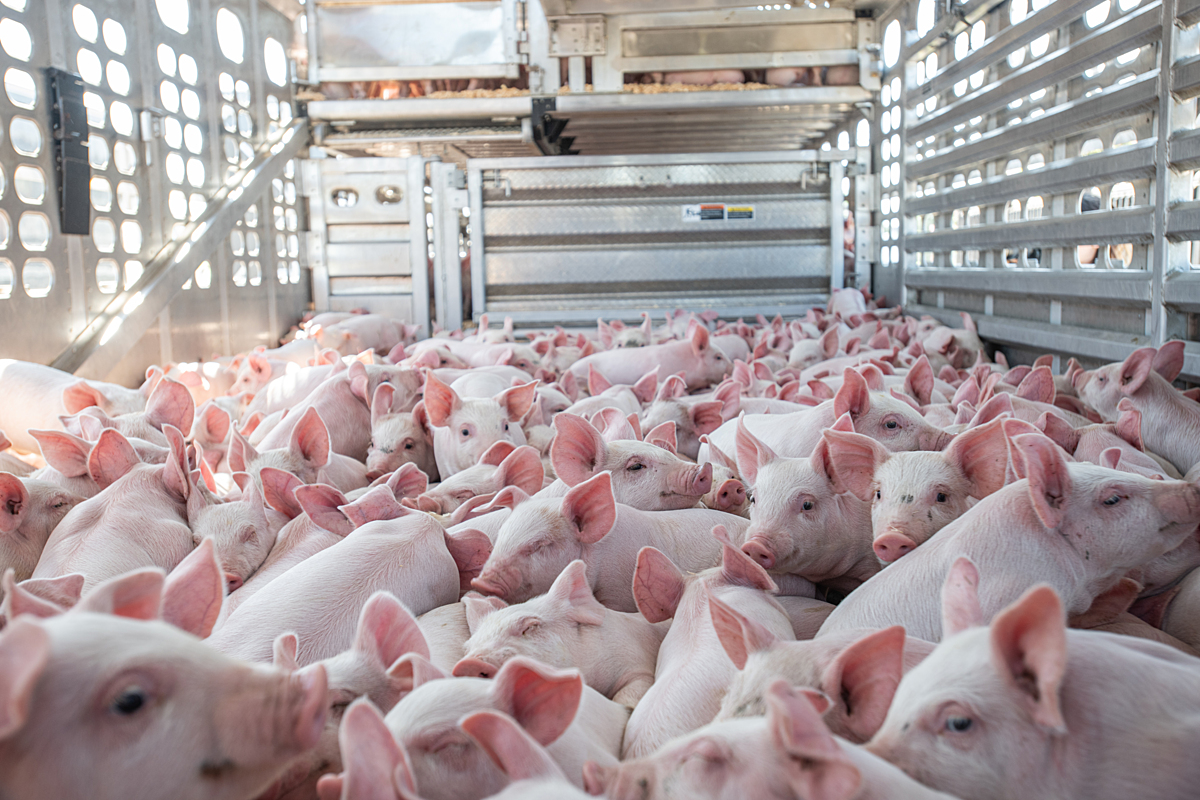
Once they reach “market weight,” young pigs are forced onto transport trucks bound for slaughterhouses. The journey is agonizing, and some terrified pigs fall or jump from the crowded vehicles, while others may succumb to extreme heat or cold. In fact, each year in the U.S., over 330,000 pigs die on these grueling drives.
The only U.S. legislation governing the treatment of farm animals during transport, The Twenty-Eight Hour Law, mandates only that animals be offered five hours of water, food, and rest if transported for over 28 consecutive hours. This leaves pigs and other animals to suffer, and birds aren’t even included in these alarmingly inadequate protections.
Those who survive long enough to reach the slaughterhouse suffer through their final moments of life, as they are shackled upside down by their legs and moved quickly down the slaughter line.
Most pigs farmed for meat in the U.S. are killed at just 4-6 months of age. Naturally, pigs can live for 10-15 years, with some even reaching 20 years old! Animal agriculture cuts lives drastically short, while at sanctuaries, farm animals are protected, given the care they need to thrive, and allowed to reach their golden years. An estimated 99% of Farm Sanctuary’s current animal residents have lived beyond the ages they would have reached in factory farming systems.
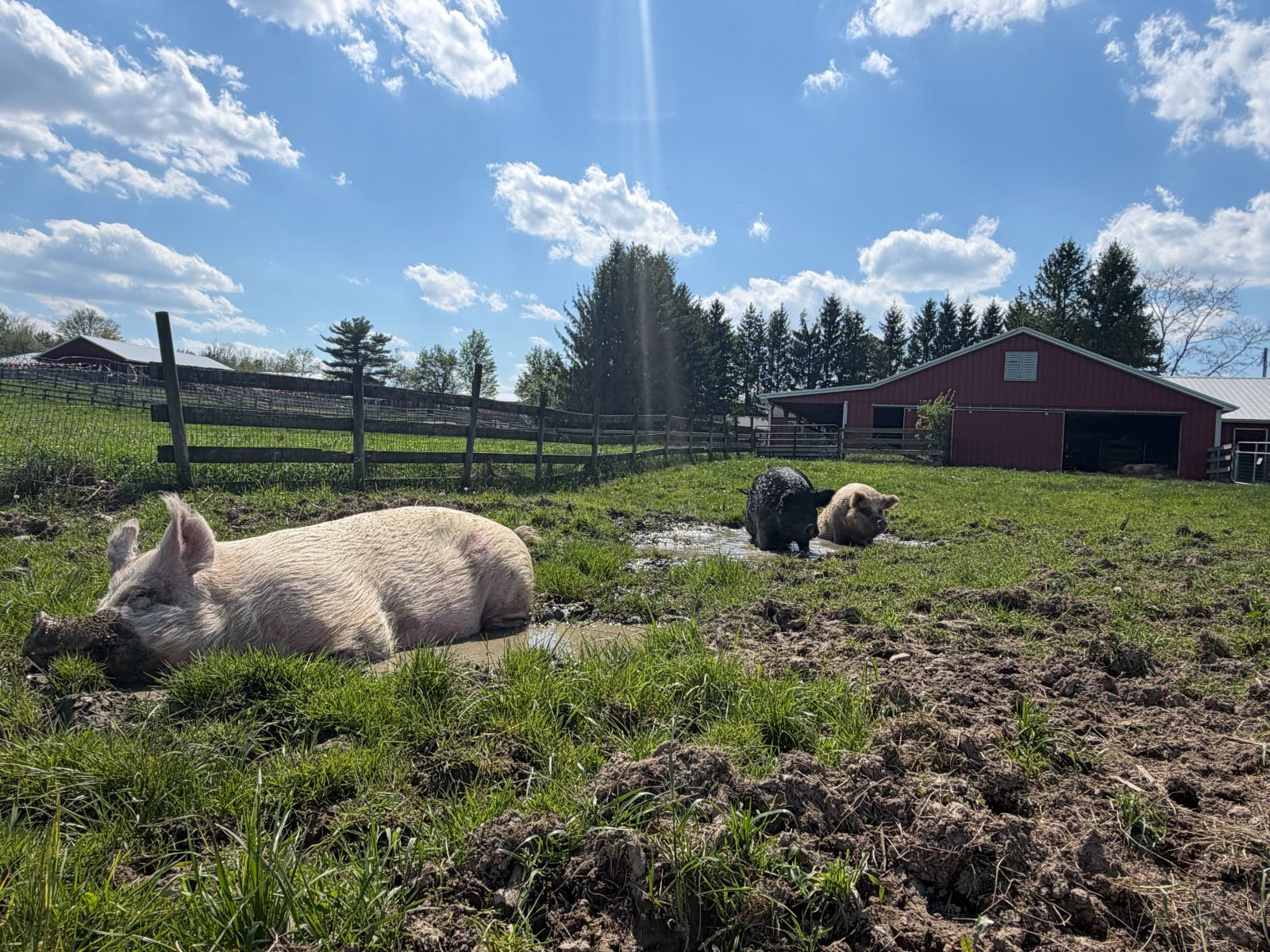
You can help build a world where all pigs are treated with compassion. In fact, you make an impact each time you choose plant-based foods that leave pigs off your plate. Want to do even more? Take action below!
With one simple action, you can support the care of a rescued pig at Farm Sanctuary and power our efforts to defend pigs everywhere from cruelty. Sponsor a pig today, and your tax-deductible donation ensures that Blue or Jodean continues to thrive—and brings us one step closer to a world where every farm animal is given the kindness they deserve.

Blue was raised as part of Future Farmers of America, which teaches students to raise animals for agriculture—but Blue’s young guardian saved his life. Their family quickly found a home for him at Farm Sanctuary, where silly and sometimes grumpy Blue is a leader of his herd. He loves to explore, settle into a pig cuddle puddle, and spend time with his friends, Grace and Jodean (meet Jodean below!).
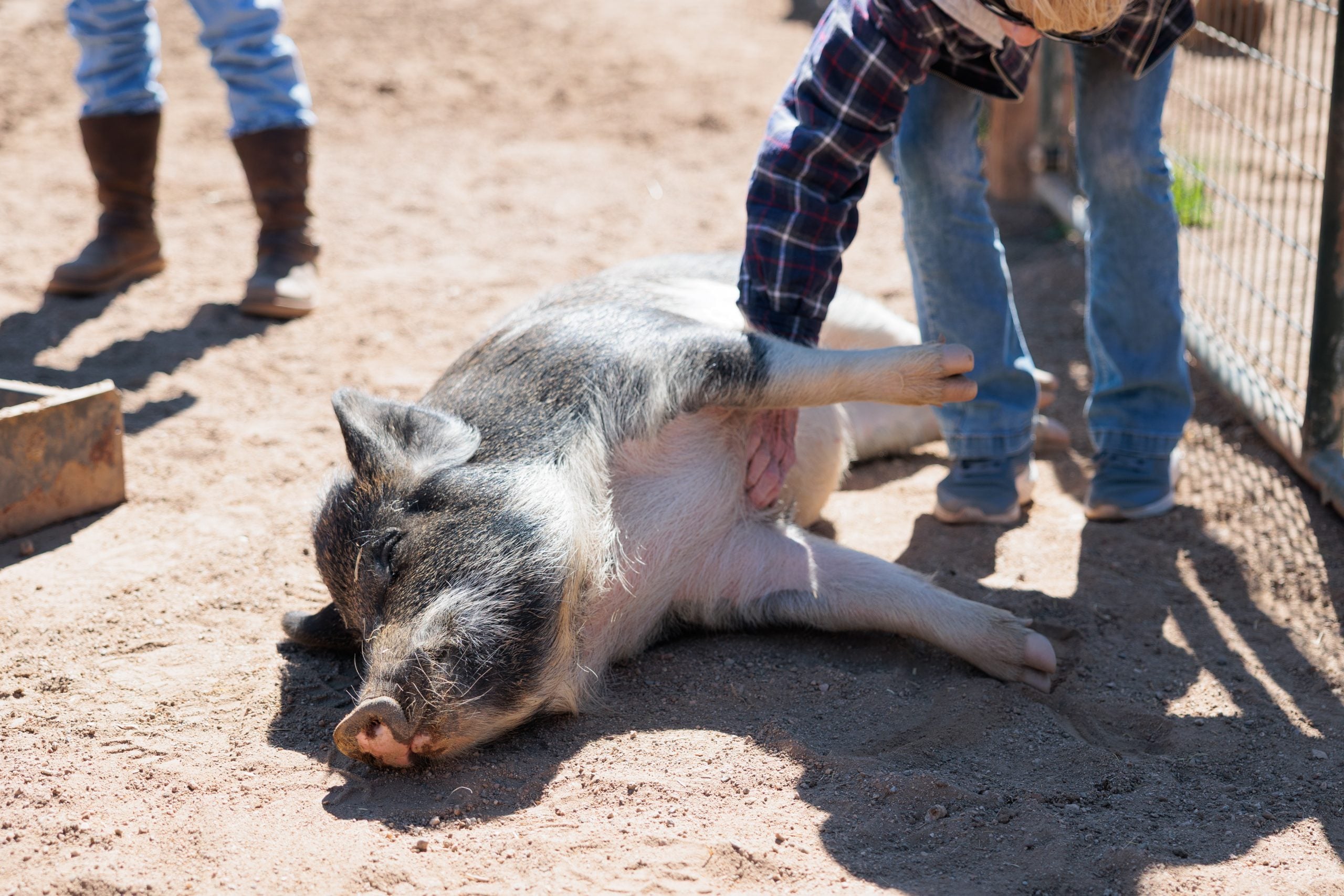
Jodean lives happily alongside her protective and doting mother, Grace, after they were found wandering the streets of a residential neighborhood in the middle of the night. A happy, adventurous, and playful gal, Jodean loves to swim, and she will flop right down onto her side for belly rubs.