

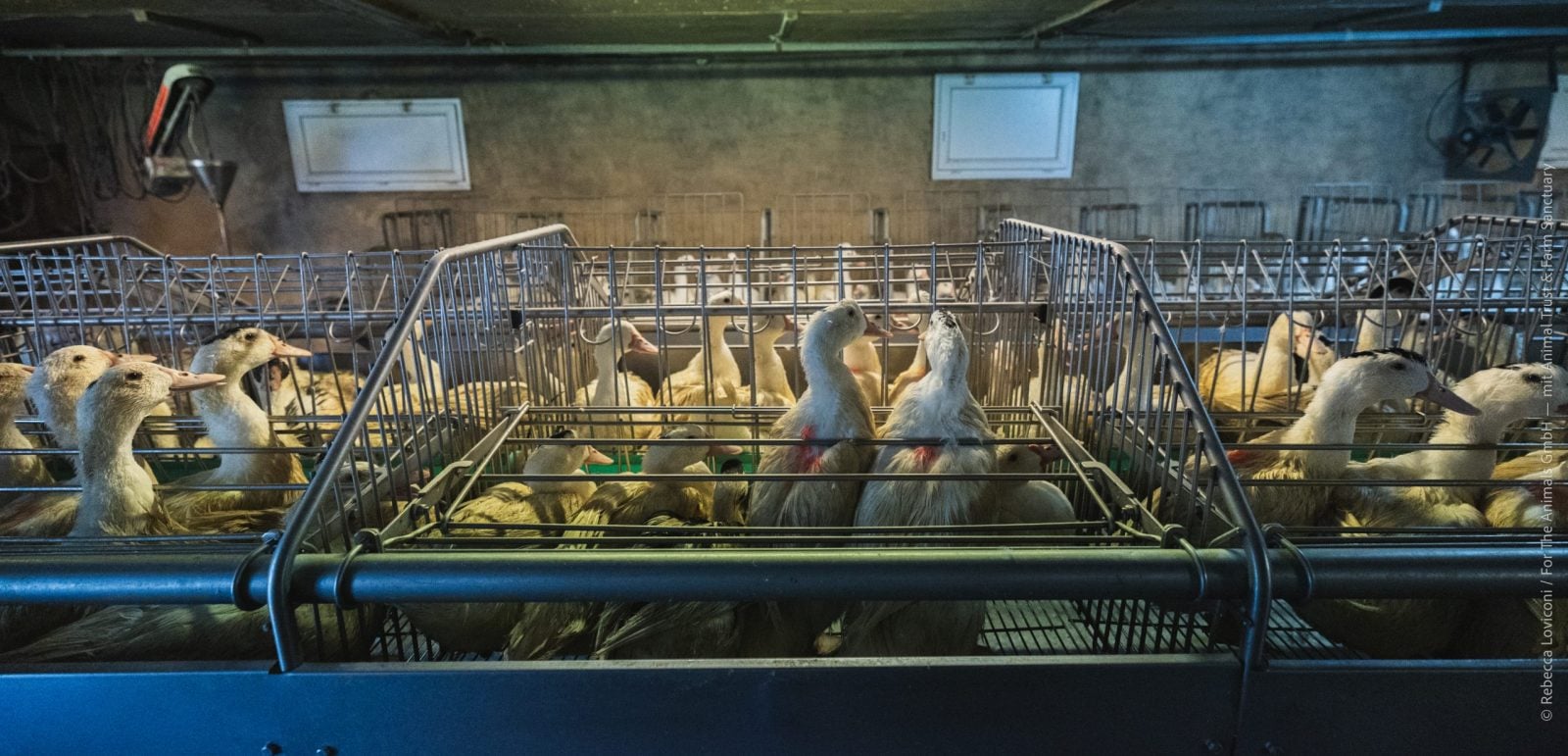
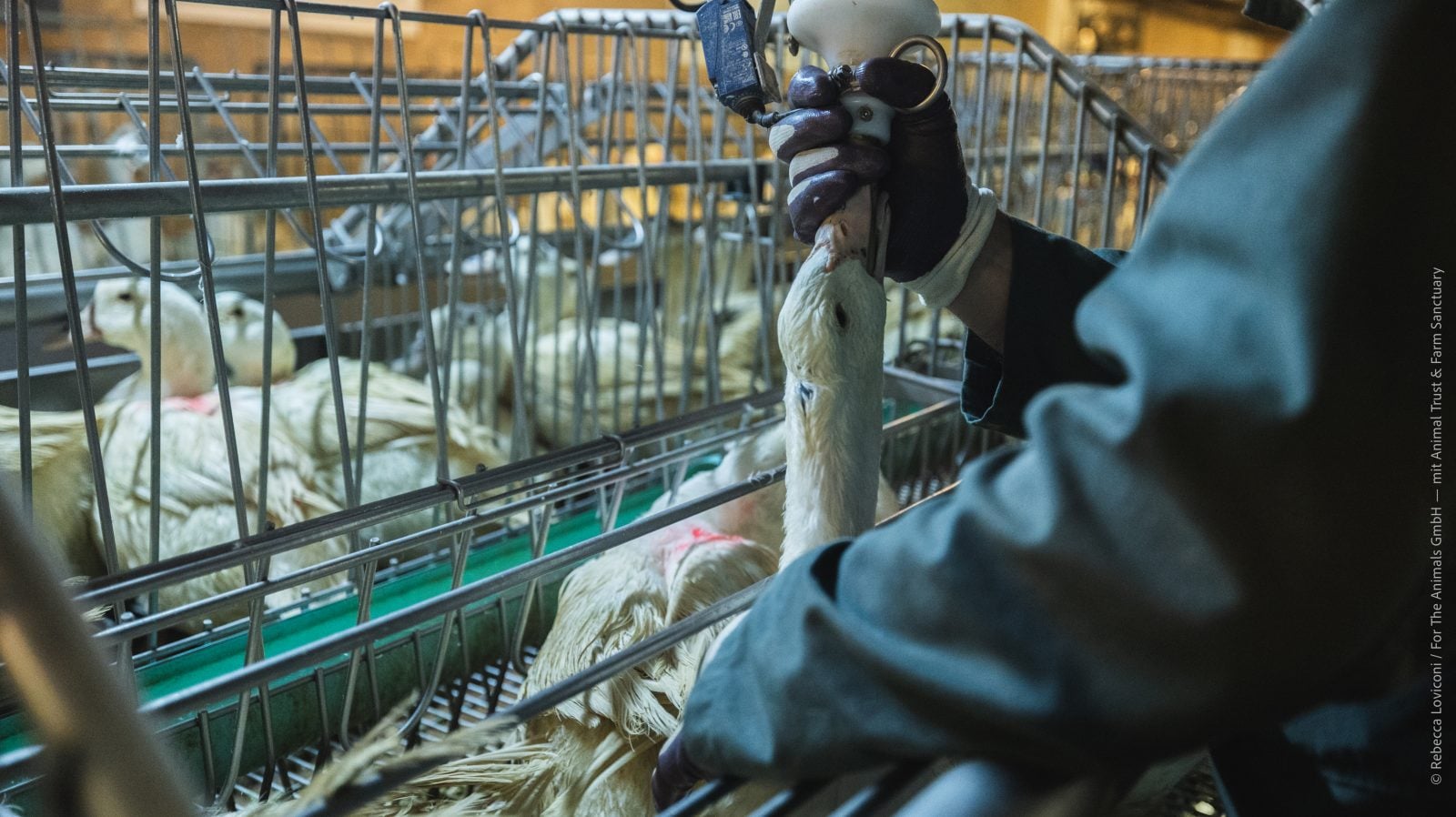
Foie gras, or “fatty liver,” is strongly opposed by the public due to the brutal way it is produced, as shown by the powerful investigative images in this article, captured by Rebecca Loviconi and For The Animals GmbH with Animal Trust & Farm Sanctuary. On foie gras farms, ducks and geese are force-fed through a tube put down their throats until their livers become swollen by up to 10 times their natural size.
Take Action: Join the Call to Ban Foie Gras Nationwide
© Rebecca Loviconi/For The Animals GmbH—with Animal Trust & Farm Sanctuary
Take Action: Join the Call to Ban Foie Gras Nationwide
© Rebecca Loviconi/For The Animals GmbH—with Animal Trust & Farm Sanctuary
For decades, Farm Sanctuary has been at the forefront of the movement to end the sale and production of foie gras. Amid encouraging steps toward the end of this cruel “delicacy,” the fight continues—and now, you can join us in calling for a nationwide ban.
© Rebecca Loviconi/For The Animals GmbH—with Animal Trust & Farm Sanctuary
According to a survey spanning 10 U.S. states with foie gras legislation under consideration at the time of its release in February, 89% of consumers support a ban on force-feeding ducks and geese, and 81% support a general ban on foie gras sales.
With public support behind the movement, there have been several promising victories for birds, including:
- In 2004, California became the first U.S. state to ban foie gras by passing the Farm Sanctuary-sponsored Senate Bill 1520, which took full effect in 2019, despite years of industry challenges.
- In 2019, Farm Sanctuary President & Co-founder Gene Baur testified in support of New York City’s ban, which has also survived industry opposition, as a recent court ruling has allowed the law to take effect.
- The city of Portland, Oregon, outlawed the sale of foie gras from force-fed birds in June, with the ban set to go into effect this December.
- Washington, D.C. has garnered enough petition signatures—thousands!—to get a foie gras ban, Initiative 86, on the ballot in November. If approved, it will ban force-feeding and the commercial sale of foie gras, imposing fines of $1,000 to $5,000 on violators.
- In the U.S., in addition to the laws passed in California, Portland, and New York City, the cities of Pittsburgh, Pennsylvania, and Brookline, Massachusetts, have passed local bans.
- Businesses have also stopped selling foie gras, such as Omni Hotels, Safeway, Target, and Whole Foods.
- Many countries, including all but five European nations, have banned foie gras from force-fed birds.
This progress signals that the end of foie gras cruelty is near—but ducks and geese still need your help today.
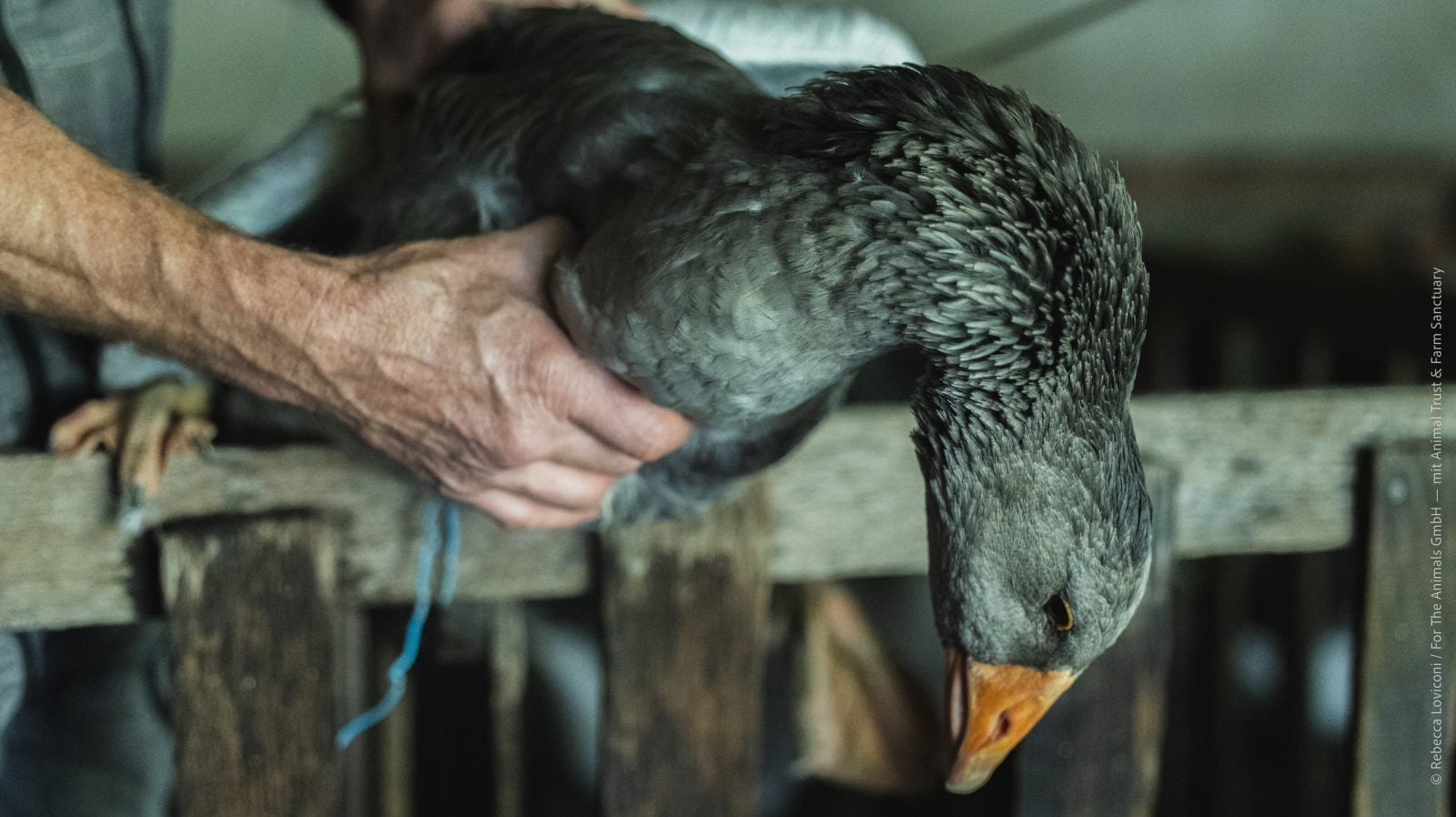
© Rebecca Loviconi/For The Animals GmbH—with Animal Trust & Farm Sanctuary
At Farm Sanctuary, we have seen firsthand the heartbreaking impacts of foie gras production on birds, having rescued survivors of this cruel industry—including Monet and Matisse (seen below).
Left outside our New York shelter one night by an anonymous rescuer, Monet and Matisse bore sores on their bills, likely from force-feeding pipes, as well as cuts and scrapes often caused by confinement in crowded cages and rough handling.
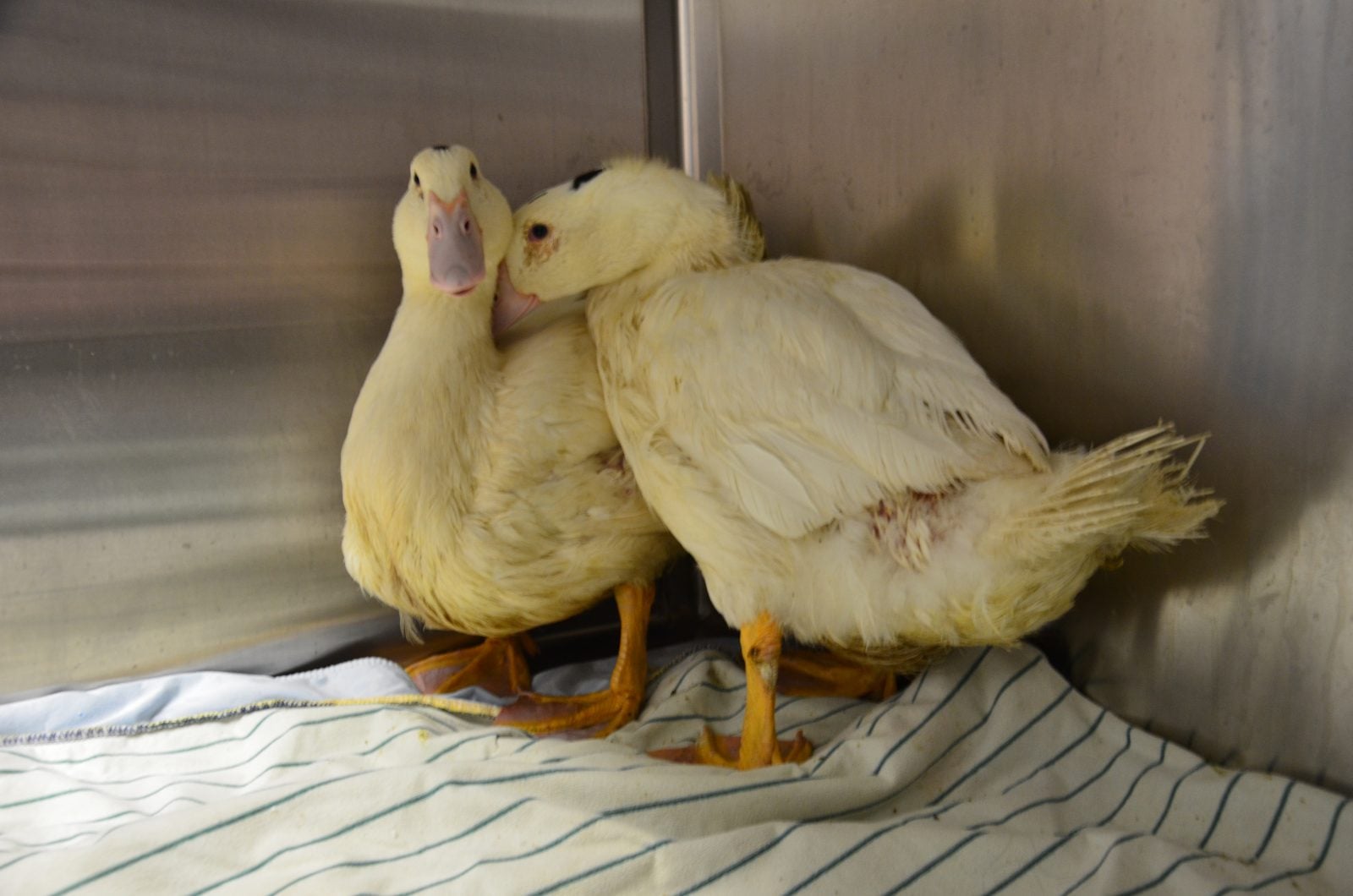
Monet and Matisse, shortly after their rescue
When they first arrived at Farm Sanctuary, these birds were terrified of humans, understandably, after all they had been subjected to. But as our caregivers patiently helped them to heal, they found solace and comfort in each other, too.
They found the life of freedom and friendship that all farm animals deserve.

Monet and Matisse, healed by sanctuary and each other
Protect birds like Monet and Matisse: Take action below!
Ban Foie Gras Nationwide
Be part of the fight against foie gras and protect birds from cruelty! Join Farm Sanctuary in urging U.S. lawmakers to introduce a national ban on the sale and cruel production of foie gras. It takes only a quick moment to speak out using our handy form.