


Below are 10 of many reasons to consider keeping fish off your plate in favor of kinder, more sustainable options.
10 Reasons to Keep Fish Off Your Plate
10 Reasons to Keep Fish Off Your Plate
Fish is often touted as a cure-all—the ultimate health food, and the solution to the overfishing of our seas. But look deeper, beyond the murky marketing, and you’ll find the truth.
1. Overfishing is decimating our oceans.
Globally, though there have been signs of fish populations recovering from decades of overfishing, around one-third of monitored fisheries are considered overfished. This means that the fish in those areas are being caught faster than their population can reproduce.
Alarmingly, the situation could be even worse than we know due to unreported catches. A 2024 analysis of satellite mapping found that 75% of industrial fishing worldwide is going untracked.
What we do know is that overfishing is happening, and we can help change that.
“All of us, every one of us, all of life on Earth, depends on the existence of a living ocean,” renowned oceanographer, Dr. Sylvia Earle, said at the TIME 100 Talks in 2025. “Knowing is the key to caring. And never has there been a greater time of opportunity to take what is known and turn it into action.”
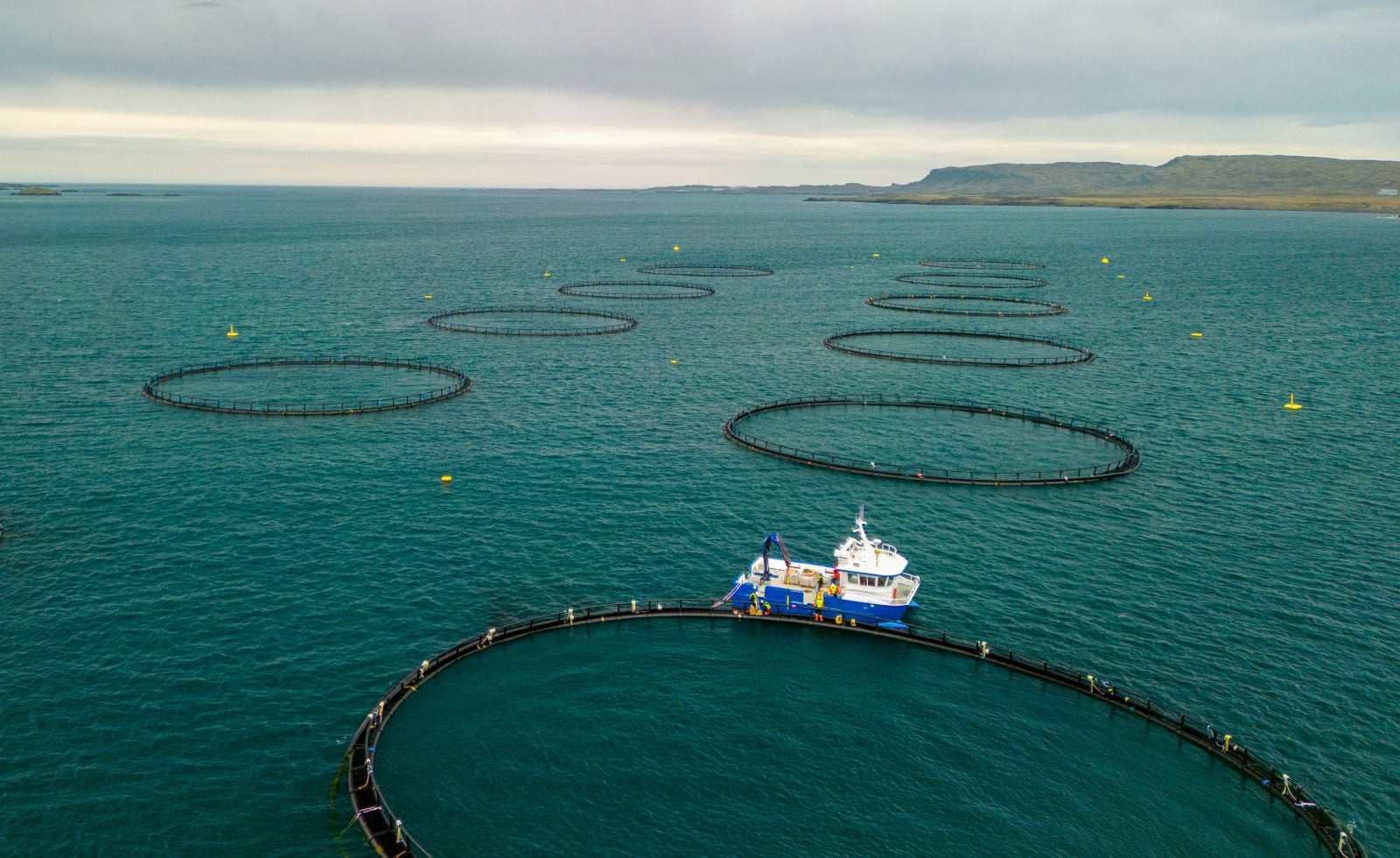
2. Fish farming is another problem, not a solution.
When it comes to overfishing, aquaculture is not the sustainable answer that some have claimed it to be.
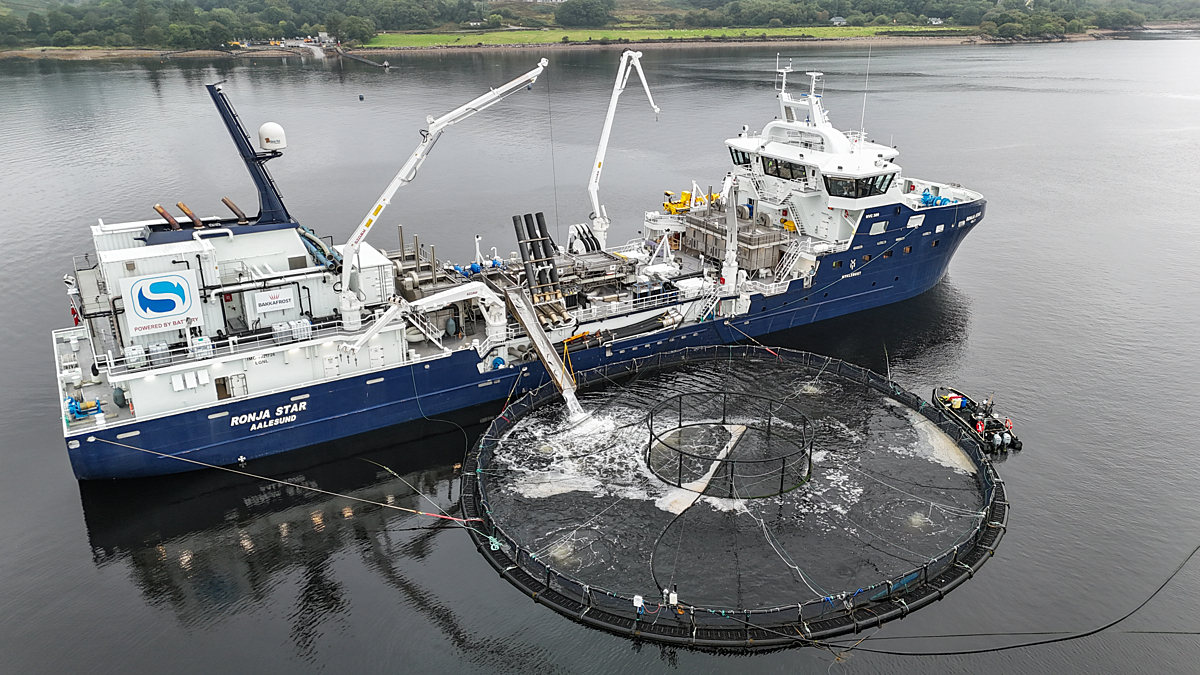
In addition to putting populations of ocean wildlife at risk from pollution and disease, fish farms consume a massive amount of the world’s catch of fish. For example, millions of tons of fish caught in the Global South (more on that further down in this article) go to farms, where they’re used to feed carnivorous species like salmon. According to a 2022 study, 60 percent and 23 percent of the fish oil and fishmeal used in aquaculture, respectively, are used to feed farm-raised salmon.
Not only this, but much of “seafood” doesn’t even end up making it to market. A staggering 35% of what is produced by the world’s fisheries and fish farms ends up wasted.
Patrick Gill/We Animals
3. Don't like factory farms? Well, you won't like fish farms.
In the United States, every one of the 130 million fish farmed nationwide is kept on a factory farm.
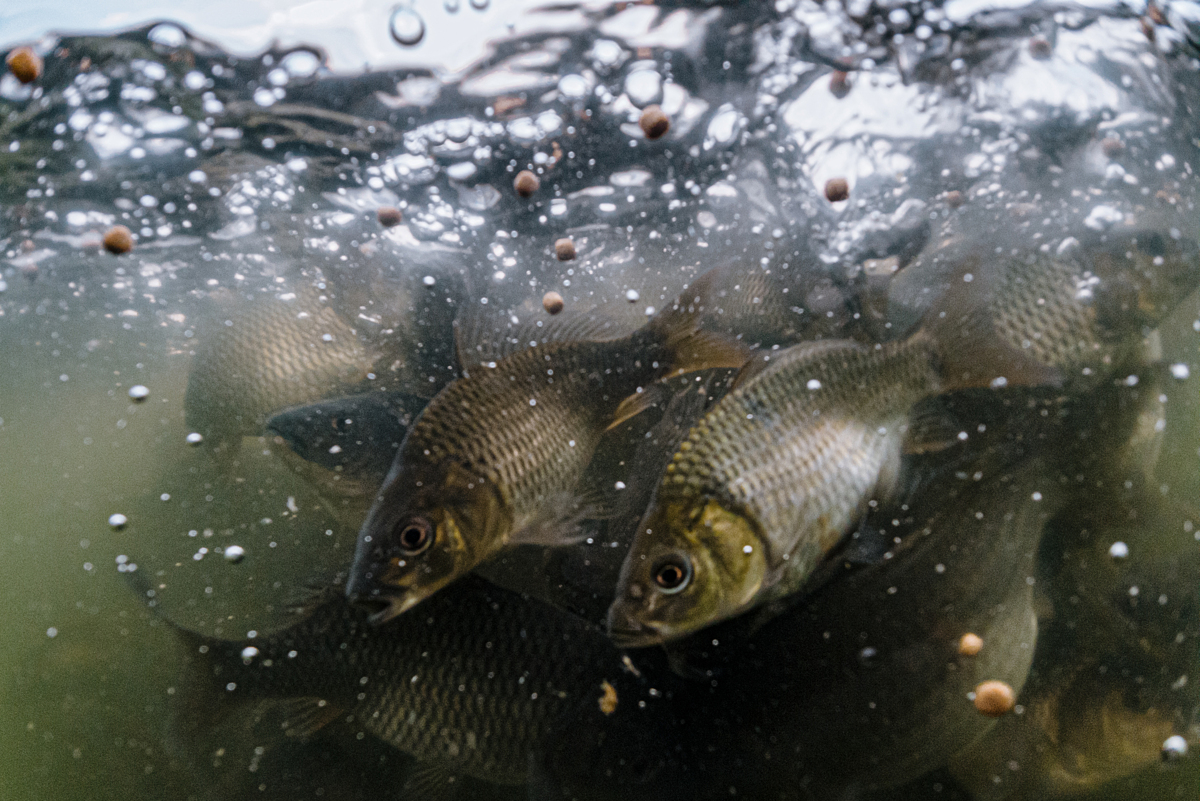
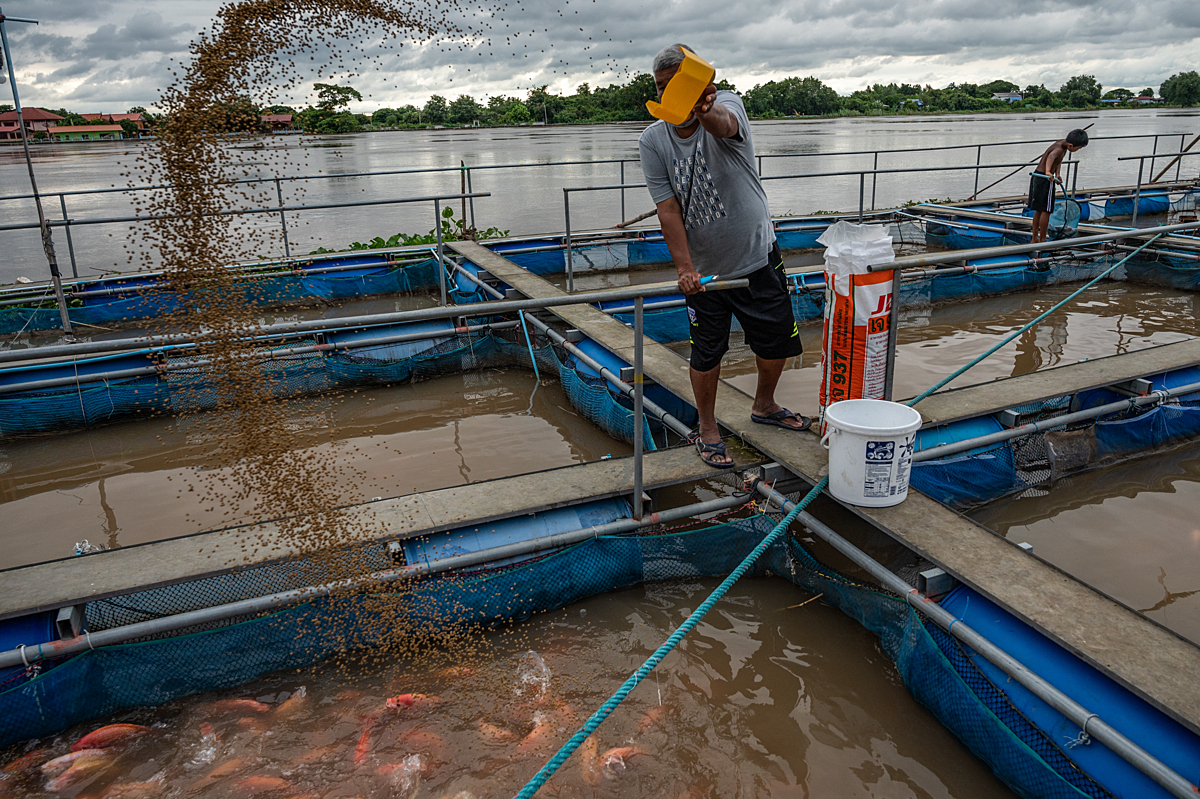
Farmed fish are confined in severely crowded conditions, whether they are raised in sea pens or in tanks on land. A single farm may contain tens of thousands of fish, and this intense crowding in filthy conditions can lead to aggressive behavior, injuries, disease, and changes in eating.
Like other factory-farmed animals, some fish will not even survive the horrendous conditions they’re forced to endure. In just three years, over 35 million salmon died before slaughter on farms in Scotland, a major global producer of salmon products.
Factory farms are extremely unnatural to fish and a far cry from their vast ocean or freshwater homes. For example, salmon may swim hundreds of miles to travel from the streams in which they hatched to the sea, and may spend years at sea before returning to spawn.
4. Fish feel pain.
Simply put, fish can feel pain, like other animals—and whether they’re taken from the sea or farmed on land, fish suffer horribly for “seafood” to end up on a plate.
A 2025 study revealed that some fish feel “intense pain” for as long as 22 minutes after being pulled out of the water and left to slowly suffocate, or even put on ice, which prolongs their agony.
Plus, fish are far more complex than they’re given credit for. They can multitask, and they’ve been found to recognize and communicate with each other, use tools, navigate their environment through spatial learning, and more. And like farm animals and other species, fish are individuals with unique personalities! For example, some fish are braver than others.
Lilly Agustina/Act For Farmed Animals/We Animals
5. The fish industry feeds wealthy nations by exploiting the Global South.
Wealthy nations are responsible for 97% of industrial fishing worldwide, and these environmentally harmful and exploitative operations often occur beyond their own waters.
In 2021, a report from Oceana concluded that the world’s largest fishing nations are using subsidies totaling $15.4 billion to fish in waters of lower-income countries and “shift the risk of overfishing” to other regions.
Meanwhile, not all of the fish captured from the waters of nations facing food insecurity are even going to feed humans directly. Some fish, like the millions of tons of wild-caught fish used to feed salmon, are fed to other aquatic animals on farms as fish oil or fishmeal.
6. Fish farms are breeding grounds for disease.
In factory farms, unsanitary facilities where animals are crowded in the thousands, and workers are often forced to work with little protection from illness, pathogens can spread easily and rapidly.
When farmed industrially, fish can become more vulnerable to disease due to severe crowding, contaminated water, and the stress they endure. Farmed fish may suffer from bacterial diseases or parasitic sea lice that can lead to death.
Like other factory farms, fish farming operations use antibiotics to prevent bacterial illnesses, but this practice itself poses a public health threat. Antibiotics used on fish farms can leak into surrounding waters and end up in products sold to consumers, as the world already faces serious threats from antibiotic resistance.
7. Workers are exploited in the fish industry.
In fish farming, like in other forms of factory farming, many workers may be undocumented immigrants working long hours, in dangerous conditions, for low pay, and with little recourse for concerns or injuries.
A worker on a salmon farm in Chile—a nation that produces salmon purchased around the world, and whose largest consumer is the United States—told The Guardian in 2025, “Those who eat Chilean salmon cannot imagine how much human blood it carries with it.”
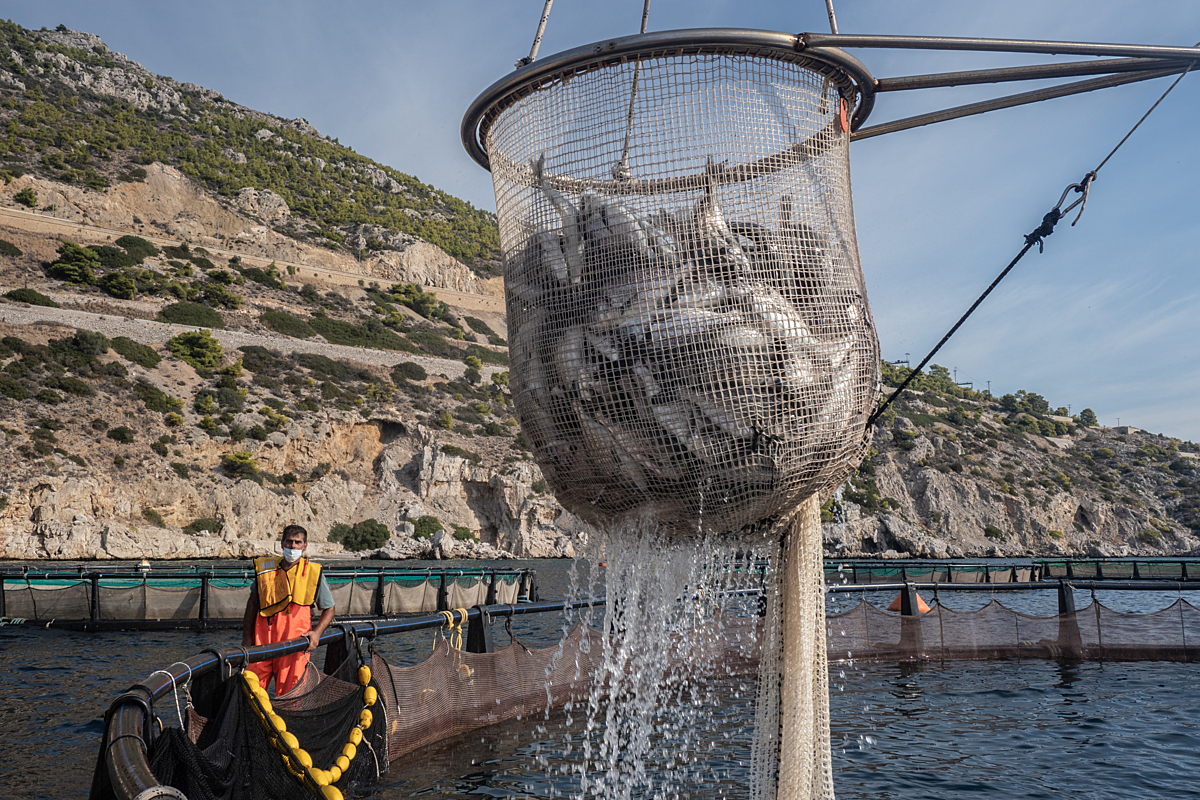
When it comes to fishing at sea, alarming human rights violations, including forced labor and human trafficking, have been well documented. In March 2025, four Indonesian fishermen sued global tuna titan, Bumble Bee Foods, alleging that they suffered slavery, physical abuse, and more aboard fishing vessels supplying the company. The case continues, following a November ruling from a federal judge who declined to dismiss the lawsuit.
Selene Magnolia Gatti/We Animals
8. Fish is not as healthy as you might think.
Fish is often touted as an ideal health food, but the truth is, “seafood” can be toxic. Fish meat is often contaminated with toxins from ocean pollution—especially mercury, a neurotoxin found in most fish today.
Plus, if you’re eating farmed fish (and if you’re eating salmon, it most likely came from a farm), then you may not be getting as many nutrients as you hoped. In 2024, researchers found a net loss of nutrients in the small fish fed to farmed salmon, meaning that essentials such as calcium, Omega-3, and B12 didn’t make it to consumers.
By the way, you can get the nutrition you need—including calcium and B12, found in many fortified foods—from a healthy plant-based diet focused mainly on whole foods. While Omega-3 is often cited as an important reason to eat fish, you can get it from plants (like fish do!).
Mako Kurokawa/Sinergia Animal/We Animals
9. Fishing gear is an indiscriminate killer of ocean wildlife.
Every year, industrial fishing gear is to blame for 100 million pounds of plastic entering the world’s oceans.
This gear isn’t just deadly to the species targeted by fishing vessels—abandoned or discarded nets and lines indiscriminately claim the lives of any ocean animals unlucky enough to swim past and become entangled, including dolphins, seals, turtles, sharks, and even birds. In fact, fishing gear has been found to pose a greater risk than plastic bags or balloons.
Fishing gear also makes up most of the Great Pacific Garbage Patch. Over 75% of this infamous collection of marine debris is comprised of equipment from the fishing industry.
10. There are so many delicious plant-based alternatives to fish.
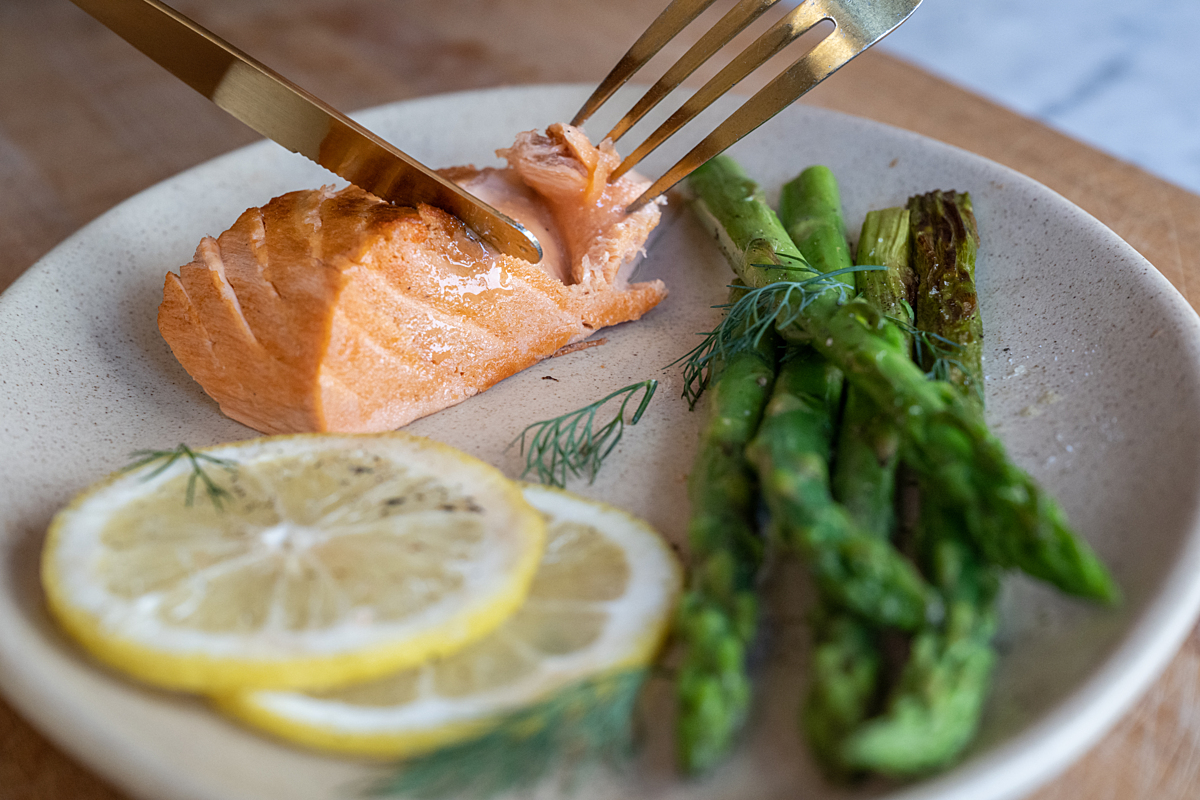
New School Foods plant-based salmon. Jo-Anne McArthur/We Animals.
Fish alternatives are making waves as a major emerging food trend, and you can get on board, too.
From vegan recipes like “tuna” salad made from chickpeas or crabless cakes featuring hearts of palm, to a bottomless variety of plant-based fish alternatives found in stores, there are so many delicious ways to fill your plate with foods that don’t harm our finned friends.
Each choice you make is more than just a drop in the ocean. Every time you choose a plant-based meal that’s free of fish, you are protecting our imperiled seas and supporting a kinder world for aquatic animals and all beings on the planet we call home—a planet on which all life is interconnected. Did you know that we get at least half of the oxygen we breathe from the ocean?
We depend on our seas for survival, and fish depend on you. Choose a compassionate, fish-free meal today.
Take a Deeper Dive
Learn more about the impacts of fish farming and how you can make a difference for aquatic animals today.


