
10 Things You Didn't Know About Donkeys

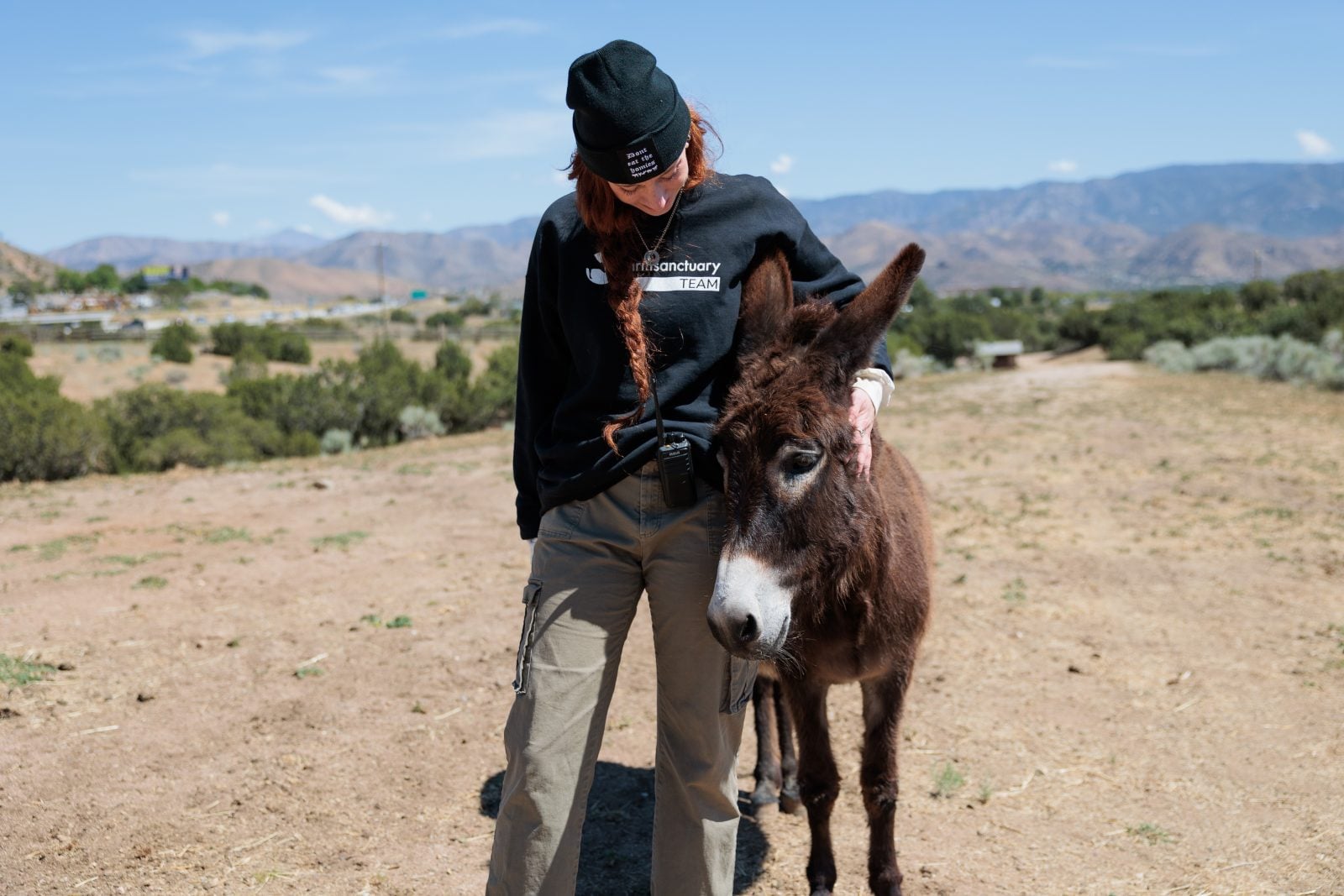
A Farm Sanctuary guest smiles as she pets a rescued donkey

10 Things You Didn't Know About Donkeys

Often stereotyped as stubborn and unintelligent, donkeys are actually quite clever, astute, and remarkably adaptable animals. Unfortunately, those very qualities have led humans to exploit donkeys for centuries.

These so-called “beasts of burden” have been used to carry heavy loads, guard livestock, manage land through grazing, and perform countless other tasks.

But donkeys are far more than the roles and stereotypes assigned to them by humans. Like pigs, chickens, cows, and other farm animals, donkeys are individuals with distinct personalities, rich inner lives, and the capacity to form deep, meaningful relationships.

These 10 facts reveal just how fascinating—and deserving of compassion—donkeys truly are.
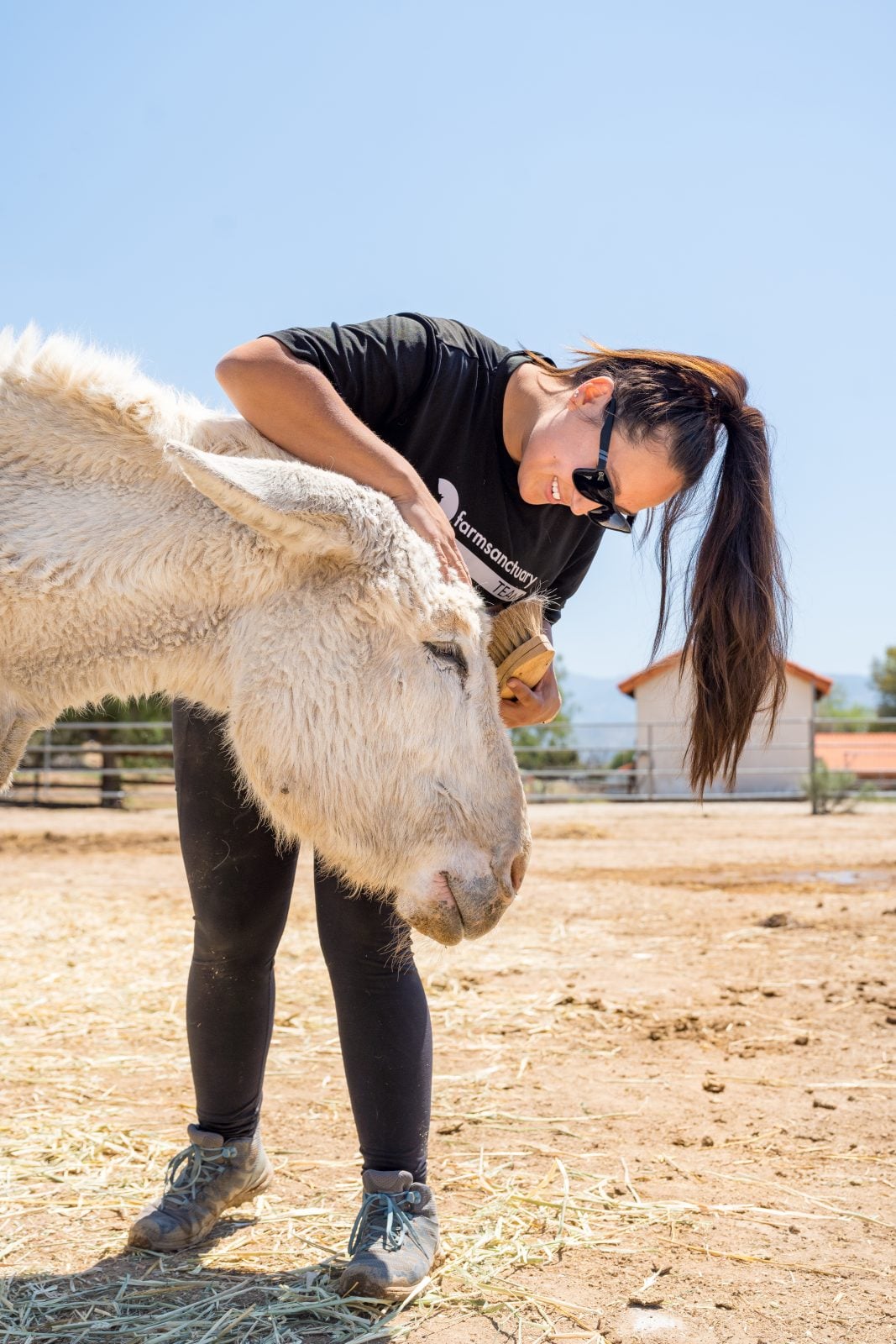
Honky Tonk relaxes as caretaker Courtney gently brushes his mane.

Honky Tonk relaxes as caretaker Courtney gently brushes his mane

1. Donkeys have adorable names.

Male donkeys and burros (wild donkeys) are known as jacks, and females are called jennies. Move over, Jack and Diane—we want to hear a little ditty about Jack and Jenny!

2. Donkeys freeze when they’re scared.

While many equids—including horses and zebras—flee when startled, donkeys tend to freeze in the face of a challenge or potential danger. This behavior might explain why donkeys have a reputation for being stubborn, but they’re actually pausing to take in more information about what’s going on. We find that to be wise and vigilant, not stubborn!

3. Donkeys are free spirits—with some exceptions!

Donkeys prefer to go where the wind takes them rather than adhere to someone else’s plan. Male burros often venture off on their own, away from other burros.

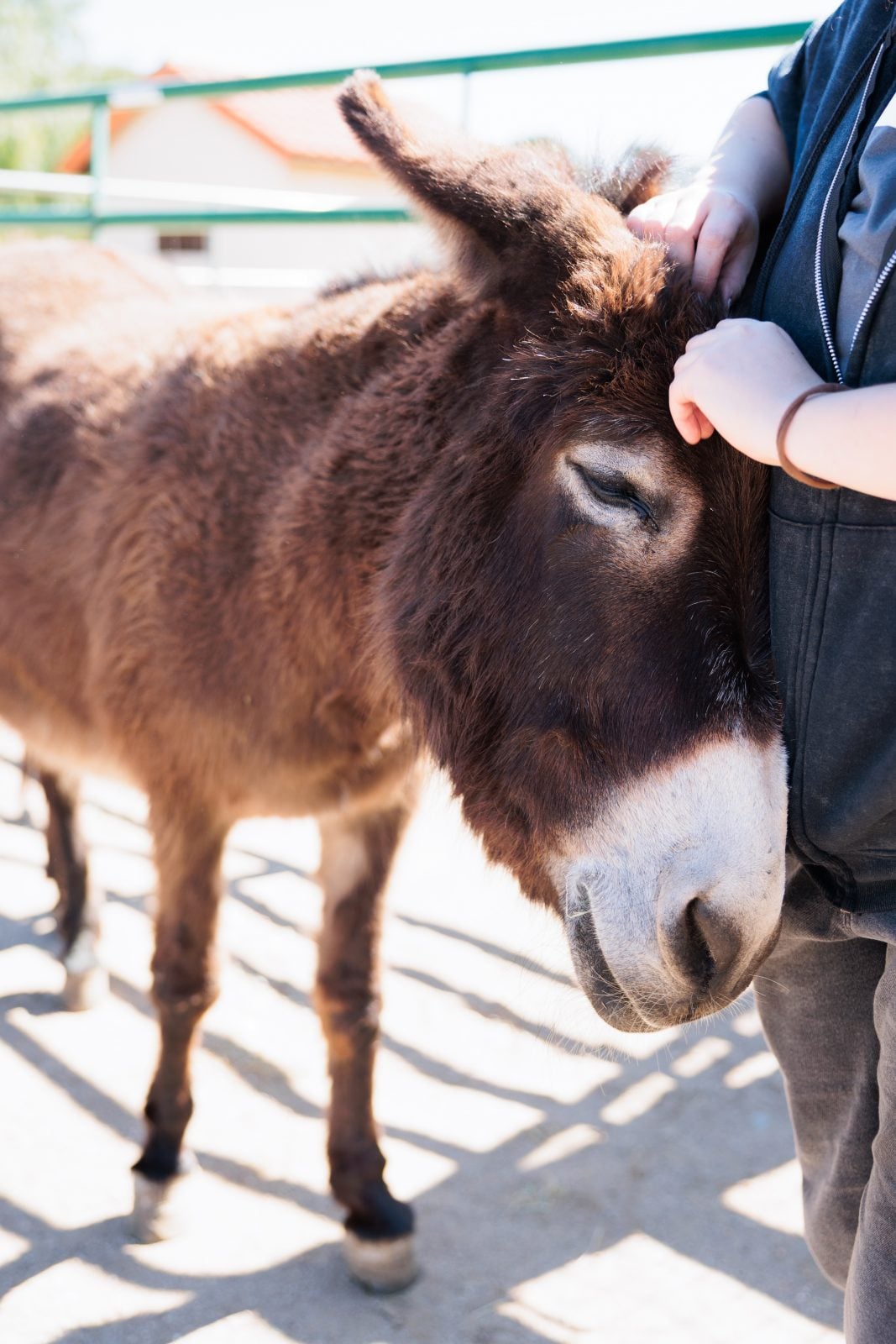
Females are more likely to stick together with other burros and their foals. Farm Sanctuary resident Hope consistently chooses companionship over solitude. Ever the extrovert, she enjoys the company of other donkeys, her human caregivers, and sanctuary visitors—anyone who will pet or snuggle her.

Rescue donkey Hope leans into pets from a visitor at Farm Sanctuary

Hope leans into a sanctuary visitor, encouraging the pets to continue

4. Donkeys are serious about foraging.

Donkeys have hardy digestive systems that can efficiently break down roughage. In their native arid climates, they spend more than half the day foraging and feeding on desert vegetation, bushes, tree bark, weeds, and woody plants. In fact, when not hindered by human interference, donkeys spend an average of six to seven hours a day foraging and can spend up to 16 hours doing so.

5. But they drink sparingly.

Adult burros usually take just one drink per day. They spend about five minutes taking in all the water they need for the day. Consequently, burros also urinate infrequently—as little as once a day.

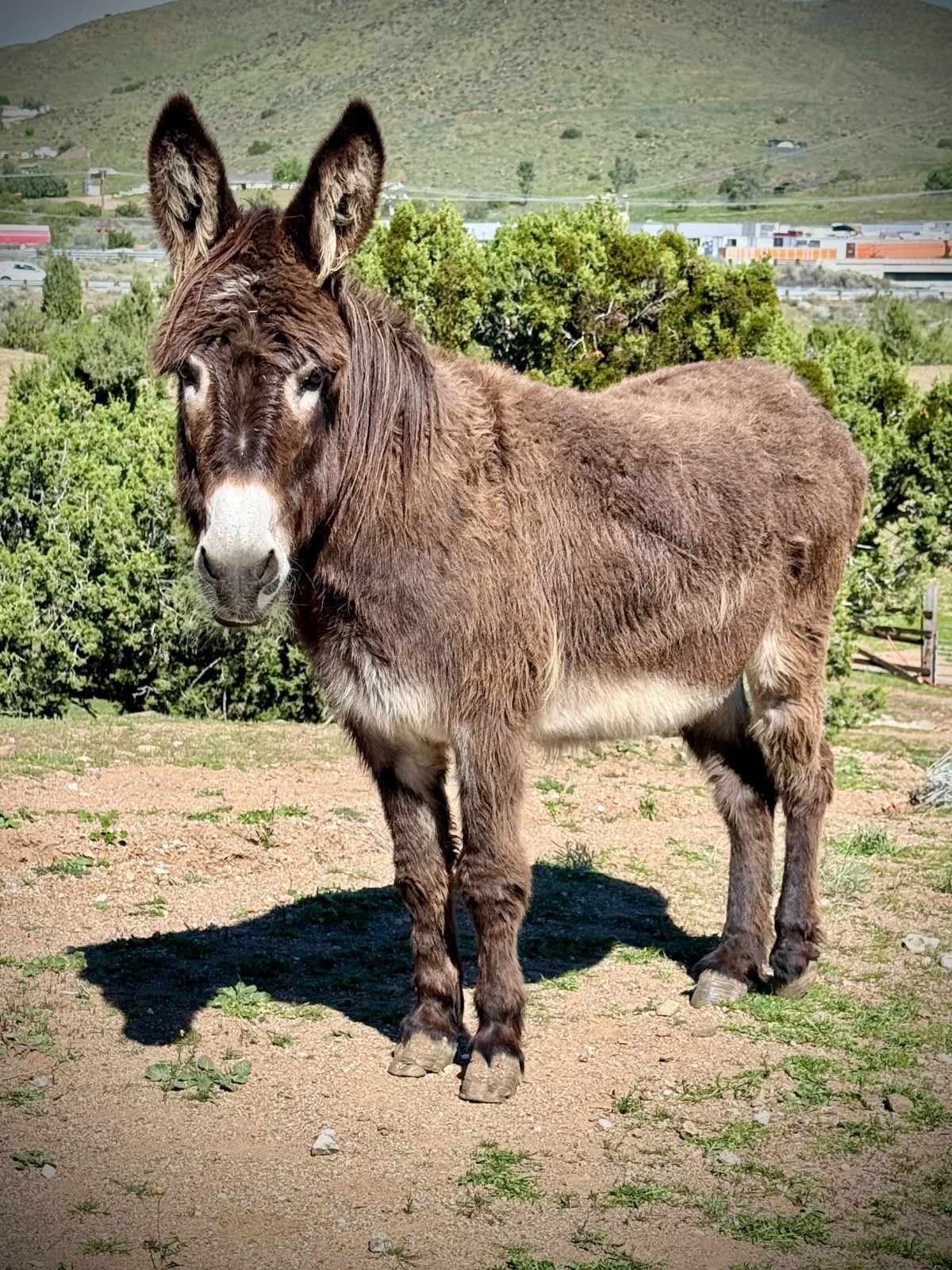
Rescue donkey Dixie stands in pasture with bushes, buildings, and mountain in background

Dixie enjoys a sunny spring day at Farm Sanctuary

6. Donkeys communicate through their dung.

Like dogs, donkeys use scent to communicate. Similar to dogs who leave their mark with urine, donkeys deposit dung throughout the day to mark their territory and leave “messages” for others in their social group.

7. Donkeys can smell over long distances.

Donkeys can detect odors from more than six miles away. In their native desert climates, which are dry and expansive, this highly developed sense of smell helps donkeys to find food and water.

8. Donkeys rest standing up.

Like horses, donkeys spend time standing both while alert and while resting. This ability is thanks to the animals’ “stay apparatus,” an arrangement of muscles, tendons, and ligaments that work together to enable standing with almost no muscular effort. Standing rest enables donkeys to flee from predators quickly if needed.

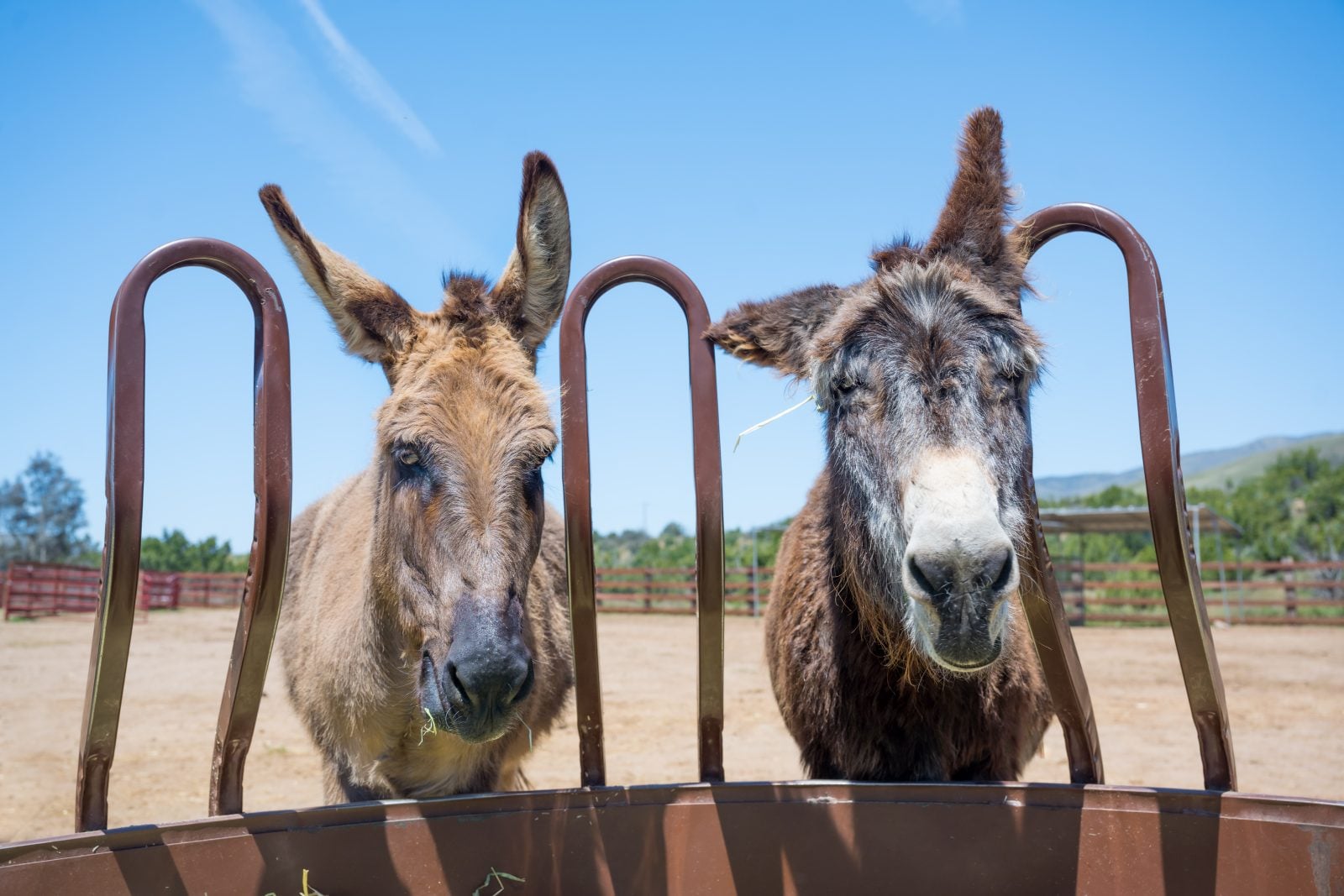
Two donkeys Dorado and Harley stand at trough together at Farm Sanctuary

Dorado and his friend Harley chow down together

9. Donkeys have best friends.

Donkeys often pair up and develop close friendships, choosing whom to spend their time with. Their friendship bonds are so strong that donkeys become distressed and often stop eating when separated from their pals. (Burros, on the other hand, don’t seem to engage in this same pair-bonding behavior. The reason is still unknown.)

10. Donkeys deserve protection.

In 1971, Congress tasked the Bureau of Land Management (BLM) with protecting and managing the vulnerable burros and horses who populated and now roam public lands after decades of exploitation. Sadly, the BLM’s methods for removing burros from these lands often cause more harm than good. Roundups are stressful and can separate donkeys from their family members. Many burros are confined to holding pens while awaiting adoption, while others are sent to slaughterhouses in other countries.

The system is not without its issues, but rescue has led to some happy stories for donkeys like Dorado. Born in a BLM facility, his future was uncertain. Thanks to our partnership with the Platero Project, Farm Sanctuary was able to provide refuge not only to Dorado, but also to his friend Platero, and their moms, burros Patsy and Dolly.

Adopt a Donkey

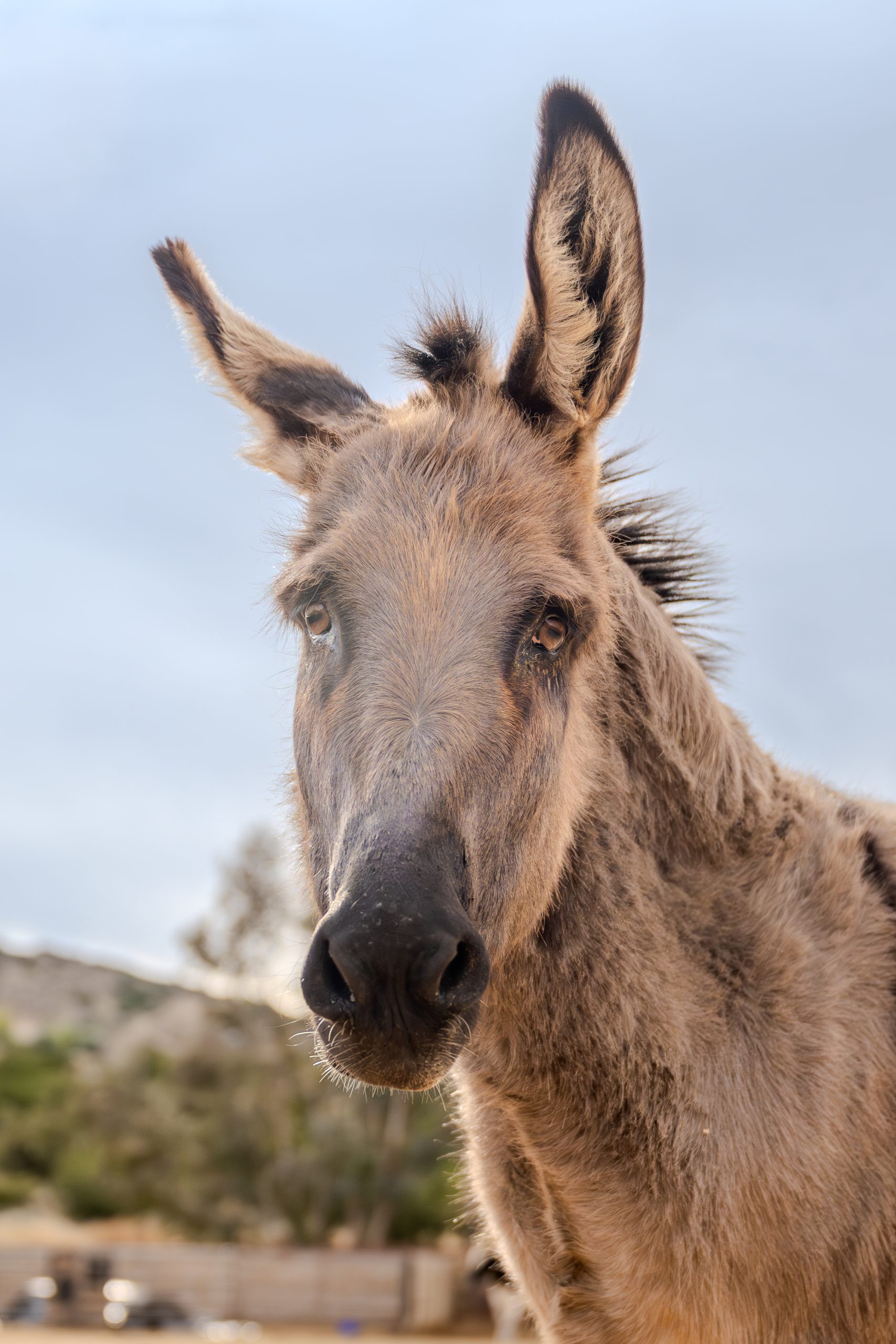
Close-up portrait of Platero, a gray and brown donkey who looks directly at camera

Whether they’re social butterflies or prefer to go against the grain, every donkey deserves a lifetime of love, safety, and protection. By symbolically adopting Dorado or MJ, your monthly support will help to provide lifelong care to these spirited donkeys and all of Farm Sanctuary’s hundreds of rescued animal residents.

Adopt Dorado

Adopt MJ