

10 Things You'd Never Guess About Geese

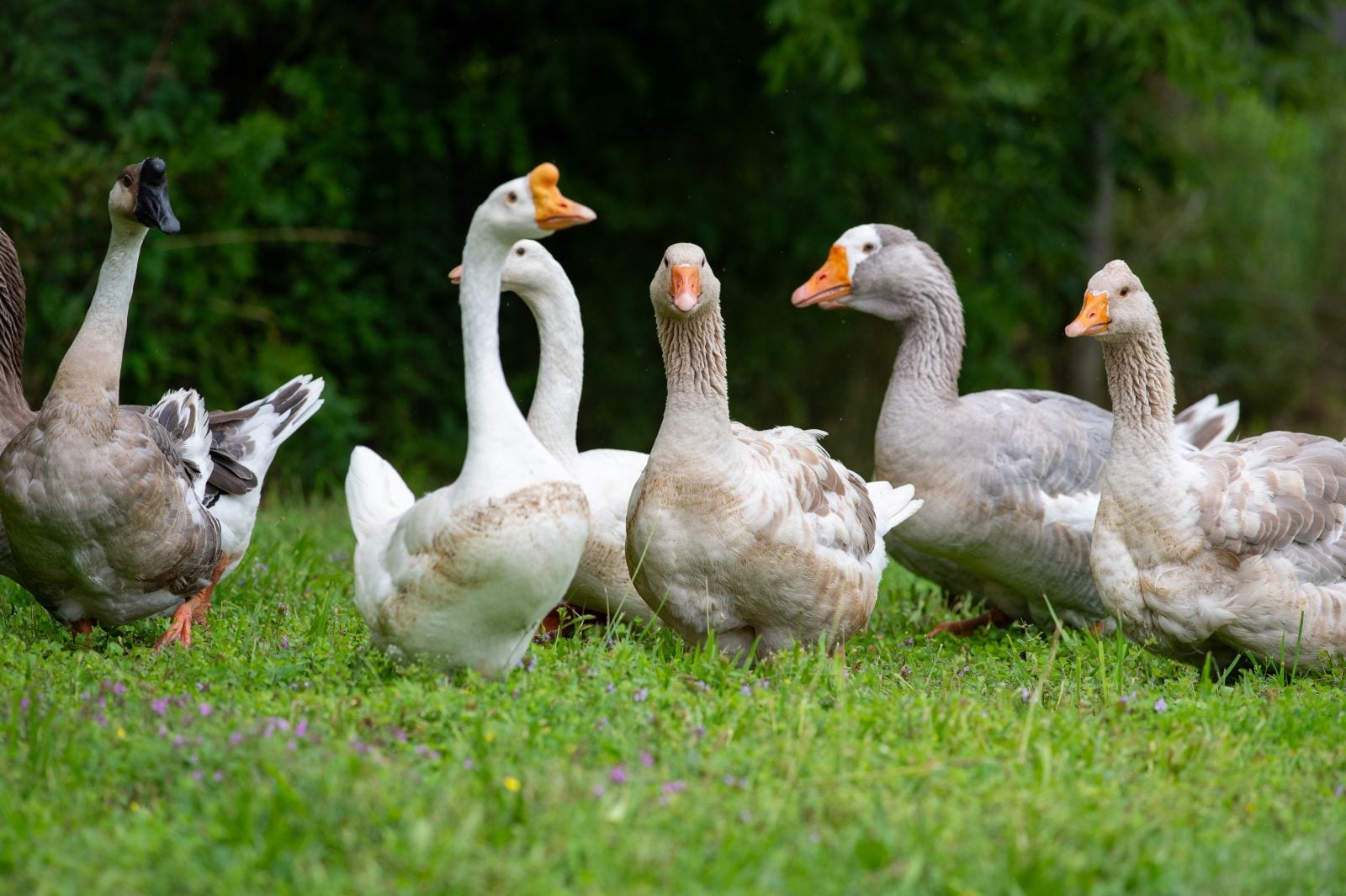
A flock of seven geese stand in grass at Farm Sanctuary

10 Things You'd Never Guess About Geese

Geese are ever-present in our culture, from nursery rhymes like Mother Goose to idioms like “goosebumps” and “silly goose.” But how much do we really know about these intelligent, social birds?

While geese are known for their elegance, adaptability, and strong bonds, those raised in agriculture are denied the opportunity to express their natural behaviors or live their full lives. Instead, they are subjected to overcrowding, painful procedures, and the barbaric practice of force-feeding for foie gras production.

It’s time to look beyond the familiar sayings and discover what makes these birds so special. Read our top ten fascinating facts about geese, then learn how you can help them.
1. Geese eat all day long

Natural grazers, geese eat small amounts of food throughout the day. All these light meals add up, too; a typical goose can ingest as much grass as a sheep—an animal 20 times their weight! (Bonus fact: What goes in must come out. An adult goose excretes a whopping 1-3 lbs. of waste daily.)

2. "Gaggle" is just one of many names for geese

While the standard name for a group of geese is a “gaggle,” you may hear other terms as well. A group of geese flying in formation is called a skein (pronounced “scayne”), team, or wedge. If geese are flying close together or sitting on the water, the group is called a plump.

Though the word “goose” used alone can refer to either sex, it refers to the female when used alongside “gander,” as in “the goose and the gander.” A newly hatched goose who hasn’t yet grown adult feathers is known as a gosling.

3. Goslings synchronize their hatching

Even if a mother goose lays her eggs several days apart, they all hatch together in about a 24-hour period. This is caused both by the way the mother incubates the eggs and by the siblings’ calls to each other from inside their shells. All the goslings in a brood develop simultaneously and follow their mother out of the nest together to learn the ways of the world. Known as synchronized hatching, this phenomenon ensures that offspring aren’t left unattended by parents who would otherwise need to split their attention between goslings who hatched and developed at varying times.

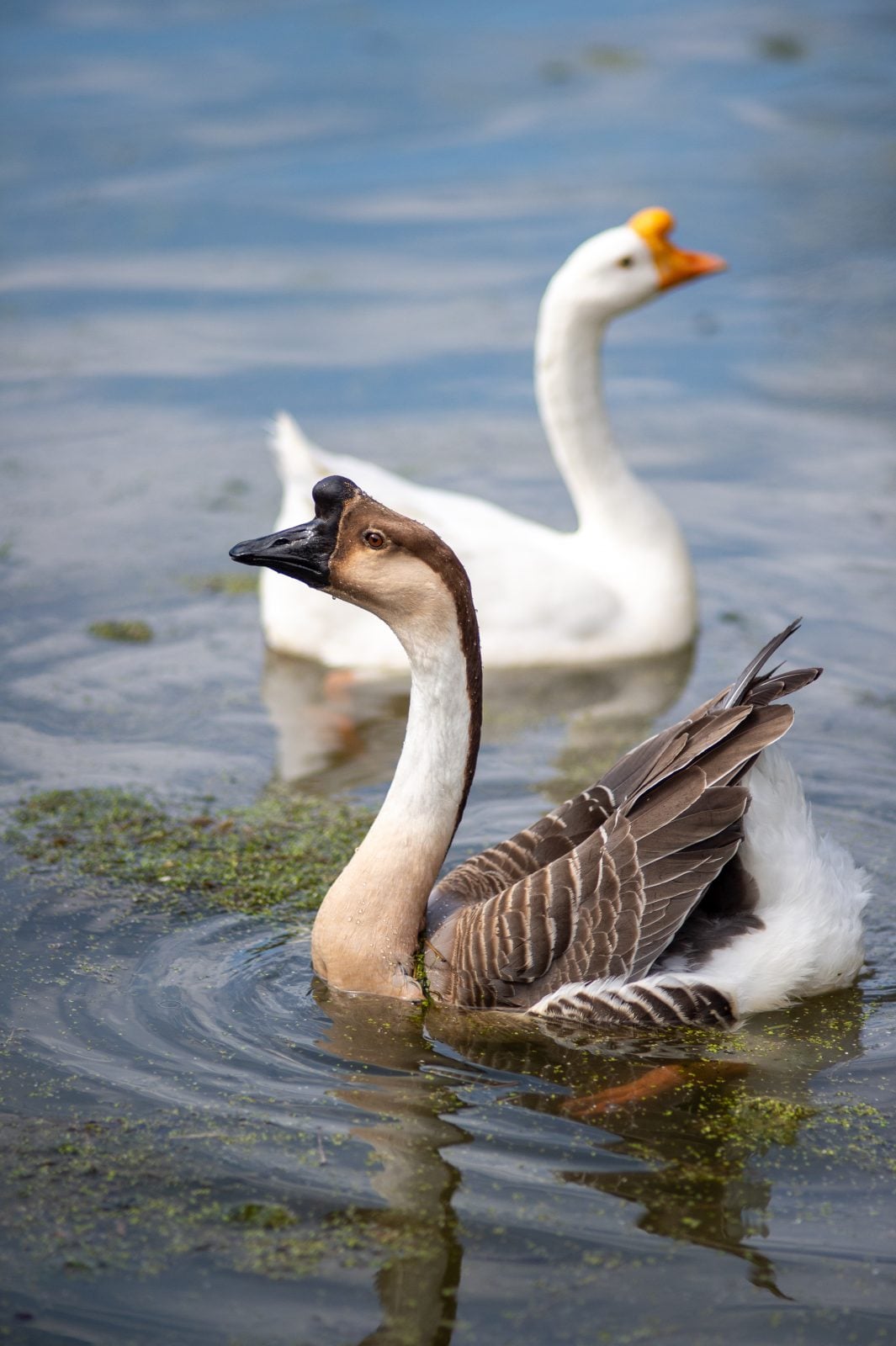
Rescue geese Wilfred and Kennedy in pond at Farm Sanctuary

Bonded geese, Wilfred (front) and Kennedy

4. Geese are monogamous

Geese tend to partner up and stay together throughout the year. These long-term bonds are highly advantageous for pairs who are nesting, raising young, and trying to protect the standard 5-6 goslings per brood. Paired geese also tend to be more dominant in the social hierarchy of their gaggle.

5. Geese make great guardians

Geese engage in what’s called sentinel behavior, wherein one goose keeps an eye out for predators while another goose eats. Natural guardians, geese also have the ability to sleep with one eye open and half of their brains awake! Known as unihemispheric sleep, this allows geese to keep an eye on their surroundings, even while snoozing.

6. Geese can distinguish between individuals

Geese recognize each other and likely possess long-term memories of social relationships. Greylag geese can not only recognize when another bird belongs to their species or family, but they can even distinguish between their individual siblings, despite strong genetic similarities.

7. Mother geese and goslings know each other's voices

Throughout the incubation period, mother geese vocalize to their babies while they’re still inside their eggs. Newly hatched goslings therefore immediately recognize their mother’s voice, helping to facilitate what’s called “filial imprinting”—the quick, strong bonds that develop between offspring and parent. These bonds keep goslings safe by increasing the likelihood that they will stay close to their mother as she teaches them critical life skills, such as where to forage and how to avoid predators.

The vocal recognition among parents and offspring goes both ways. Researchers played recordings of goslings calling out in distress and measured the reactions of the adult geese. The goslings’ parents reacted to their recorded calls, while the other adult geese did not, providing strong evidence that geese can recognize their offspring by their calls alone.

8. Geese work together for the good of the group

Though geese form social hierarchies, they also engage in sophisticated cooperative behavior, even while in flight. In their typical flying V formation, the bird in front is not always the top dog. They actually take turns at the front of the formation, a position that requires the most effort. The wind hits and goes around the lead bird, cutting wind resistance and conserving energy among the group.

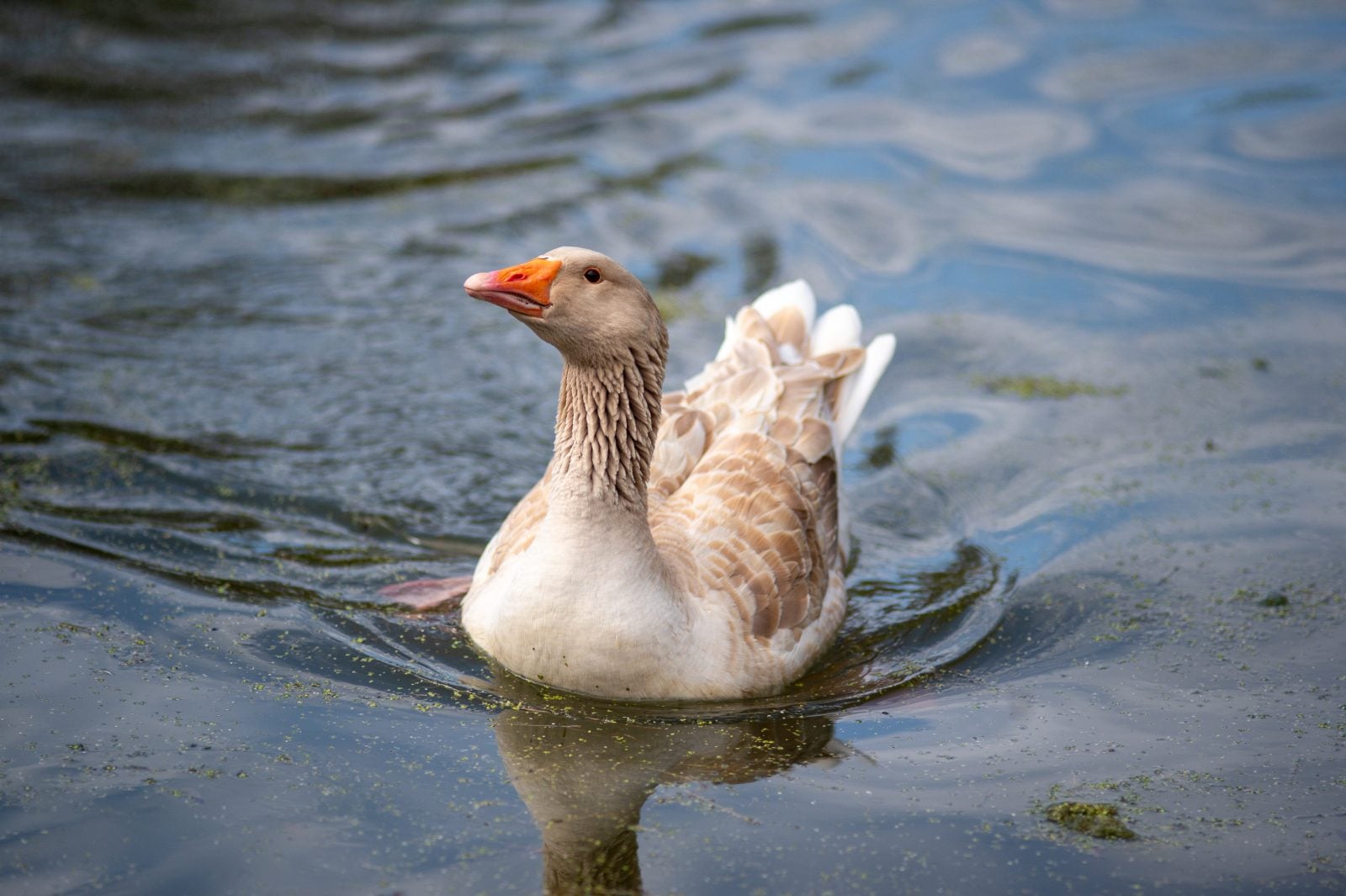
Rescue goose swims in pond at Farm Sanctuary

9. Geese can live for decades

Wild geese can live for more than 20 years. In fact, researchers in Canada identified one wild Canada goose as being at least 33 years and 3 months old. Tragically, in animal agriculture, geese are killed by the millions per day at ages far younger than their natural lifespans. Geese raised for meat are killed as young as 8 weeks old. Geese used in foie gras farming are killed around 14-17 weeks of age, but the miserable existence they endure throughout their short time on Earth is hardly a life at all.

10. Geese are force-fed to make foie gras

French for “fatty liver,” foie gras is a dish of duck or goose liver that has been fattened to an unnatural size by force-feeding the animal before slaughter. Over two or three weeks, geese raised for foie gras are force-fed with a metal tube that is thrust down their throats to pump large amounts of corn and fat directly into their esophaguses. Due to rough handling and the speed of the lines, the birds suffer lacerations and punctures from the feeding pipes and often choke on the feed or their own vomit. Their livers swell to 10 times their normal size, resulting in serious health consequences. Severe physical strain causes birds to struggle to walk. In the cramped, unsanitary conditions of factory farms, they often suffer from foot and leg infections. Breathing becomes difficult, their organs begin to fail, and many geese die before the period of force-feeding is complete.

Monet and Matisse ducks

Monet and Matisse

Monet and Matisse are two of the many geese who have found refuge at Farm Sanctuary after surviving the foie gras industry. Both geese arrived with sores on their bills from the pipe used to force-feed them. They had cuts, scrapes, and broken feathers from rough handling and extreme confinement. 

Monet and Matisse found safety, but there are millions of geese and ducks still suffering in the foie gras industry.

Foie gras represents one of the most extreme forms of animal cruelty still allowed in our food system. More than 80% of consumers support a ban on foie gras sales, and nearly 90% want to see a ban on force-feeding ducks and geese. This overwhelming public support and the efforts of animal protection groups have led to promising victories in states and cities around the U.S., including the recent bans in Denver, Colorado, and Washington, D.C.