
Sanctuary Questions: What Does 'Cage-Free' Really Mean?

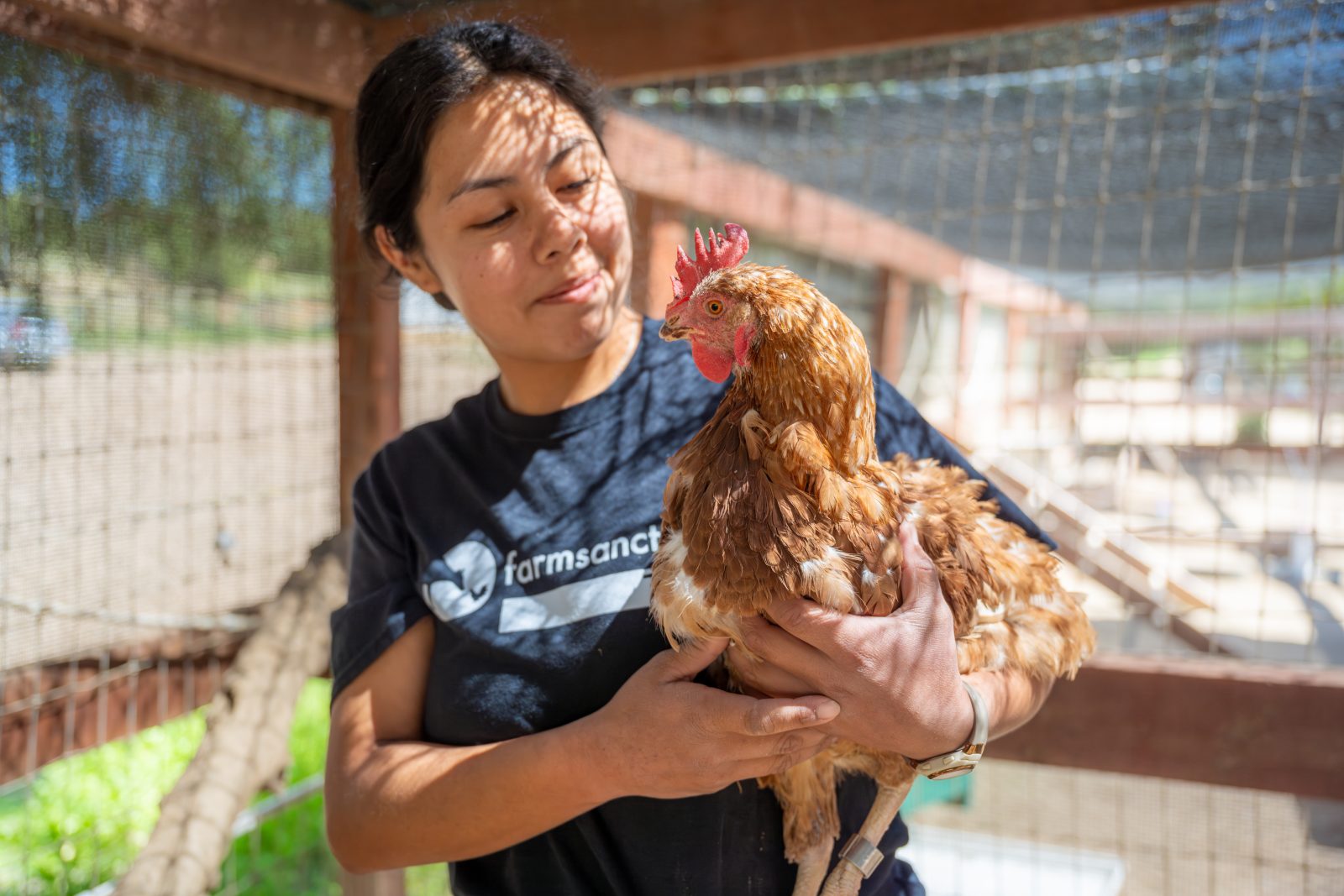
Phoenix hen at Farm Sanctuary

Sanctuary Questions: What Does 'Cage-Free' Really Mean?

This article is part of our Sanctuary Questions blog series. While touring our New York and California sanctuaries, visitors often express curiosity about the lives of our rescued farm animal residents. We’re sharing the most frequently asked questions and answering them here. Read on, and stay tuned for more.

Many of the hens at Farm Sanctuary are survivors of animal agriculture, including cage-free farms. When we share with visitors the cruelty these birds endured, we often hear questions like, “Aren’t cage-free farms good?” and “Aren’t the birds there treated well?”

With no standard legal definition, consumers are often surprised to learn what “cage-free” means for hens—and what it doesn’t.
An alternative to battery cages

In 2012, more than 90% of eggs produced in the U.S. came from hens kept in battery cages. These cages—named for the rows of stacked enclosures, or “batteries”—keep egg-laying hens in extreme confinement. In these cramped spaces, hens cannot stand comfortably, turn around, spread their wings, or engage in natural behaviors like dust-bathing.

Public pressure has led to legislation like California’s Prop 12, pushing much of the egg industry to move away from battery cages. Today, nearly half of U.S. eggs come from cage-free farms. But what does that actually mean, and is it really an improvement?

No strict legal definition

“Cage-free” simply means that hens are not kept in cages. Beyond that, however, the term lacks a consistent legal definition in the U.S., allowing for wide variation in how it’s applied. 

Some certifiers set higher standards than others. The United Egg Producers—a group that represents industry interests—allows as little as 1.5 square feet of space per bird. The USDA requires that eggs sold with their “Grade A” or “Grade AA” shield icon come from hens who are allowed unlimited access to food and water and have space to roam during their laying cycles. Certified Humane—a nonprofit organization with the strictest standards for cage-free egg producers—requires access to nest boxes, perches, and dust-bathing areas so hens can engage in natural behaviors and avoid conflict with other birds.

Even at its best, industrial egg production labeled “cage-free” still typically denies hens access to the outdoors, employs painful practices like debeaking, and ends in slaughter when production declines.

Baby chicks are still ground alive

Cage-free farms source hens from the same hatcheries used across the egg industry. In these facilities, male chickens—who are of no use to the egg industry since they can’t lay eggs—are killed within hours of hatching. Each year in the U.S., hundreds of millions of male chicks are killed, most commonly by being dropped into high-speed industrial grinders—literally ground alive.

Sunshine is still out of reach

Despite the name, most cage-free hens never see the outdoors. Many cage-free facilities are large, dark sheds crammed with thousands of hens. Without sunshine or space to move around, cage-free hens endure the same miserable conditions as caged hens. Denied the opportunity to engage in even the most basic natural behaviors—such as foraging and dust-bathing—hens experience both physical and mental decline.

Extreme confinement indoors also risks injury to individual hens—and large-scale tragedy. Farm Sanctuary has welcomed many survivors of cage-free farms, including hens rescued after a massive fire in 2020 that trapped and killed more than 300,000 other birds.

Painful procedures are standard

Hens in cage-free farms are subjected to the same cruel and painful procedures as those in cages. To prevent feather-pecking, a stress-related behavior caused by overcrowding, producers commonly “debeak” hens.

Standard practice in the egg industry, debeaking involves cutting or burning off a portion of the beak, often without anesthesia. Because a chicken’s beak contains a high concentration of nerve endings, the procedure can cause both immediate and long-term pain.

Unnatural production levels cause harm

Decades of selective breeding to maximize profits have led to unnaturally high levels of egg production. Modern hens lay up to 320 eggs per year, far beyond the average 10-15 laid by their wild ancestors. Because of the energy required to fuel this overproduction, hens today suffer from osteoporosis, bone fractures, and reproductive disorders.

Birds are still brutally slaughtered early in life

Whether raised in cages or cage-free farms, hens face slaughter when their egg production declines—usually at just a few years old. They spend their final days of life enduring an arduous multi-day journey to the slaughterhouse, without food, water, or shelter from the elements. Those who survive the journey are slaughtered, often while fully conscious, as poultry animals are exempt from receiving even the most basic protections of the federal Humane Methods of Slaughter Act.

A truly humane alternative: plants

Farm Sanctuary staff Jenni holds rescued hen Alicia

If cage-free farms still involve so much suffering, what can conscious consumers do? How can we make more humane choices? 

In addition to advocating for stronger animal protection policies, we can each make choices that better reflect our values of compassion for animals.

No matter what you’re cooking up, there are plant-based alternatives available. Replace eggs with one of the many delicious, nutritious vegan versions. Use tofu in your breakfast scrambles, and use bananas or applesauce in place of eggs in your baked goods. These egg-free recipes will get you started!

Visit Us

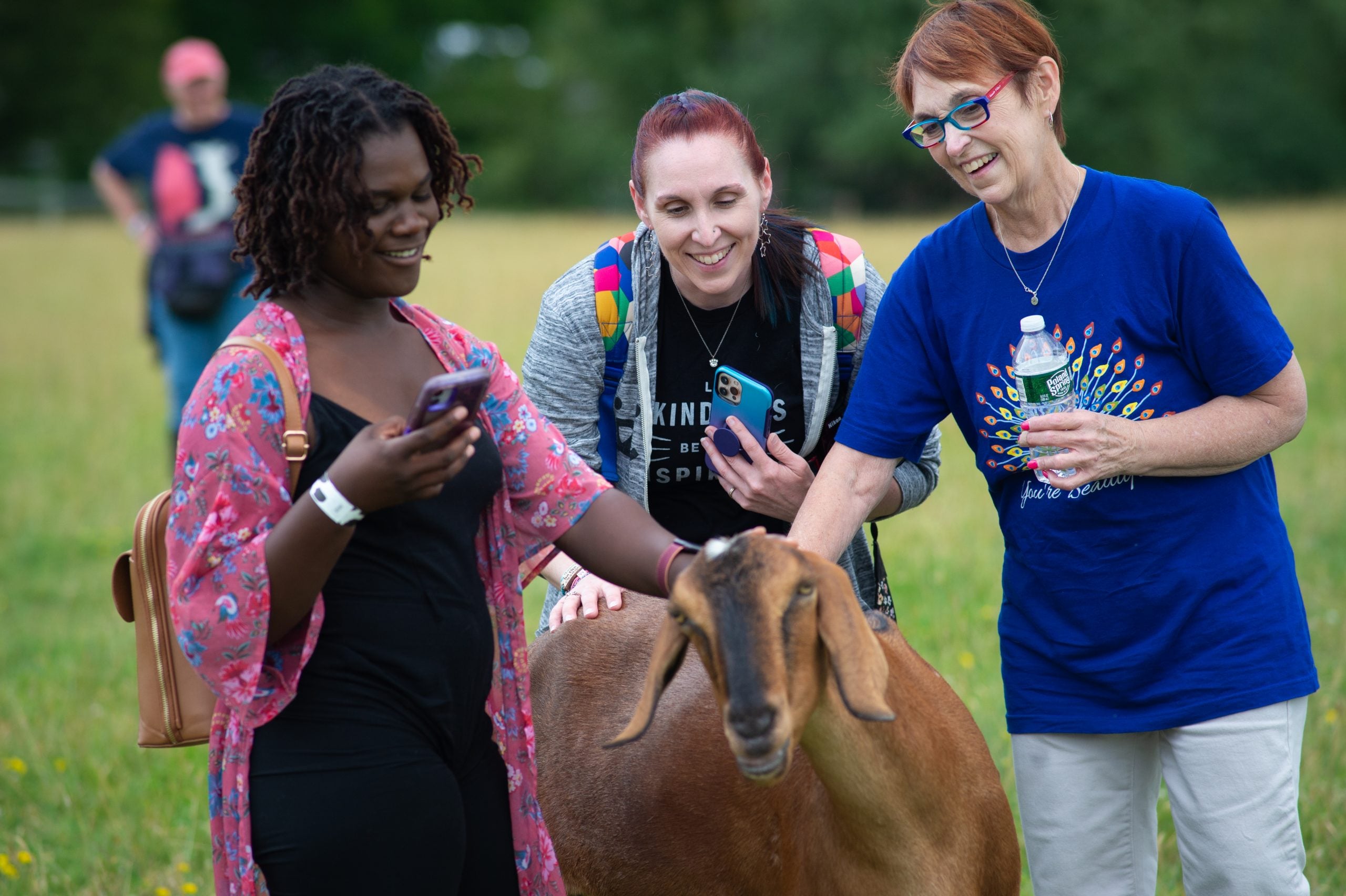
Three smiling guests pet rescued goat Halbert in pasture at Farm Sanctuary

Farm Sanctuary was founded in 1986 to combat factory farming and transform our food system for animals, people, and the planet. At our sanctuaries in New York and California, we welcome visitors for public and private guided tours. You can even book a stay in one of our tiny houses or cabins in New York. We hope to see you soon!

Learn More